Shlok 1.4-1.6: The Divine Champions of Virtue
श्लोक १.४-१.६: धर्म के अजेय महारथी — दैवी सम्पद् की महागणना
The Cosmic Insecurity of Delusion
अत्र शूरा महेष्वासाः: मोह का आंतरिक संत्रास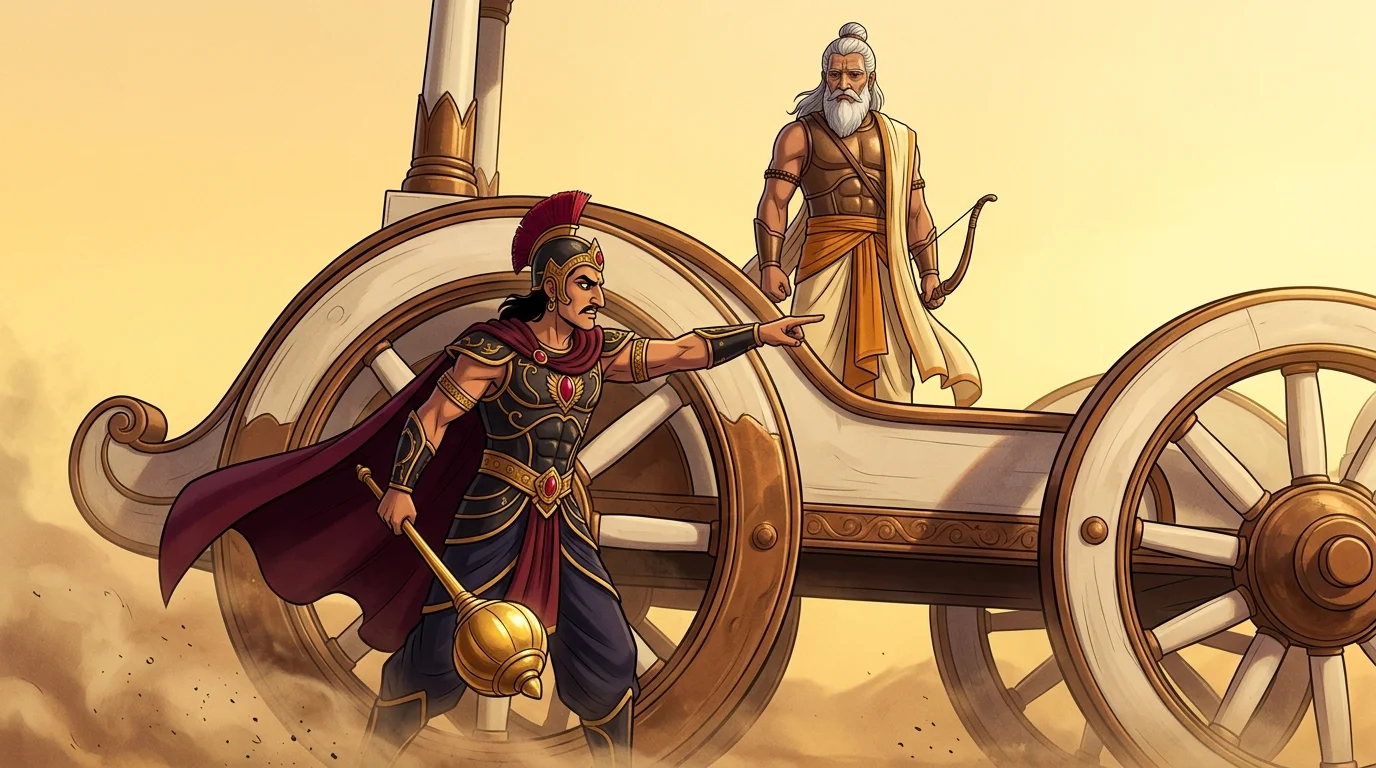
Having challenged Drona's loyalties, Duryodhana turns to the enemy. The catalog of virtue begins not from reverence, but from the raw anxiety of Delusion.
Atra Shura! Look there, Acharya! Cast your eyes beyond our vanguard and behold their titans!
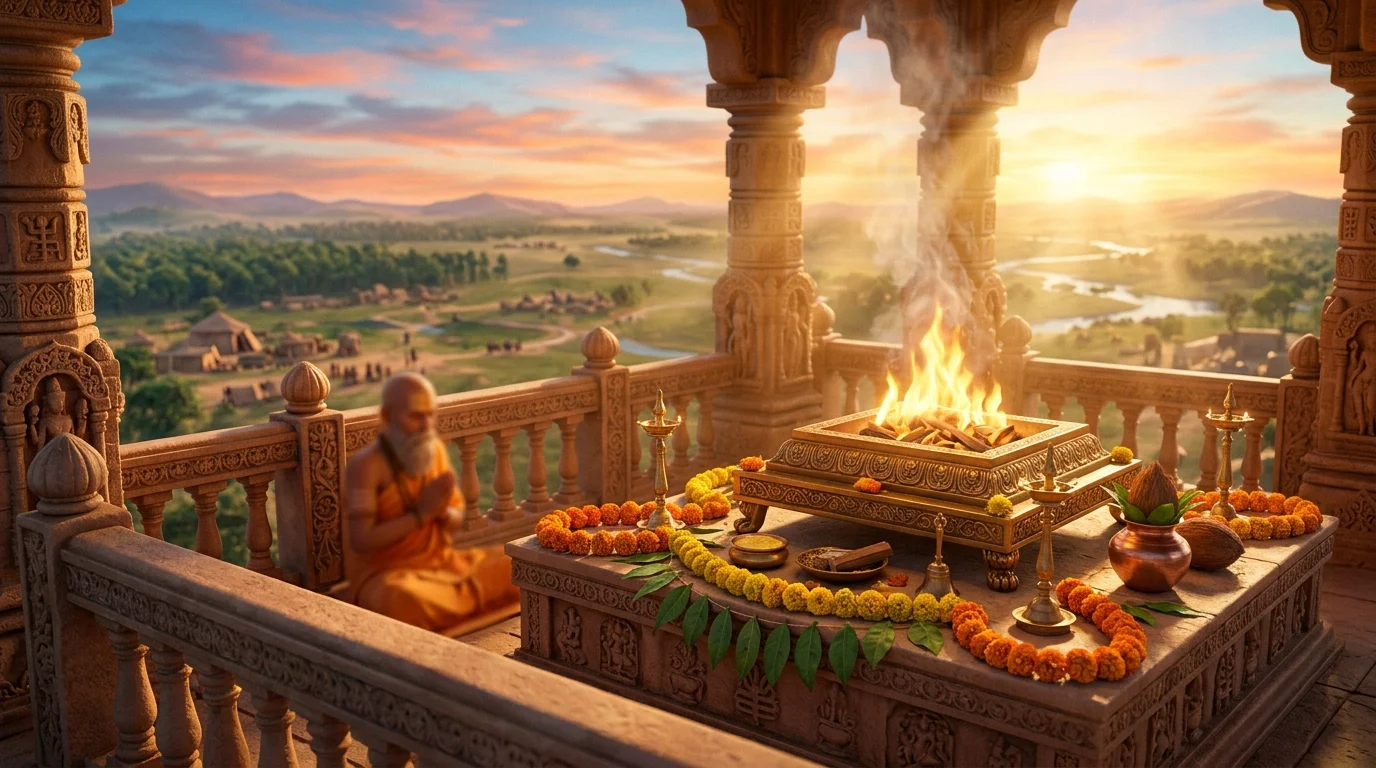
Shloka 1.4 opens the grand roll call: Twelve ancient heroes named across three verses, each embodying an indispensable faculty of the spiritual path.
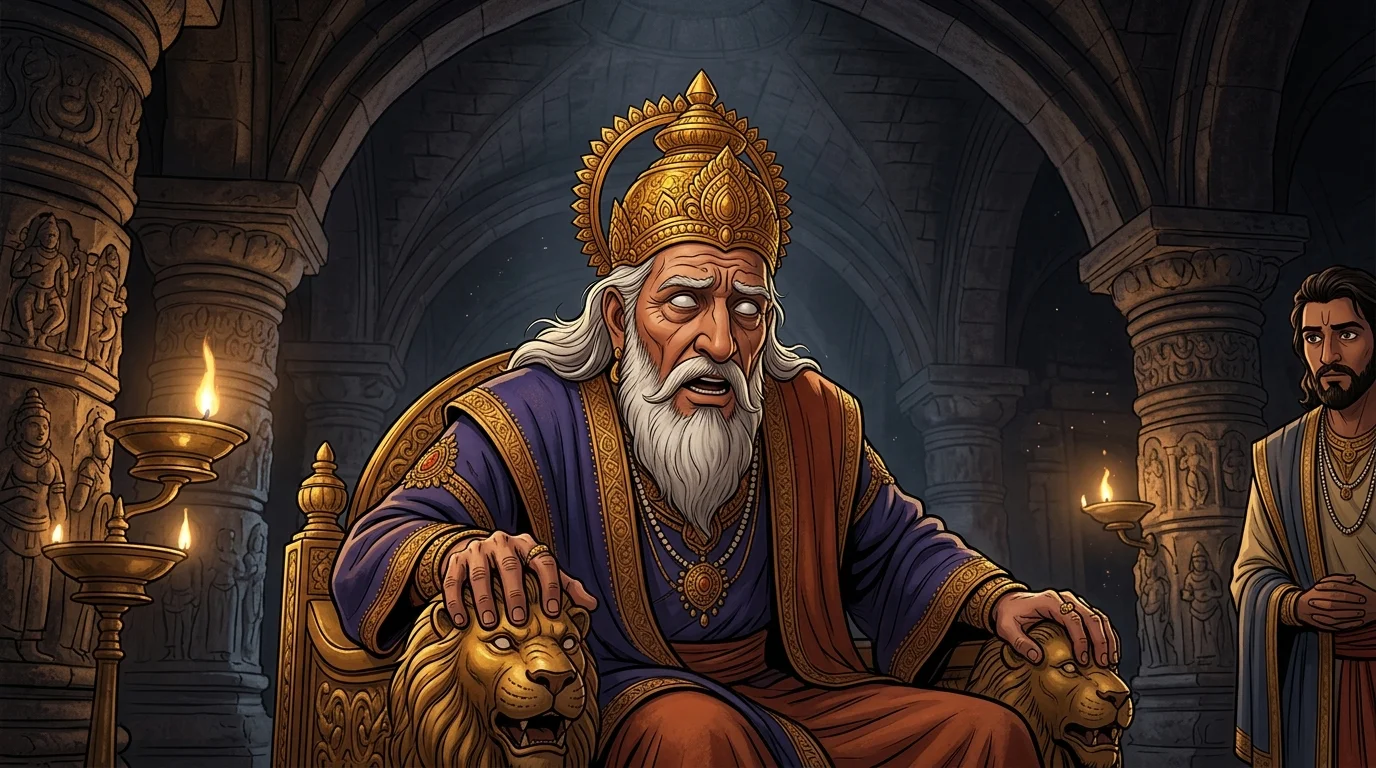
Blind Ignorance hears only martial weapons. Dhritarashtra measures conflict by physical force, unable to discern the soul's unseen battlefield.
Why does my son call them 'Maheshvasah'—mighty bowmen, Sanjaya? Does he tremble before their arrows of bamboo and iron?!
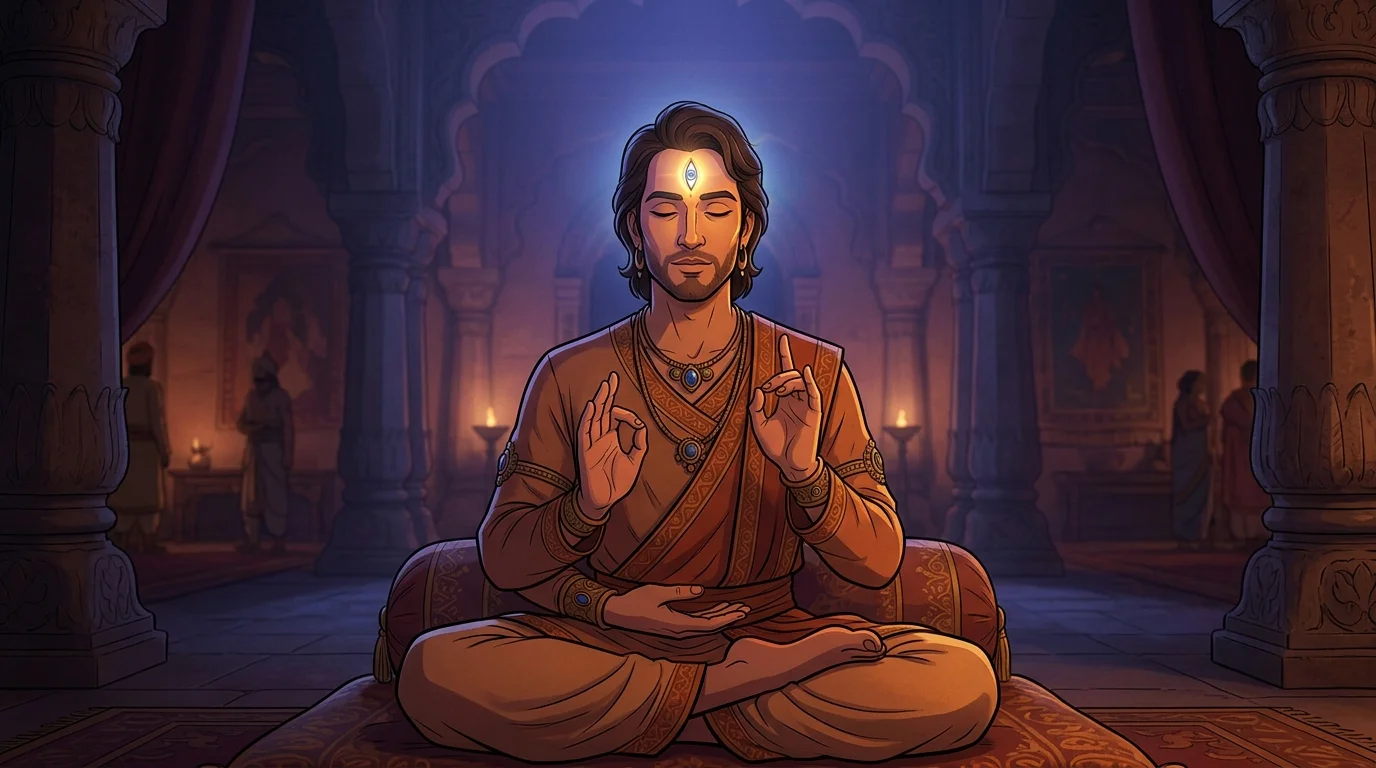
Swami Adgadanand reveals: The divine champions do not merely fight; their every breath is a spiritual impulse anchoring human awareness into the Eternal.
No, O King! 'Maheshvasah' does not mean archers of mortal wood! It means: 'Mahan Ish mein vaas dilane-vale'—those who seat the soul in the Supreme Lord!
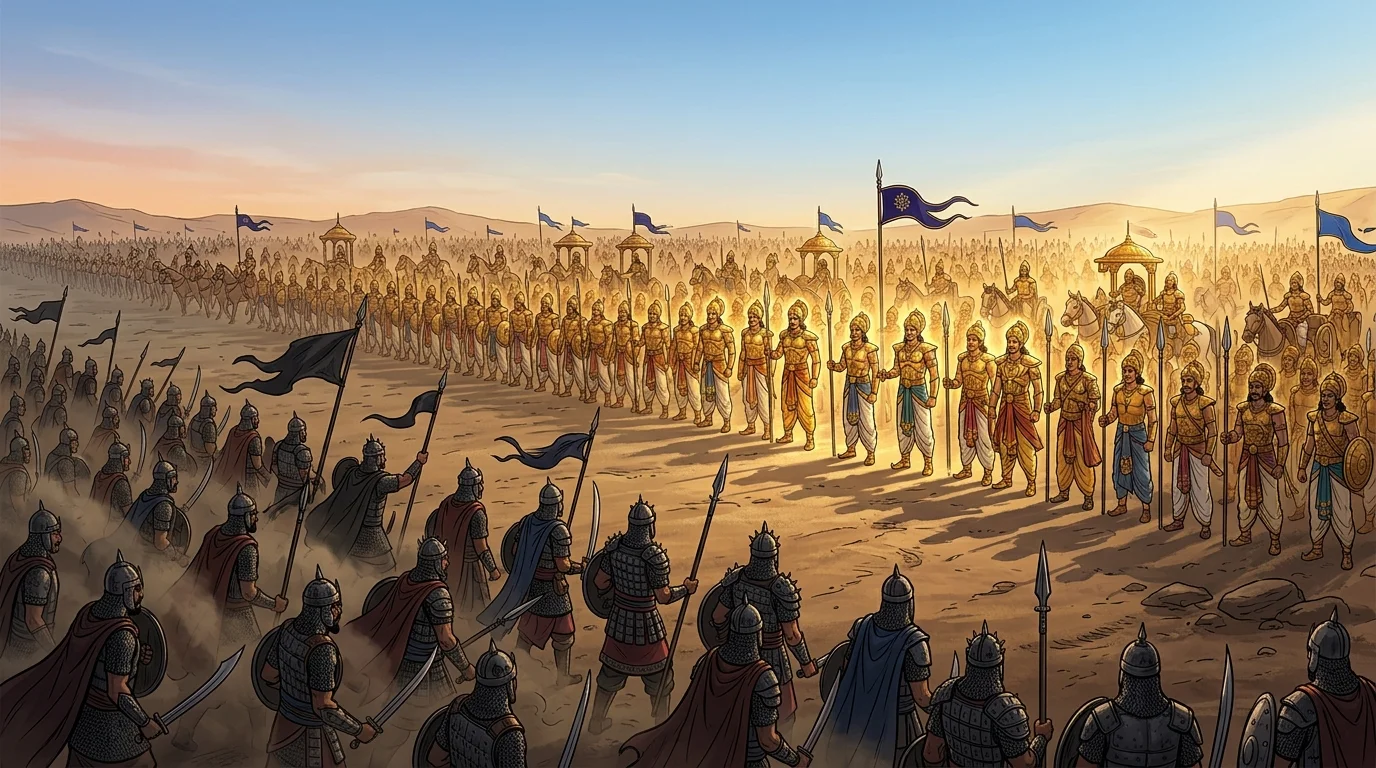
To guilt-ridden vice, every virtuous impulse appears colossal. Duryodhana perceives the entire Pandava host magnified by the titans who lead them.
Look upon them, Acharya! Every single commander in their line stands equal in fury to Bhima and Arjuna!
The Primordial Twin Forces — Bhav and Anurag
भावरूपी भीम और अनुरागरूपी अर्जुन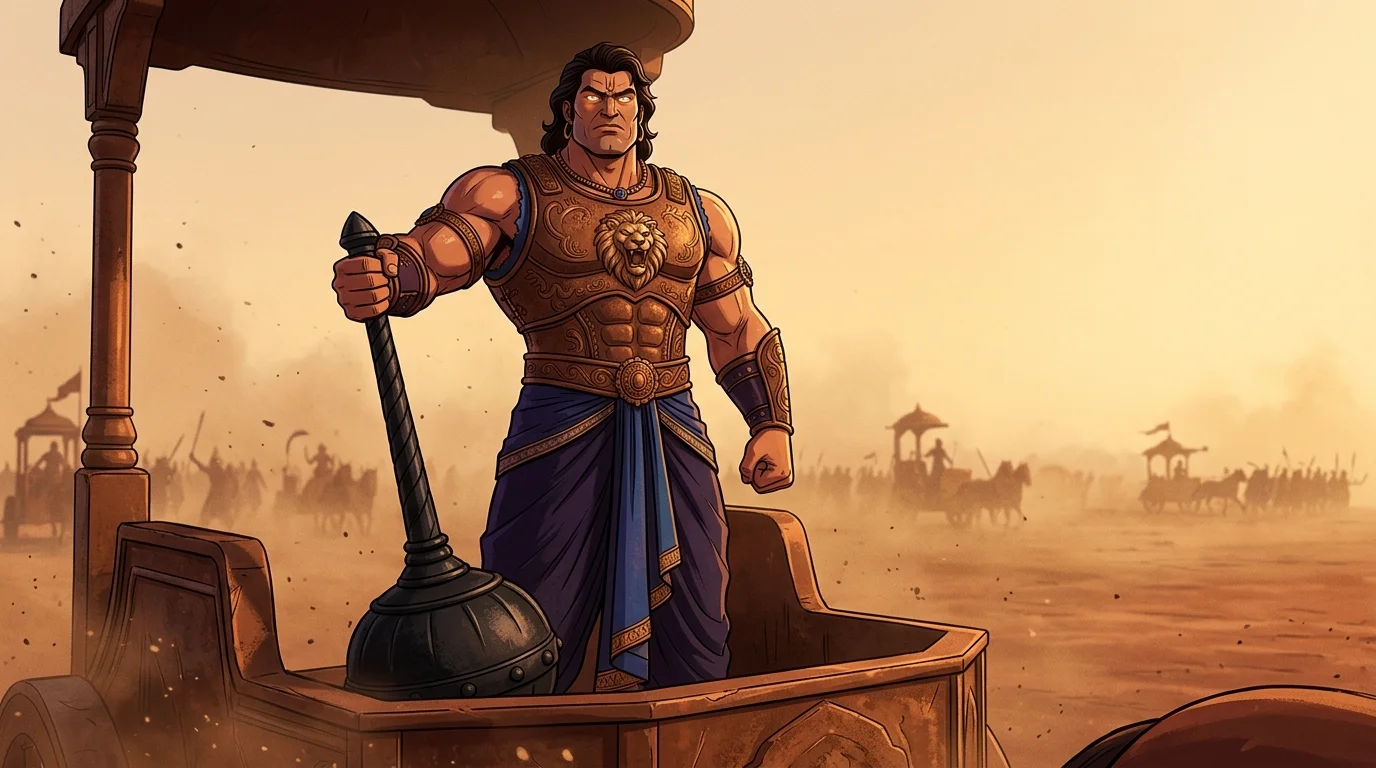
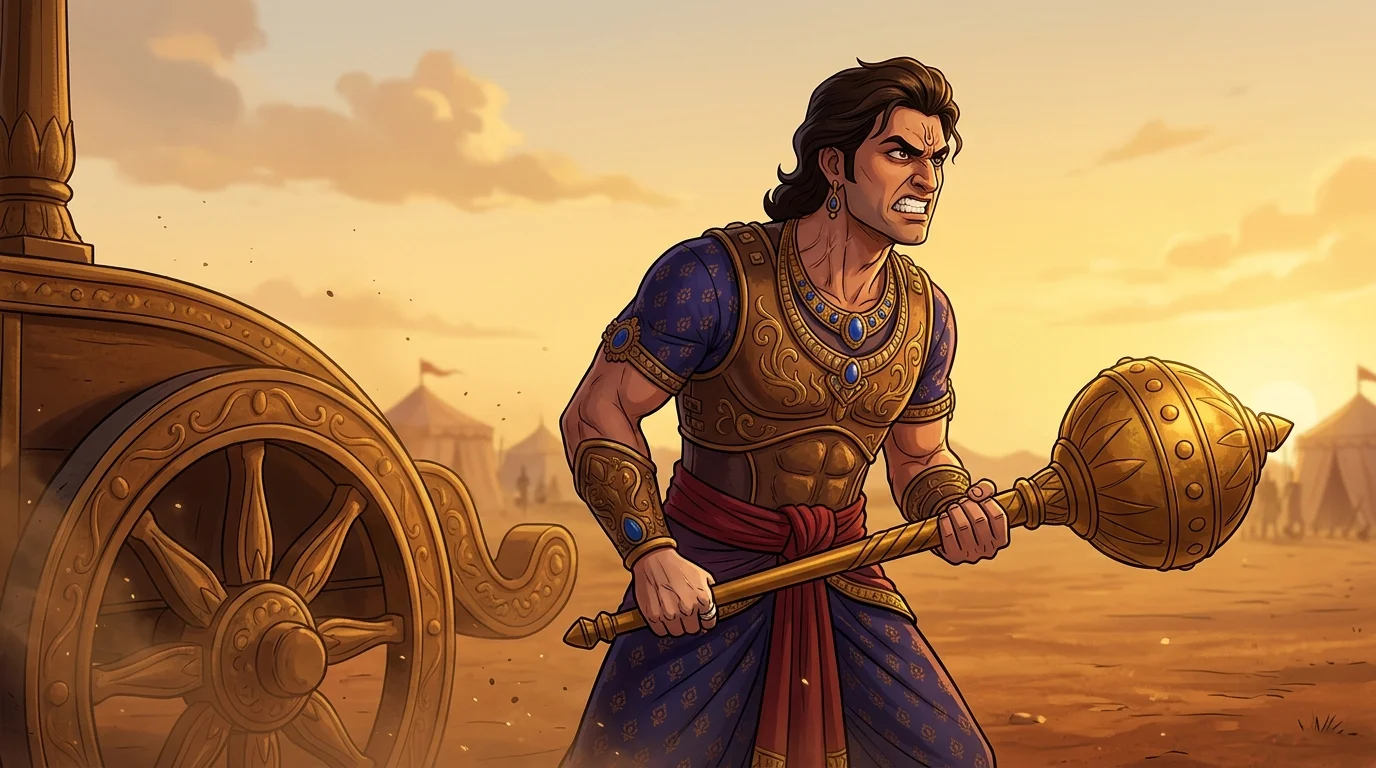
To the outer world, Bhima is terrifying physical force. But Swami Adgadanand decodes: Bhima is Bhava (भाव)—the invincible power of Divine Emotion.
Bhima! The savage colossus who swore to break my thighs and drink the blood of my brothers!
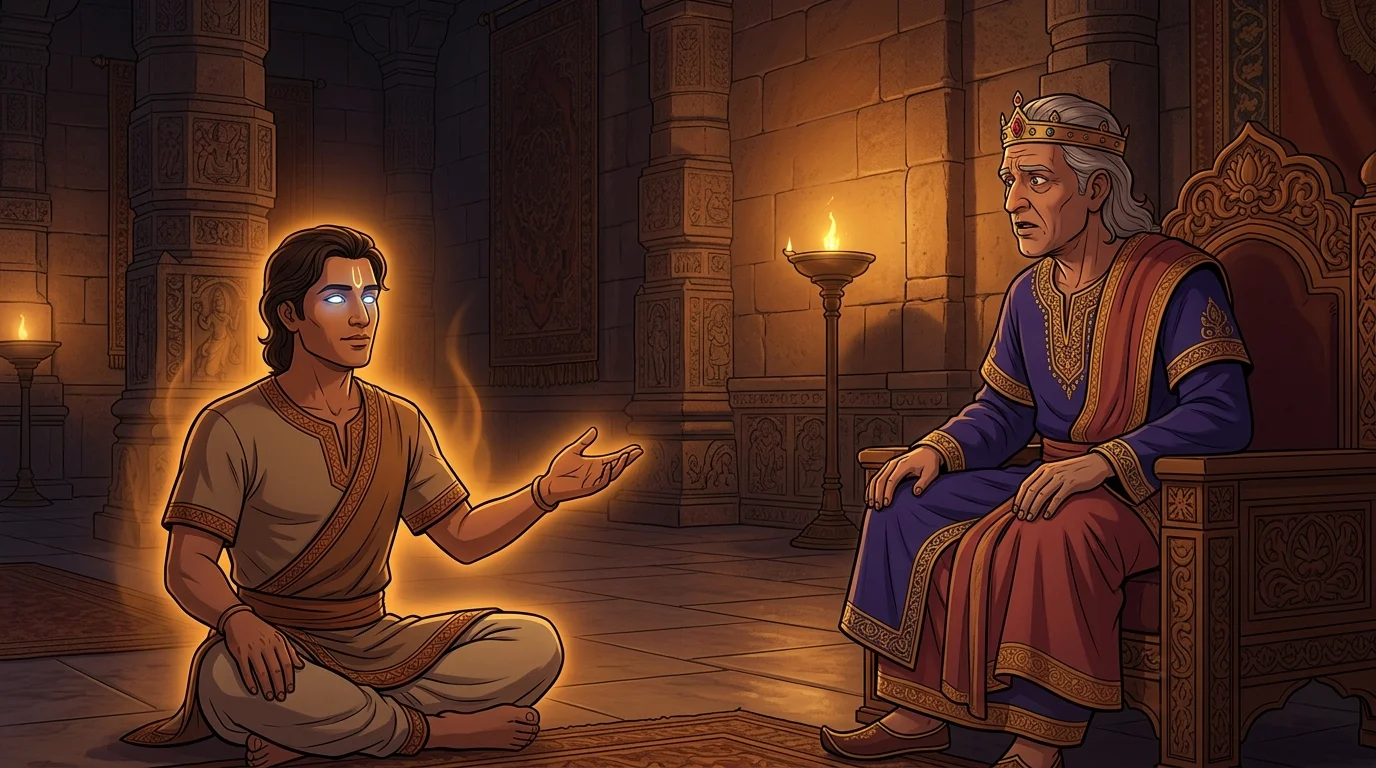
Rituals without feeling are cold ashes; japa without emotion is sterile. Bhima is that torrential spiritual passion without which spiritual victory is impossible.
Without intense divine feeling (Bhav), no seeker can shatter the rigid armors of pride and lust. Bhima is the soul's sacred fire that crushes delusion!
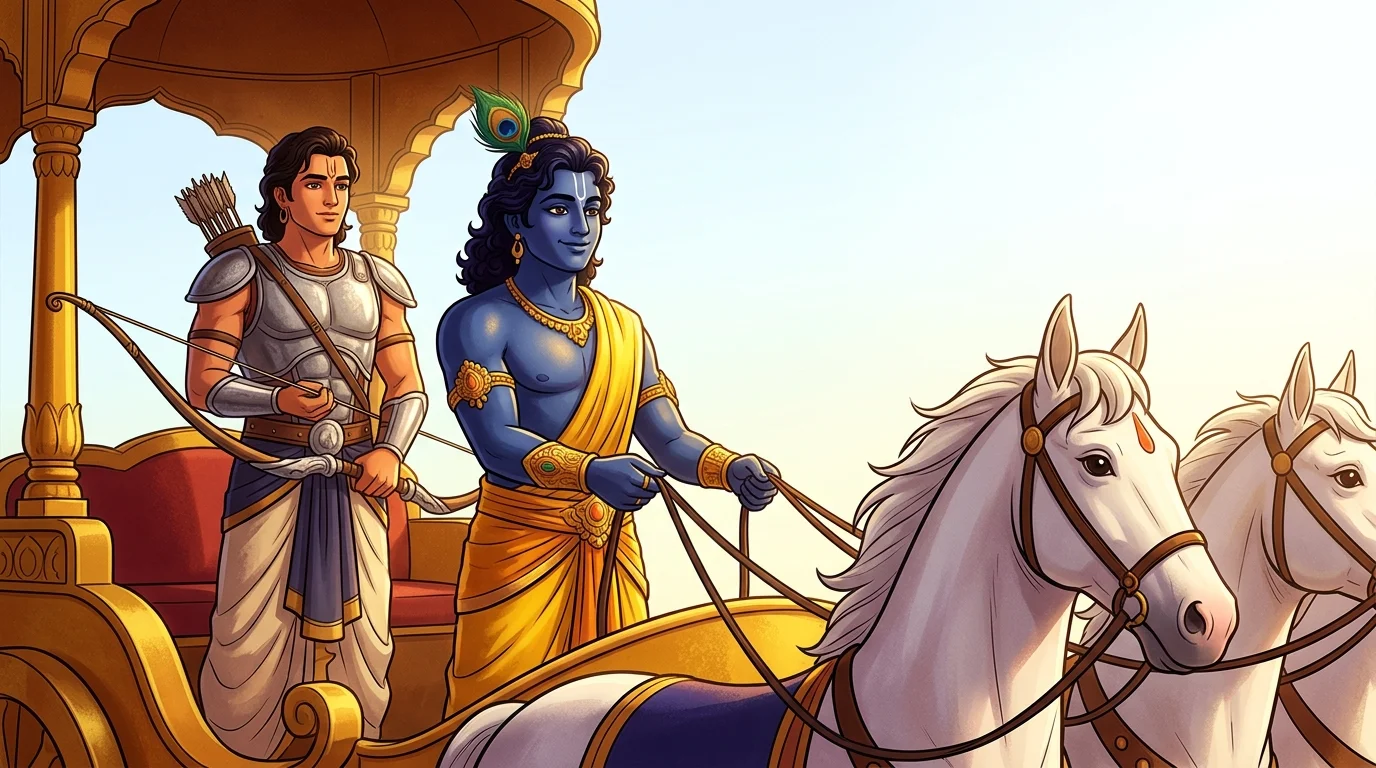
Arjuna is Anurag (अनुराग)—tender, devoted, unwavering love for the Supreme Lord. Where Anuraga awakens, Yogeshwar Krishna Himself takes the reins.
And Arjuna! The pampered favorite of heaven, wielding the Gandiva under Krishna's divine shelter!
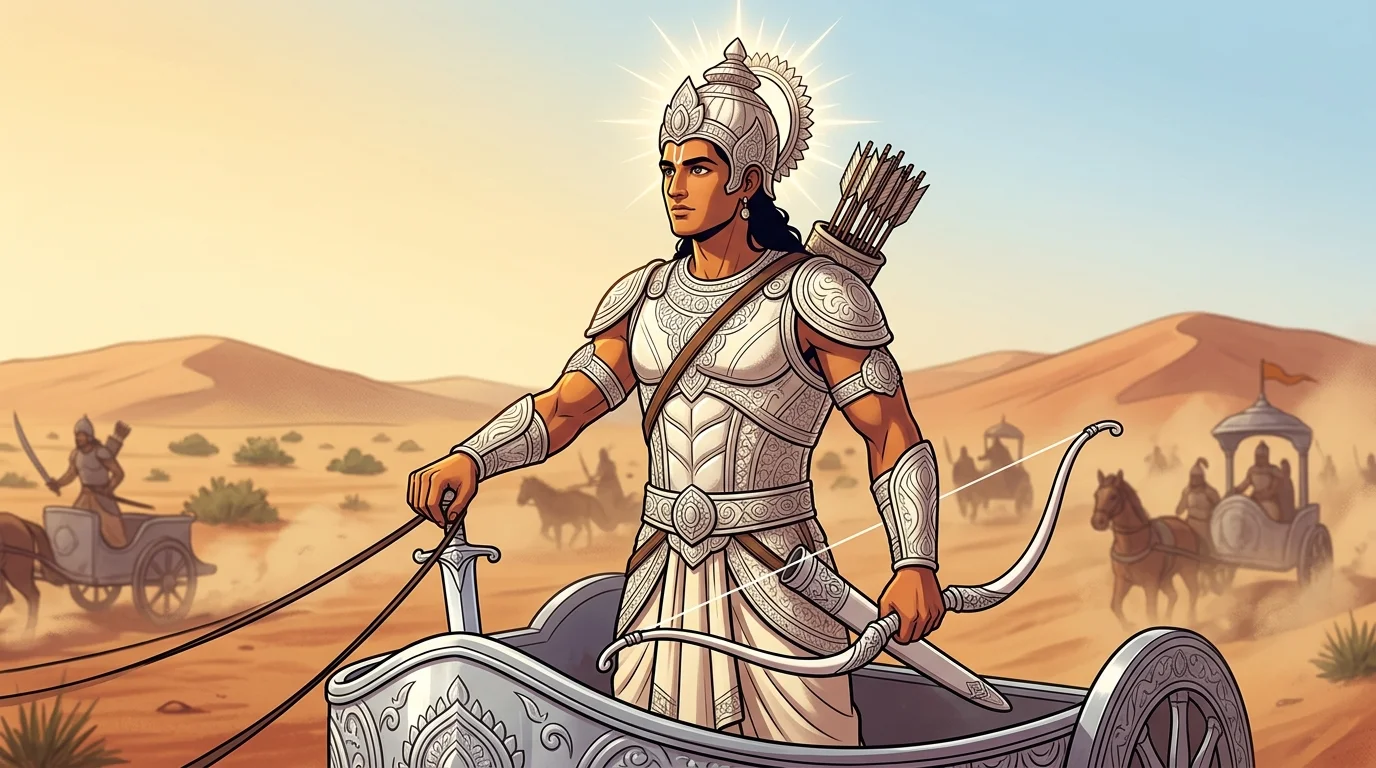
Swami Adgadanand reveals: Yuyudhana (Satyaki) is Sattvikta (सात्त्विकता)—unalloyed purity that effortlessly slices through the murky fog of rajas and tamas.
Yuyudhana! Satyaki, trained by Arjuna himself—a lion of the Vrishnis who knows no fatigue!
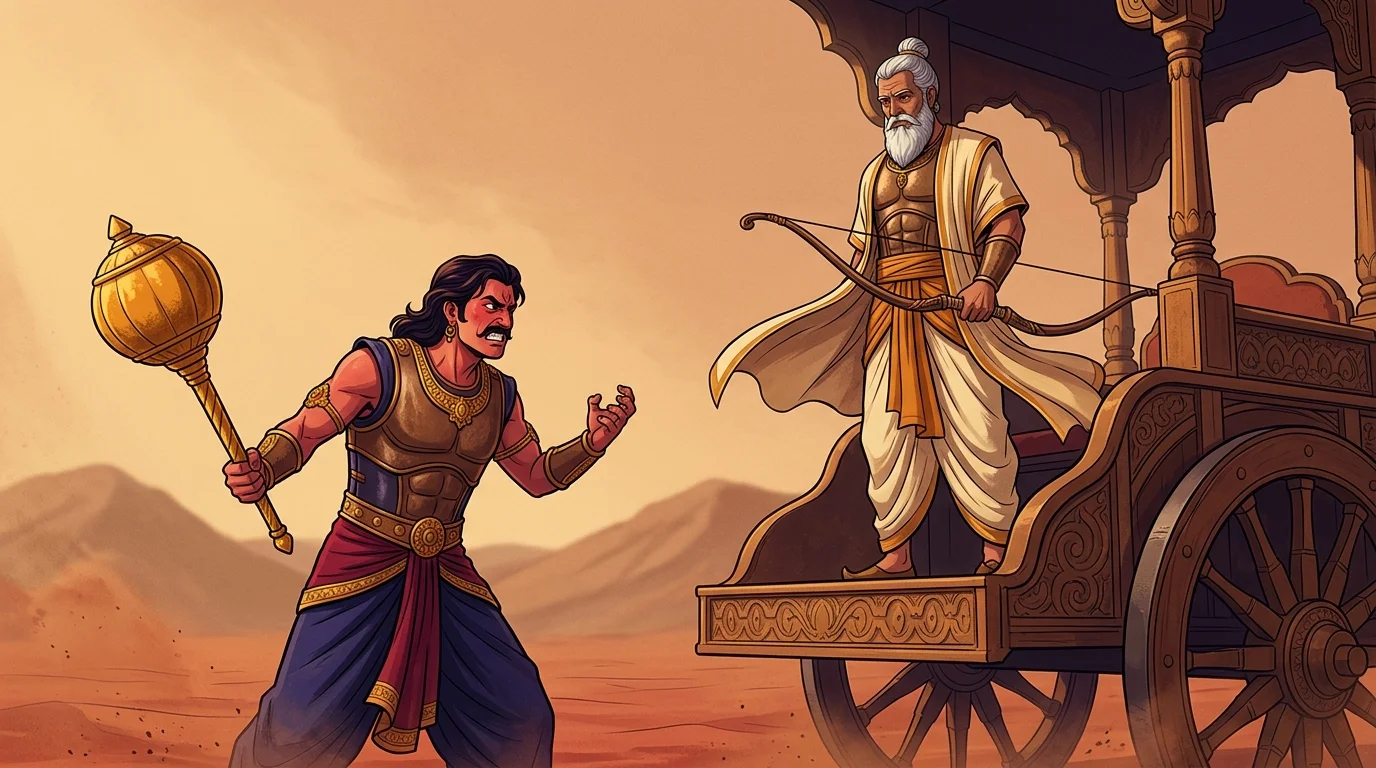
The dialogue of duality: Conduct (Drona) warns Delusion (Duryodhana) that physical armaments are powerless against spiritual reality.
They are marshaled side by side, Gurudev! Can our iron legions withstand heroes backed by such sorcery?!
Iron pierces flesh, Duryodhana. But virtues born of pure devotion cannot be slain by mortal steel.
Divine Flow and Immovable Stance
विराट और द्रुपद: ईश्वरीय प्रवाह और अचल स्थिति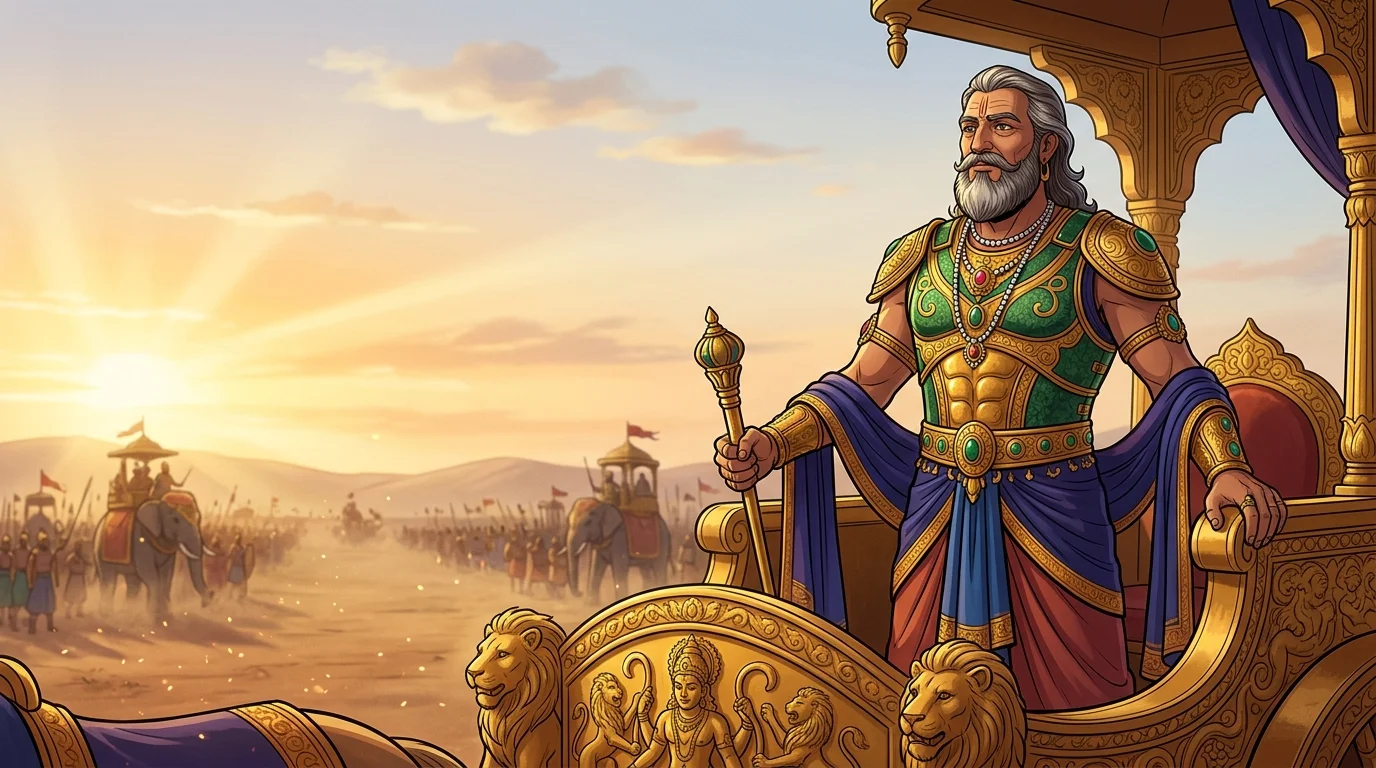
Virata represents: 'Sarvatra Ishvariya Pravaha ki Dharna' (सर्वत्र ईश्वरीय प्रवाह की धारणा)—the expanded consciousness that beholds God in all things.
Look upon old King Virata! He sheltered our enemies in his court, and now brings the entire realm of Matsya to our slaughter!
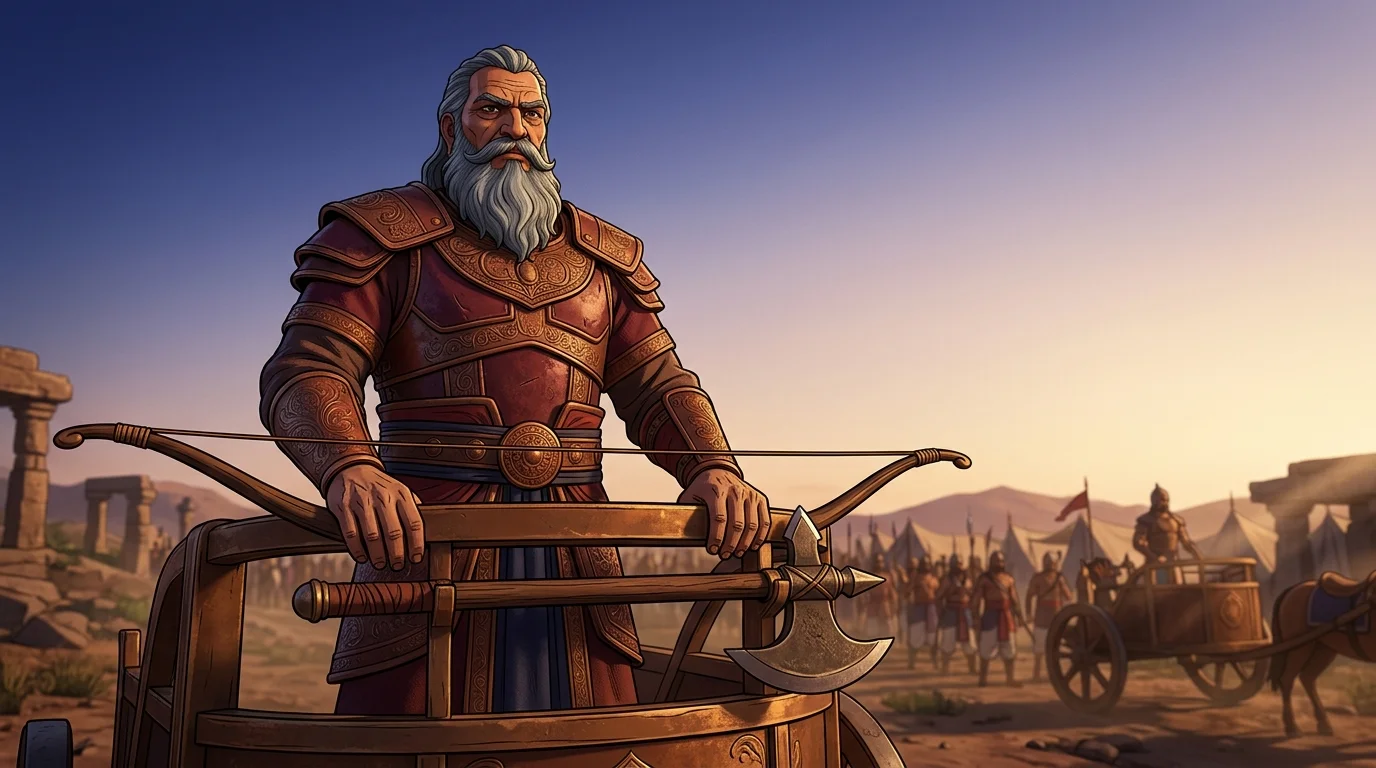
Drupada is 'Achala Sthiti' (अचल स्थिति)—the unshakeable spiritual state. From this immovable soul-foundation alone was the firm mind (Dhrishtadyumna) born.
And King Drupada! The fire that burns against you, Acharya! Standing immovable as an iron mountain!

Ignorance counts only years and muscles. Dhritarashtra cannot comprehend that spiritual maturity outlives physical youth.
Why does Duryodhana linger upon Virata and Drupada? They are aged monarchs, their youth spent! What threat do old men pose?!
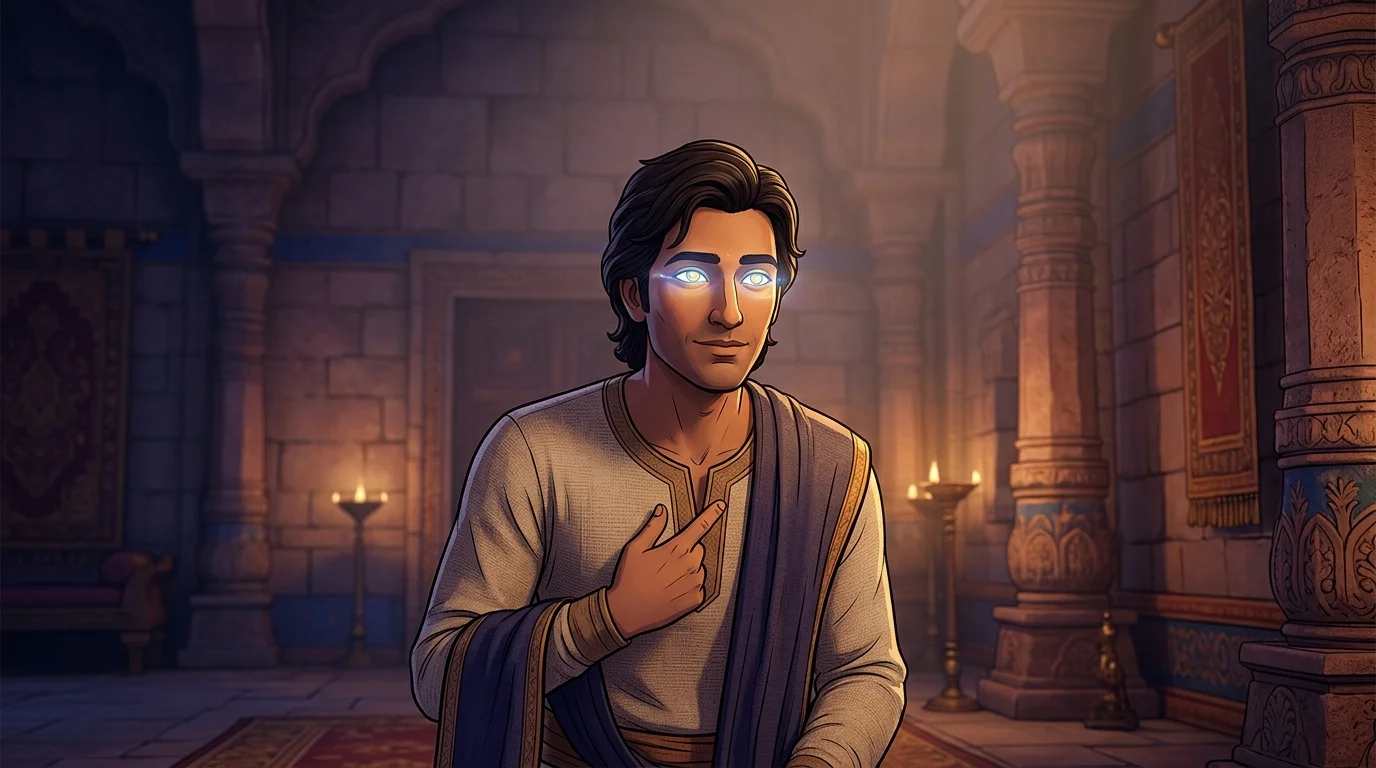
Without Virata's vision, practice remains narrow. Without Drupada's stance, the mind wavers. Together, they create an unassailable spiritual bastion.
External years mean nothing, O King! When the seeker perceives God flowing everywhere (Virata), his footing becomes immovable (Drupada). Such a soul cannot fall!
Delusion cannot stop counting. The sight of organized righteousness compels Moha to unveil the full spectrum of internal virtues.
They are called Maharathis! But they are not all! Listen, Acharya—there are yet more who dare dispute our dominion!
The Vanguard of Internal Mastery
श्लोक ५: आत्मसंयम और सत्य व्यवहार के शूरवीर
Shloka 1.5 introduces the masters of inner discipline: Duty, sensory restraint, bodily sanctification, and absolute truthfulness.
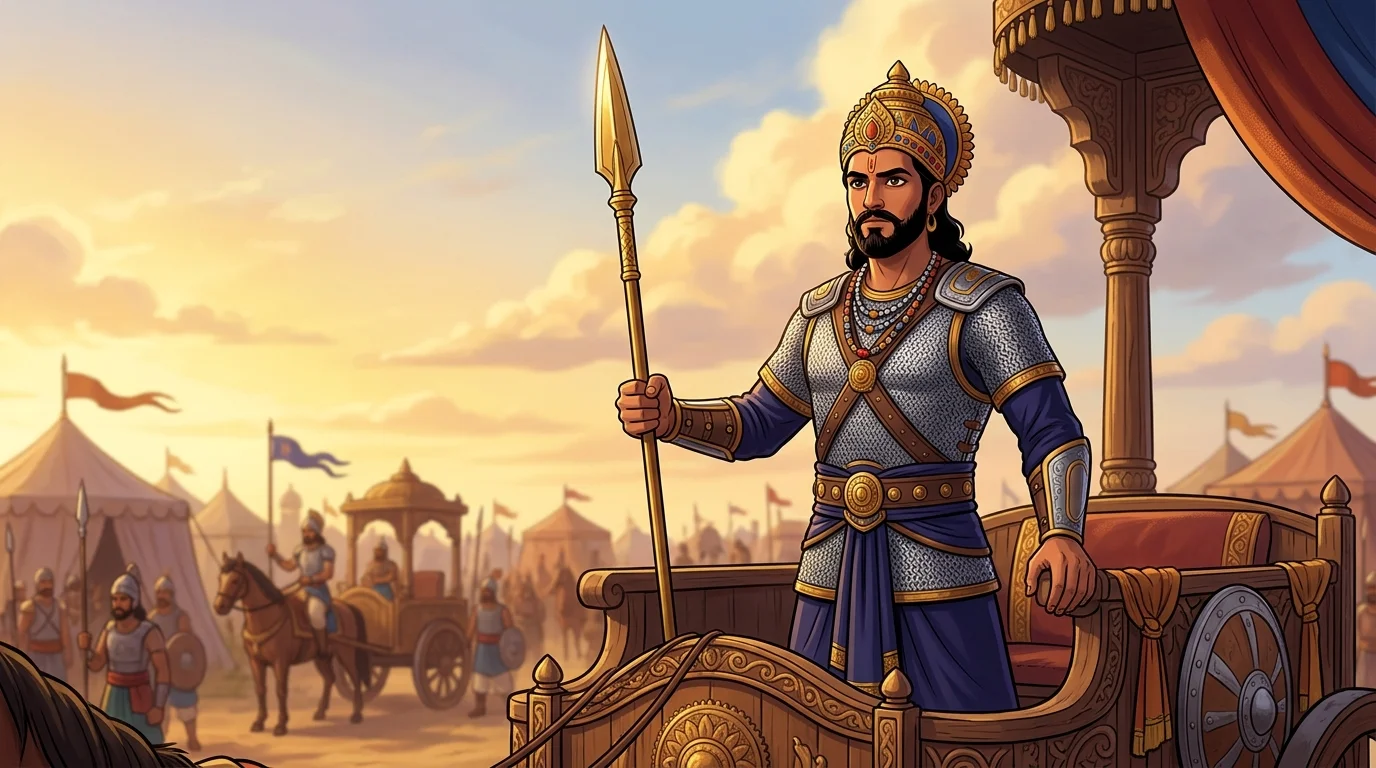
Swami Adgadanand decodes: Dhrishtaketu is 'Dridh Kartavya' (दृढ़कर्तव्य)—unshakeable commitment to spiritual duty that no worldly temptation can deflect.
Dhrishtaketu of Chedi! Guiding his division with mechanical, relentless discipline!
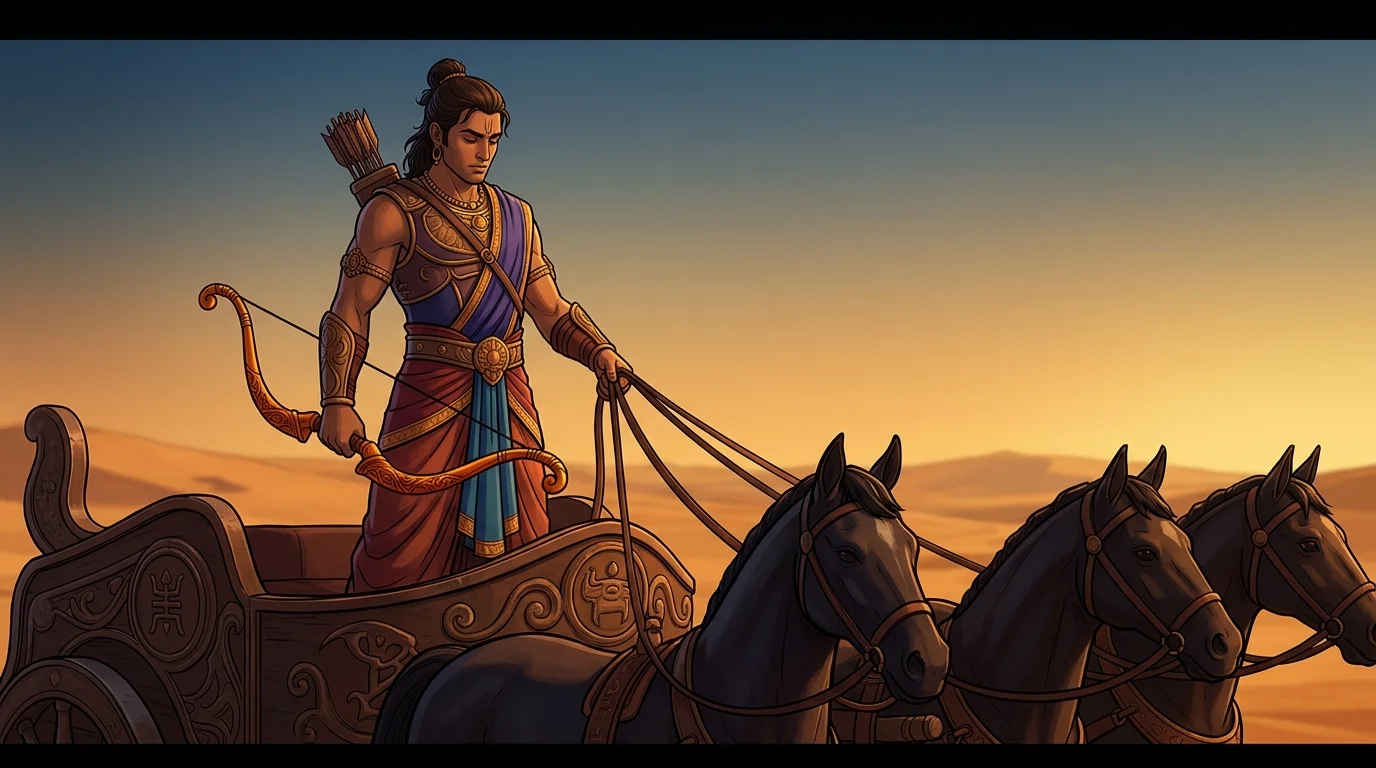
Chekitana is the vital spiritual faculty: 'Wherever the wandering mind strays, seizing it and anchoring it firmly in the Beloved Lord' (चित्त को खींचकर इष्ट में स्थिर करना).
Chekitana! The Yadava warrior whose gaze pierces through every trap we lay!
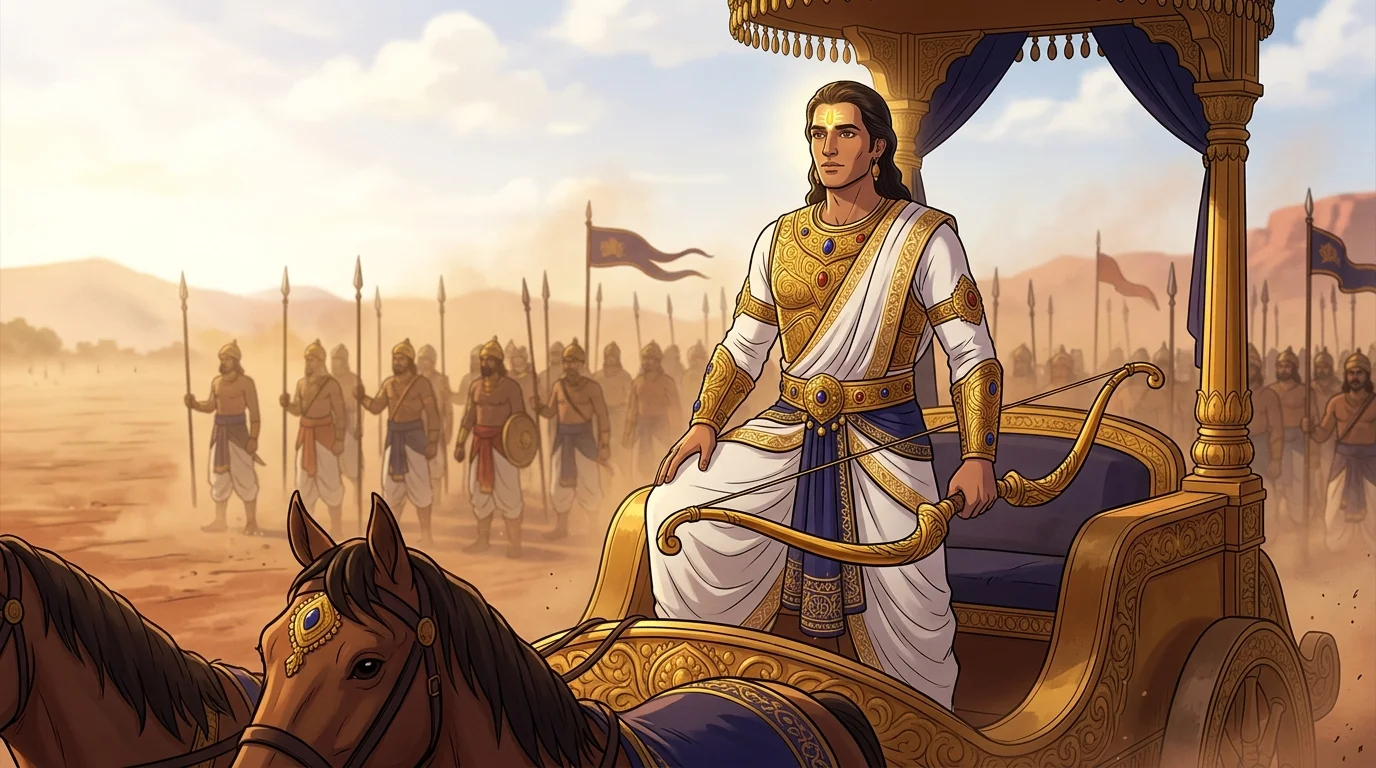
Kashiraja: 'Kaya-rupi Kashi mein hi vah samrajya hai'—The kingdom within the sacred city of the body. When the body becomes a holy temple, the Divine reigns.
And Kashiraja! Radiant as the morning sun! Why does a king of holy Kashi waste his majesty upon Pandu's rabble?!
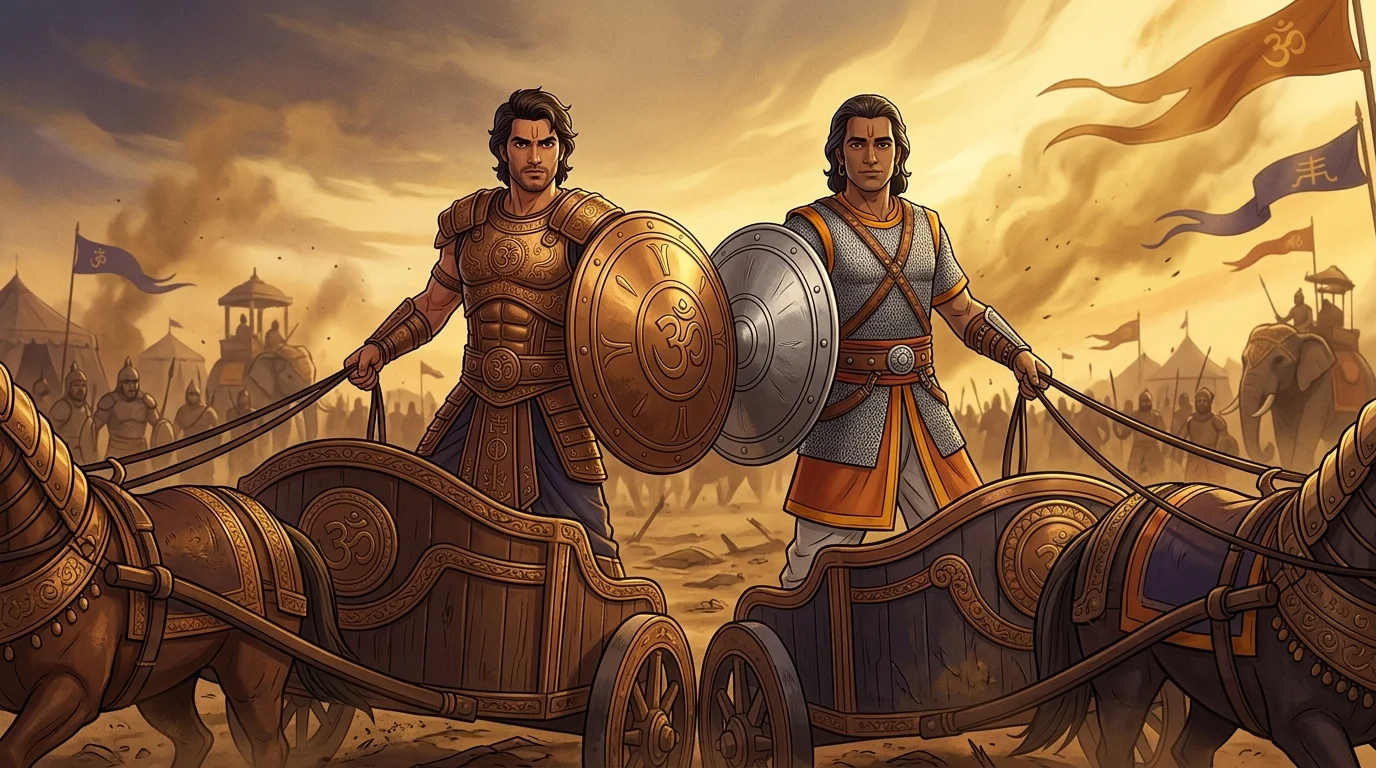
Purujit is the conqueror of the three bodies: Physical, Subtle, and Causal (स्थूल, सूक्ष्म, कारण). Kuntibhoja is victory over worldly illusion through selfless duty.
Purujit and Kuntibhoja—veteran kinsmen of Kunti! Two ancient fortresses standing side by side!
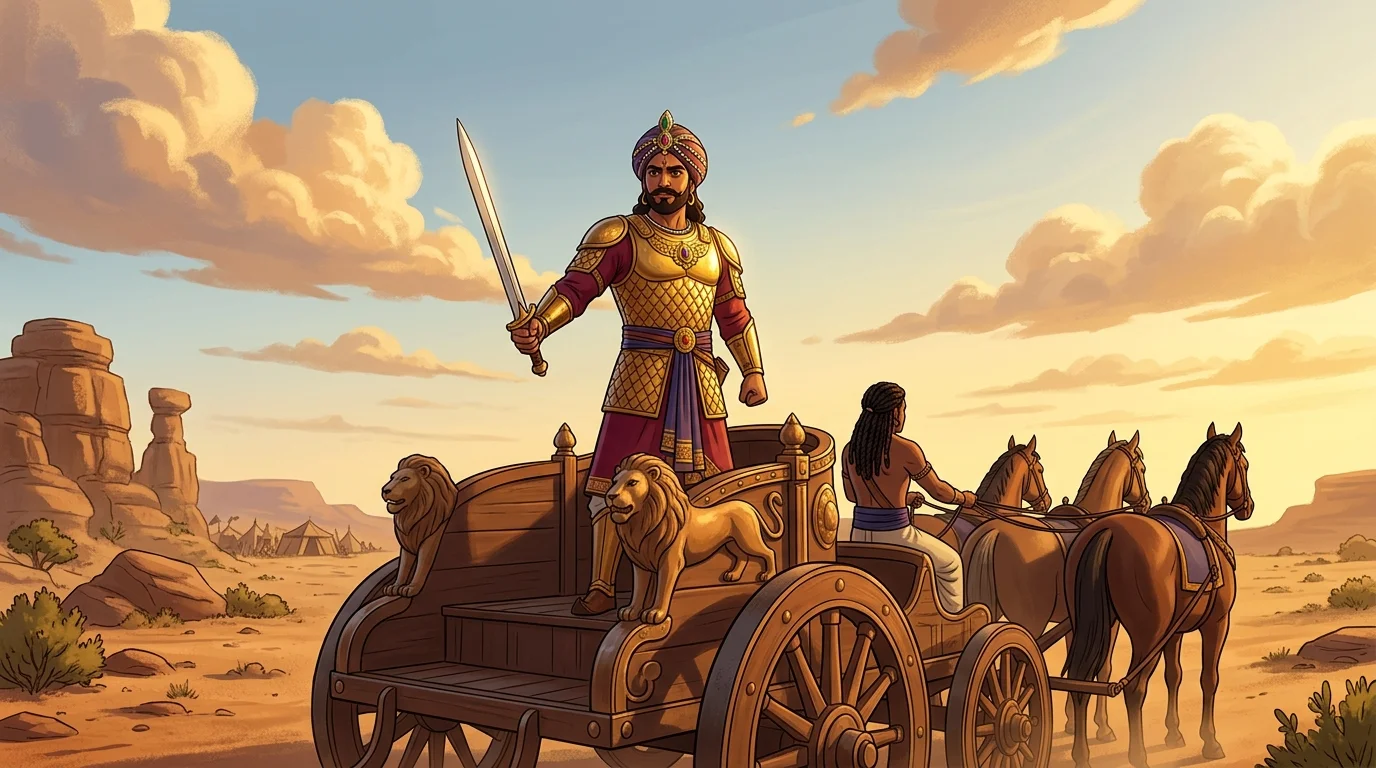
Shaibya: 'Nara-pungava'—The lion among men, embodying Satya Vyavahar (सत्य व्यवहार), truthful and noble conduct that never compromises with vice.
And Shaibya—the lion among men! Revered across Aryavarta for his stainless honor, yet defying my throne!
Sacred Passion and the Offspring of Meditation
श्लोक ६: शुभ की मस्ती और ध्यानरूपी द्रौपदी के पुत्र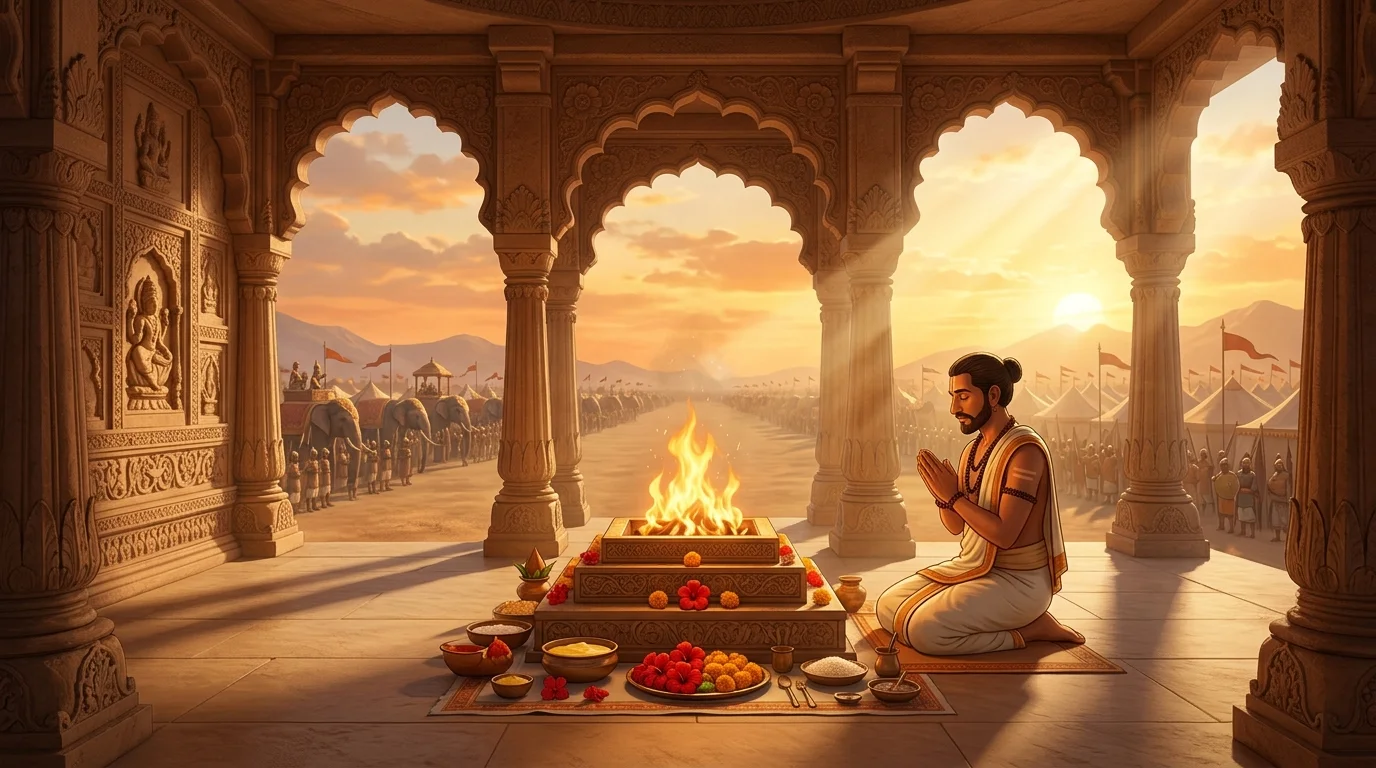
Shloka 1.6 completes the divine vanguard: Martial readiness of the mind, the pure ecstasy of righteousness, divine fearlessness, and the five fruits of Meditation.
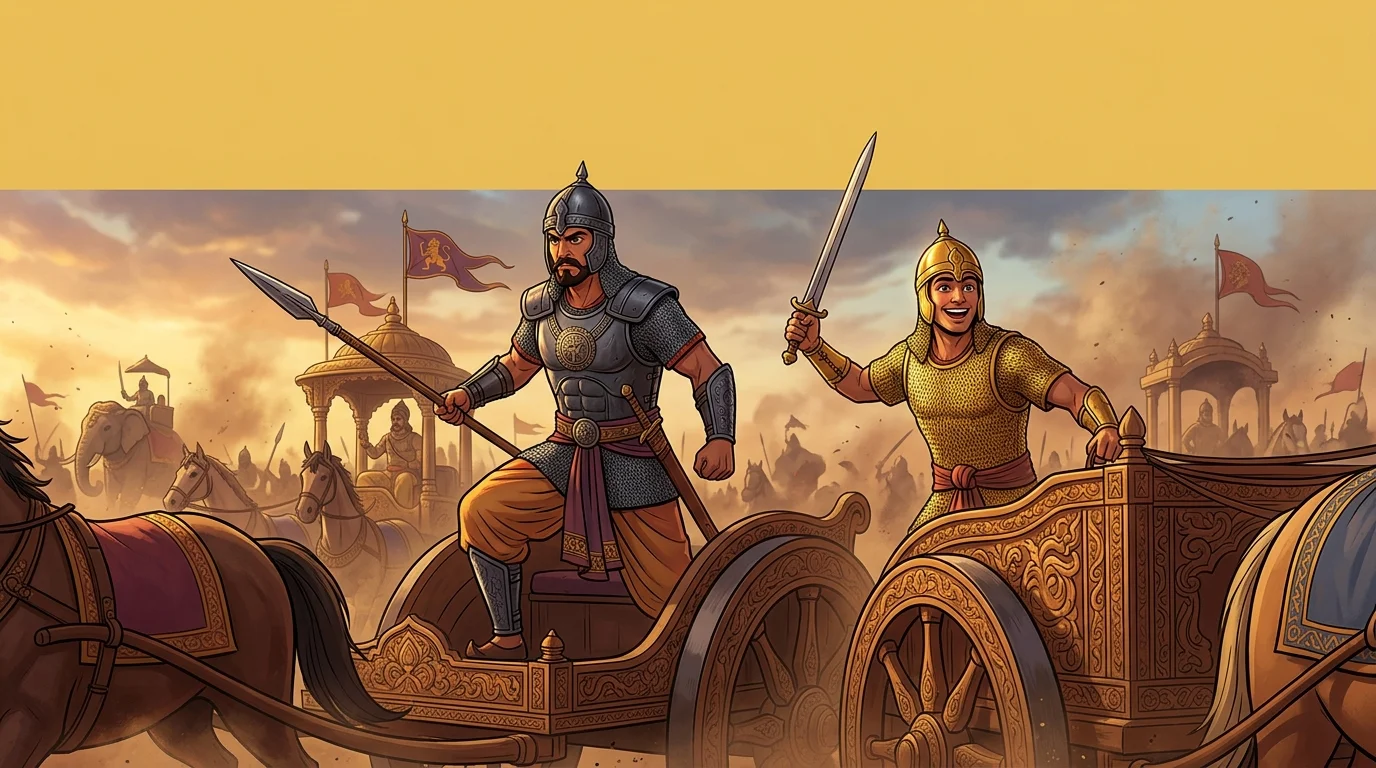
Yudhamanyu is 'Yuddhanurupa man ki dharna'—the mind conditioned for spiritual warfare. Uttamauja is 'Shubh ki masti'—the sublime ecstasy of walking the righteous path.
Yudhamanyu the fierce and Uttamauja the mighty! Stationed like twin sentinels at Arjuna's chariot wheels!
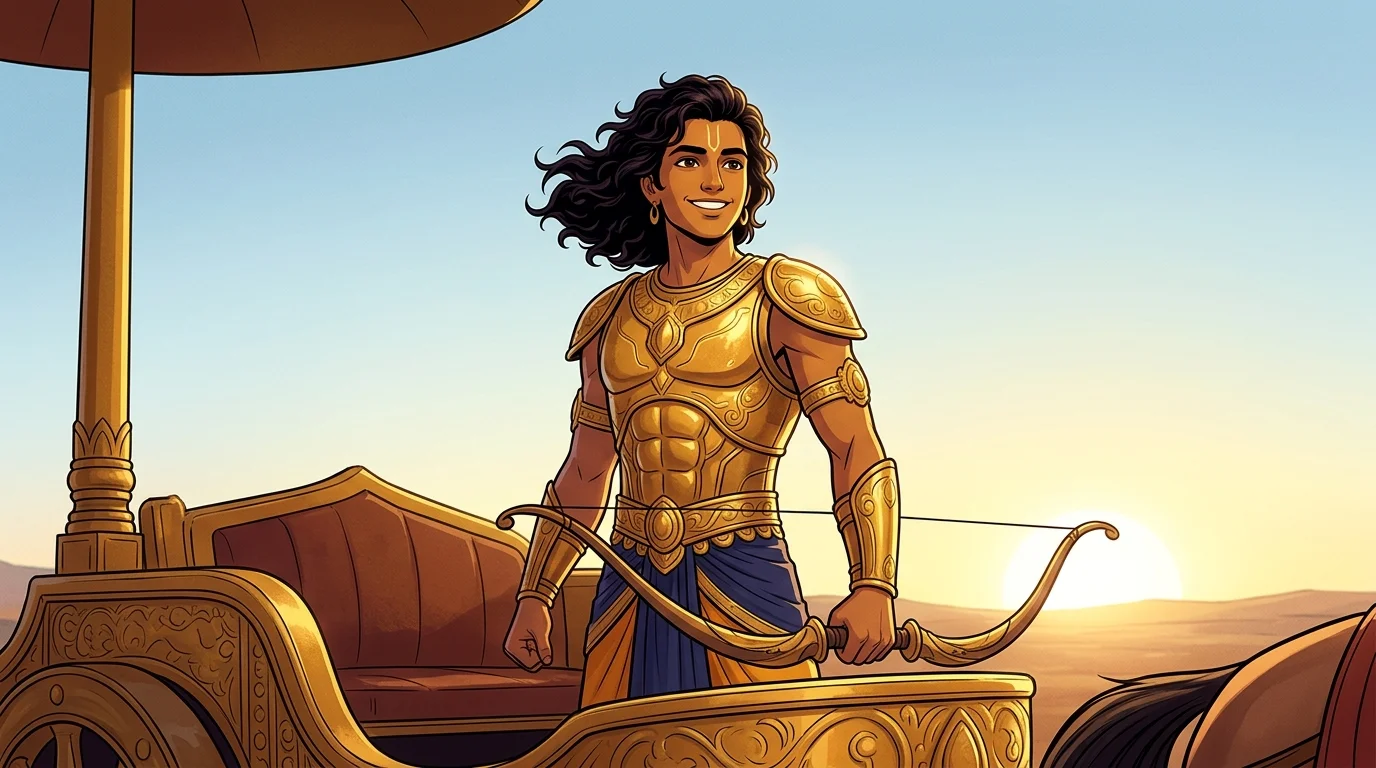
Abhimanyu is the Fearless Mind born of a sacred foundation ('Shubh aadhar se utpanna abhay man'). Anchored in the Divine, the soul laughs in the face of death.
And that boy Saubhadra! Arjuna's son Abhimanyu! Look at his face... he smiles upon our eleven divisions as though war were child's play!
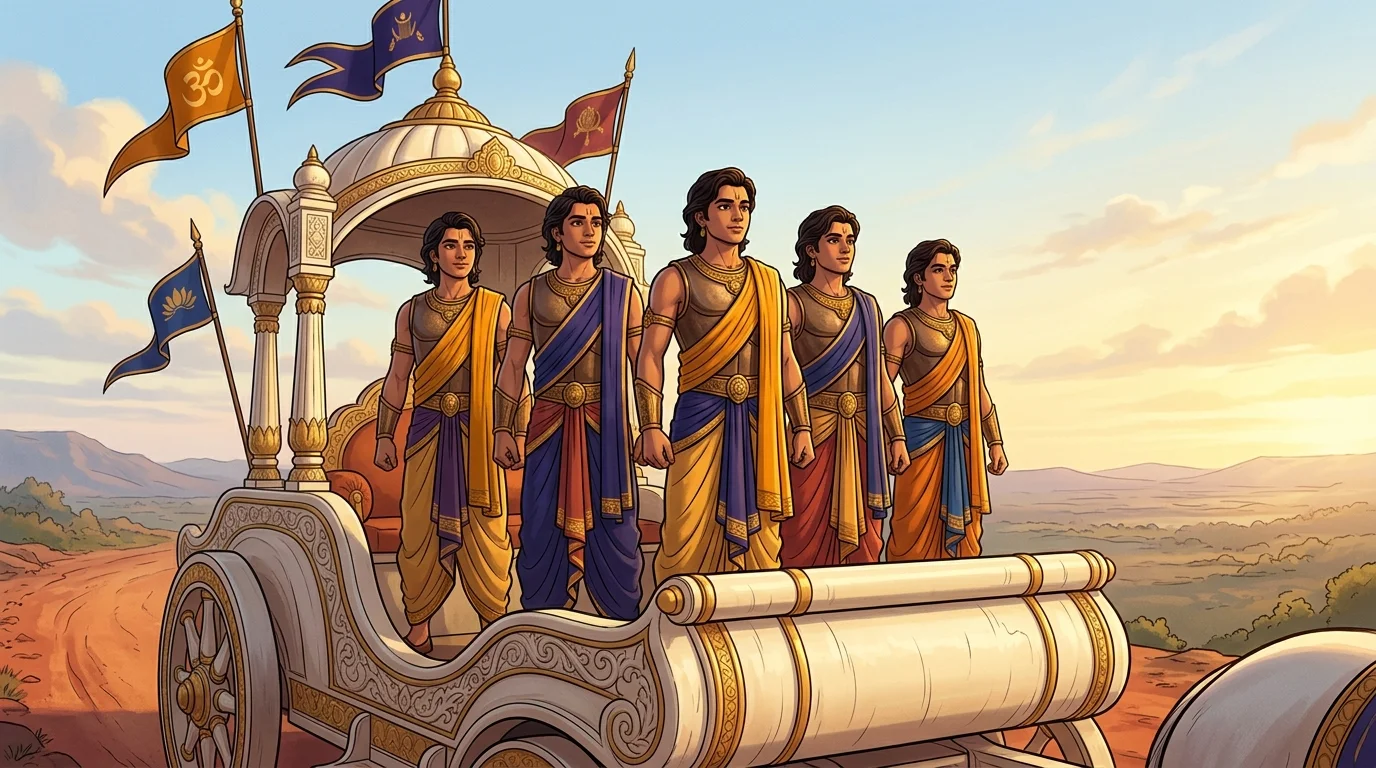
Swami Adgadanand reveals: Draupadi is Dhyana (ध्यान—Continuous Meditation). Her five sons are the five spiritual fruits born of deep contemplation.
And Draupadi's five sons! Born of five fathers, yet marshaled under a single heart, unbroken and untouchable!
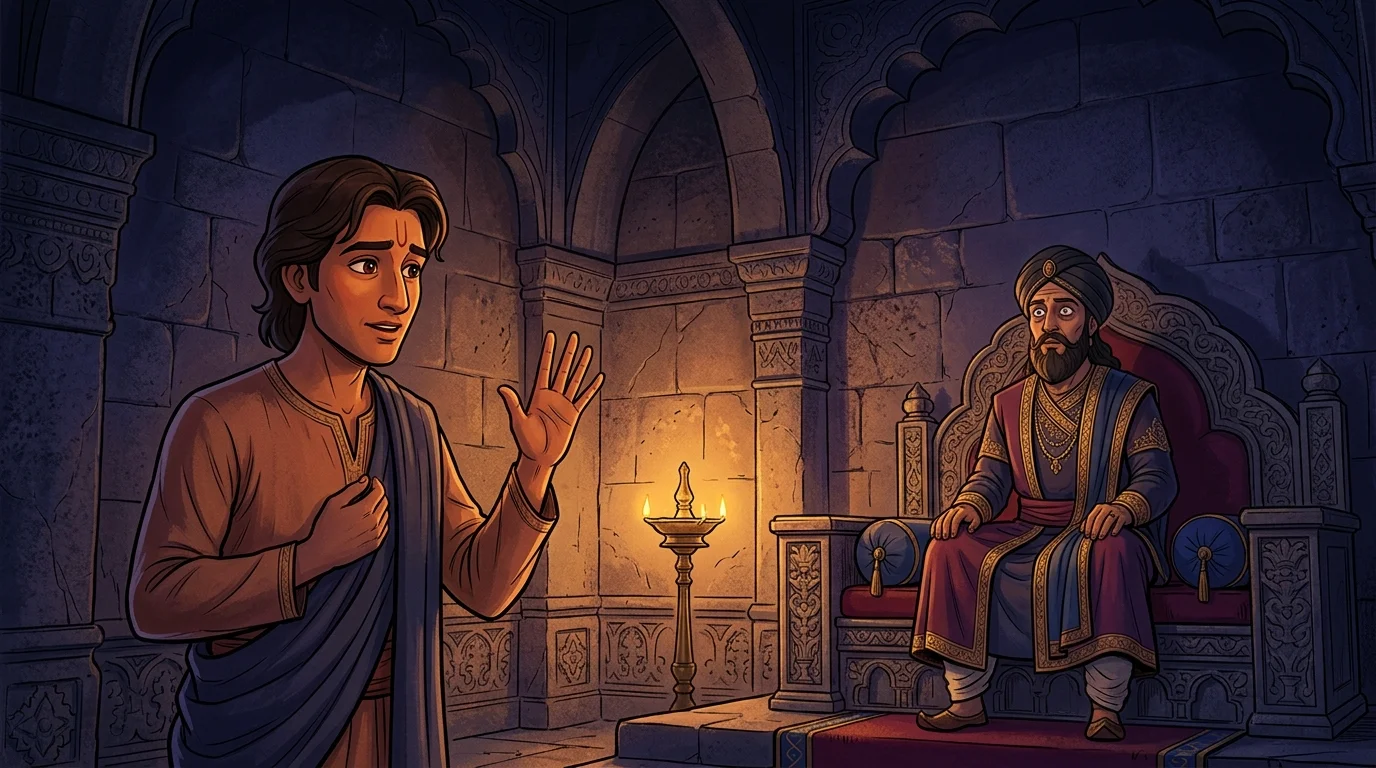
True meditation is not empty void; it is the fertile womb of the soul. From Dhyana arise the tender yet indestructible qualities that disarm every vice.
When meditation deepens, O King, it bears five sacred sons: Spiritual Affection (Vatsalya), Soul Radiance (Lavanya), Compassion (Sahridyata), Gentleness (Saumyata), and Equanimity (Sthirata)!
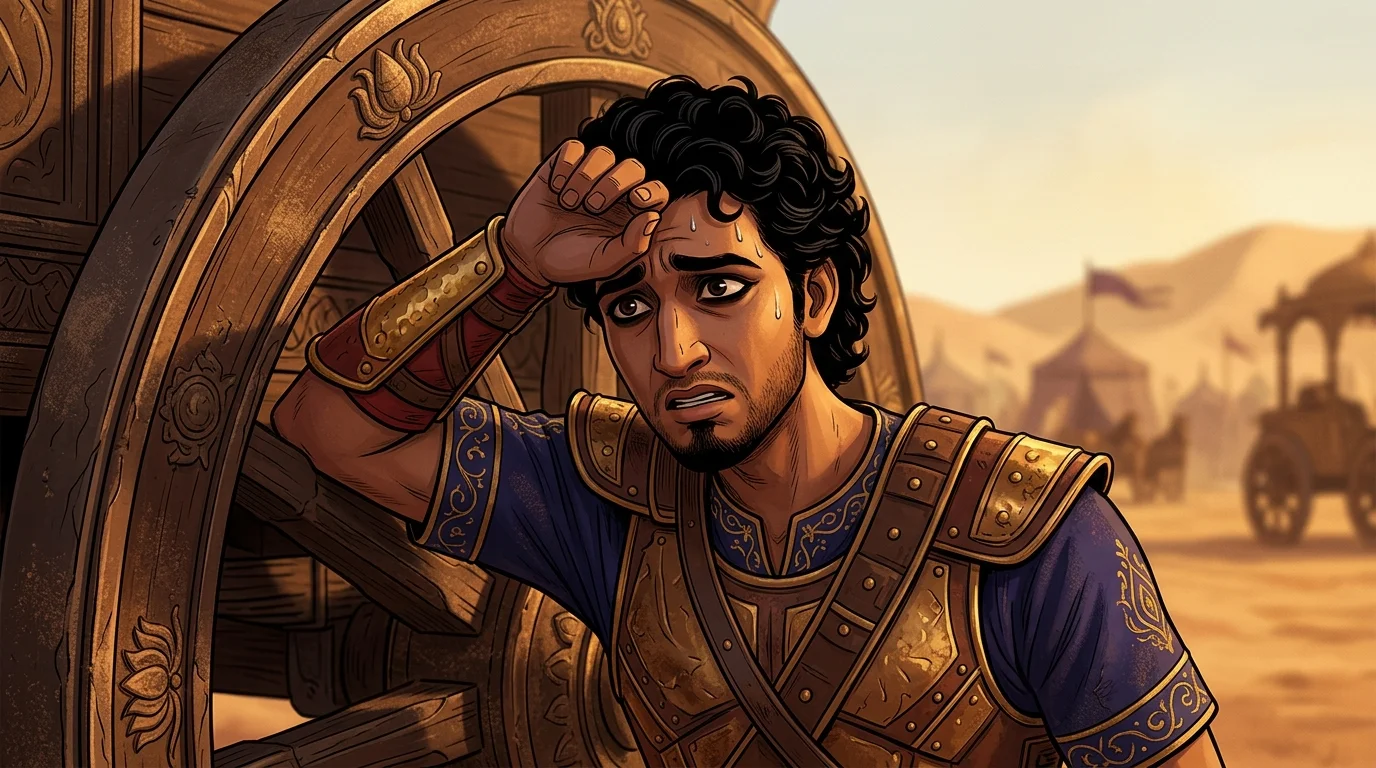
Delusion mocks gentleness, yet shudders before it. Moha senses instinctively that physical violence can never crush pure spiritual virtues.
Affection! Gentleness! Soul beauty! These are the songs of hermits, not weapons of war! Yet why... why does their sight chill my marrow?!
Sarva Eva Maharathah — The Enigma of Moha
सर्व एव महारथाः: मोह की विवशता और सद्गुणों की विजय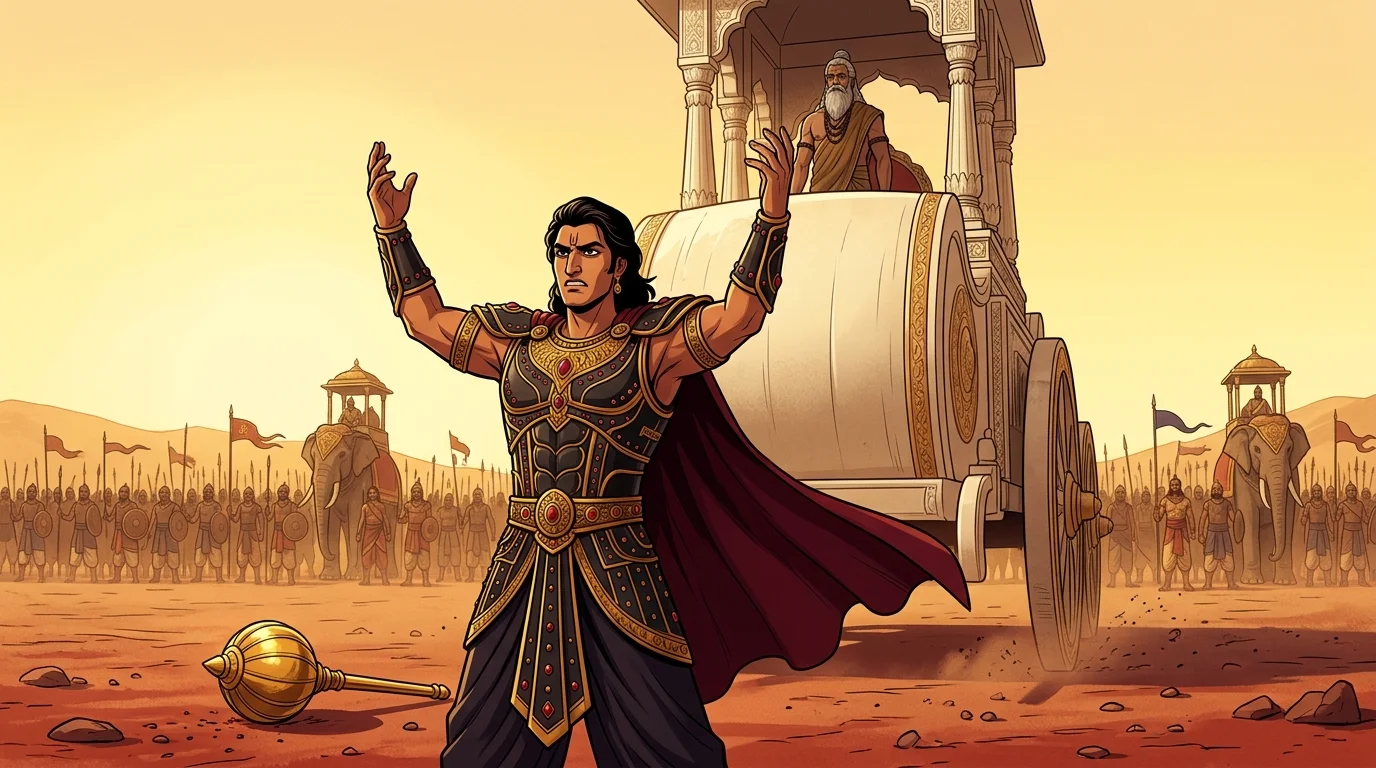
What is a Maharathi? In worldly war, one who fights ten thousand archers. In Sadhana: A spiritual power capable of carrying the seeker through to final liberation.
'Sarva Eva Maharathah!' All of them! Every single warrior in their ranks is a Maharathi! Not a single novice among them!
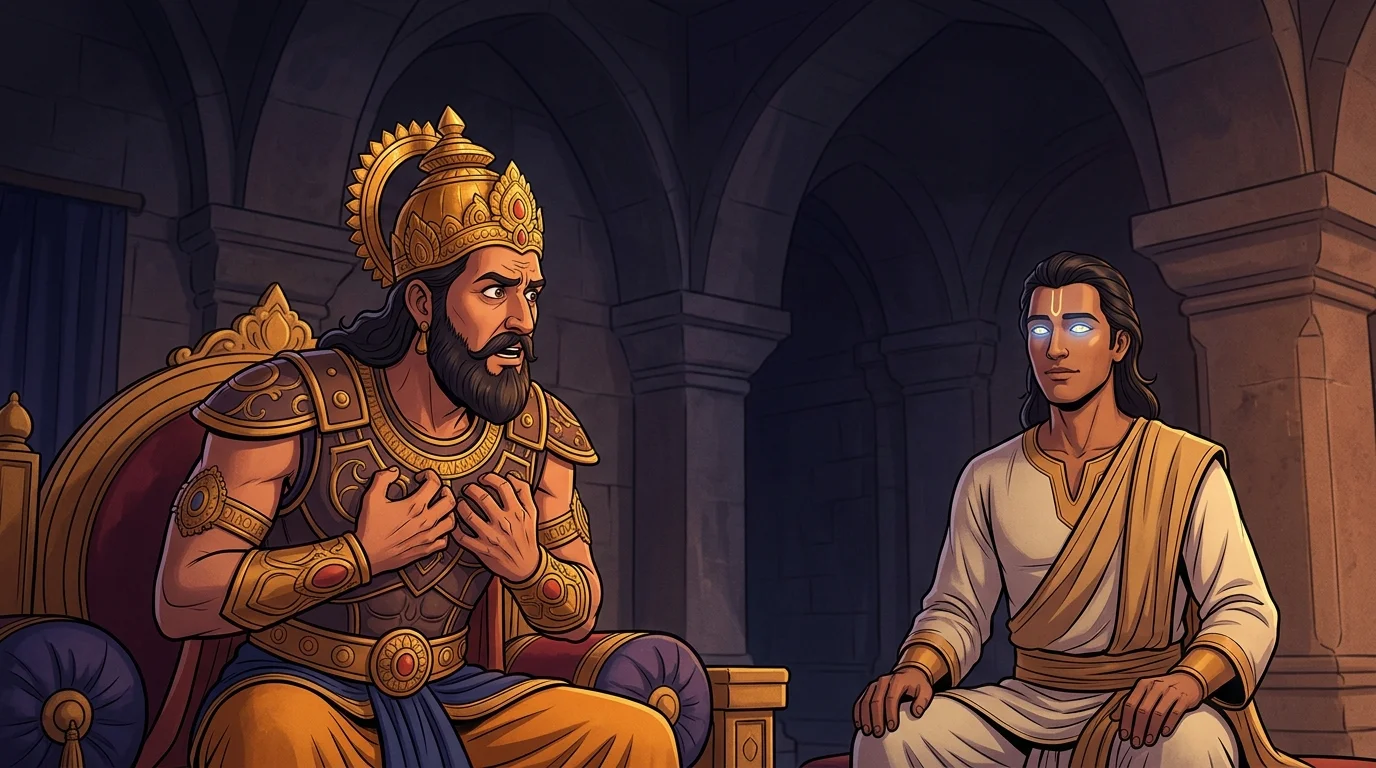
The blind king detects the psychological anomaly: Why does Delusion (Duryodhana) obsessively enumerate the virtues of the enemy instead of boasting his own?
Sanjaya! He has named nearly twenty champions on the Pandava side! We hold eleven vast divisions—why does my son dwell solely upon the enemy?!
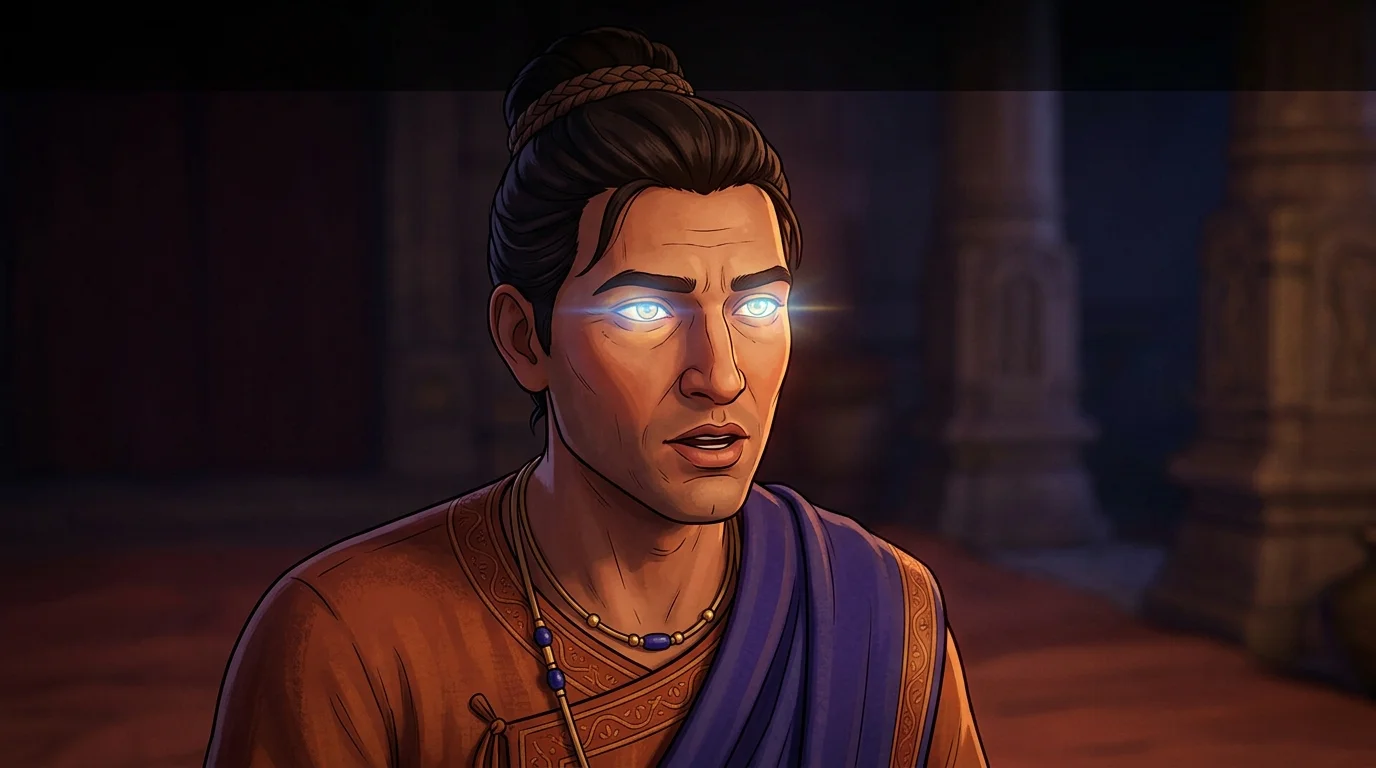
Swami Adgadanand's master insight: Delusion names 15-20 divine virtues because they are real and lasting. Vices are few and doomed; they cannot stand before the organized Spirit.
Hear the cosmic mystery, O King! Moha is forced to reckon with virtues because virtues are eternal and unified! Later, when he names your army, he will find barely five or seven vices—for vices are transient, scattered, and born to die!
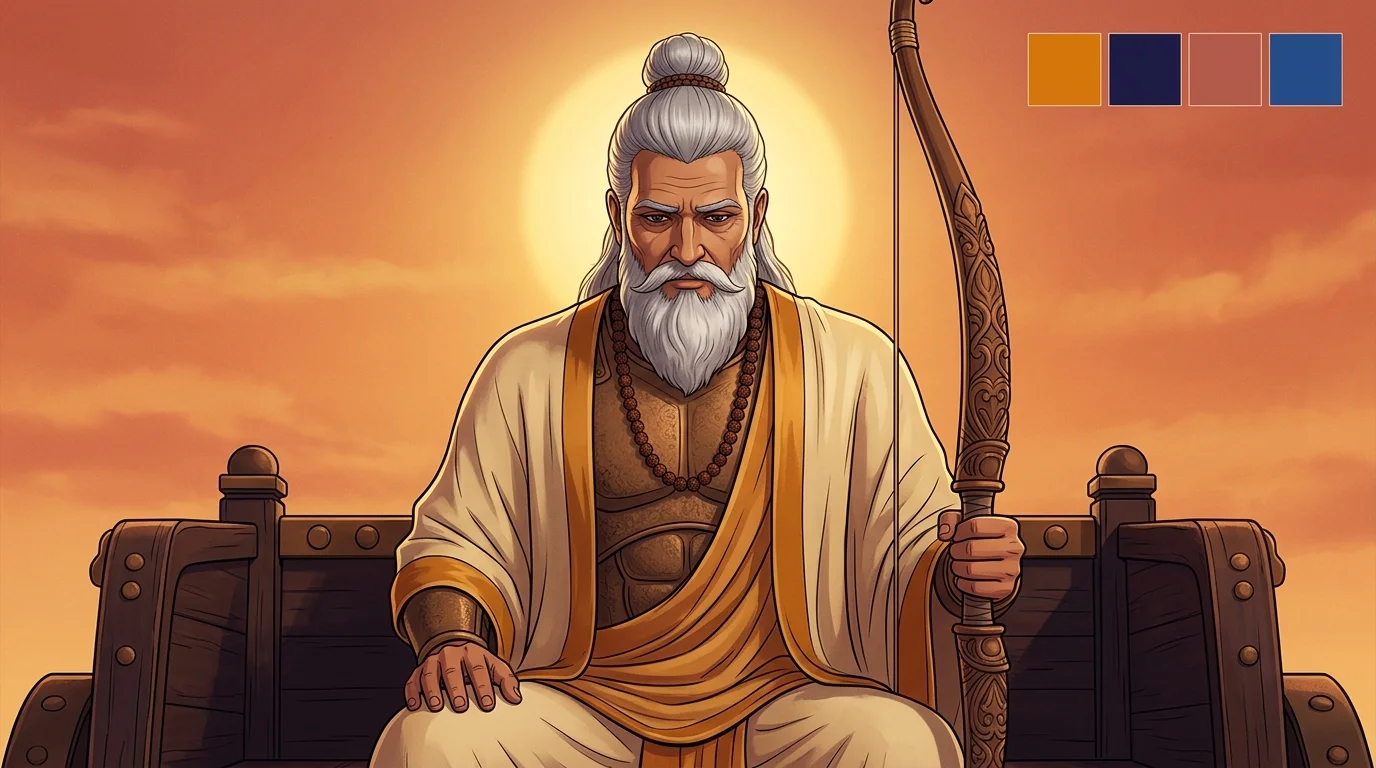
Dronacharya (The Conduct of Duality) delivers the unspoken truth: The preceptor knows that in the war between virtue and vice, truth alone is victorious.
You see an army of enemies, Duryodhana. But Dharma sees the indomitable soul marshaling its forces to return to the Supreme.
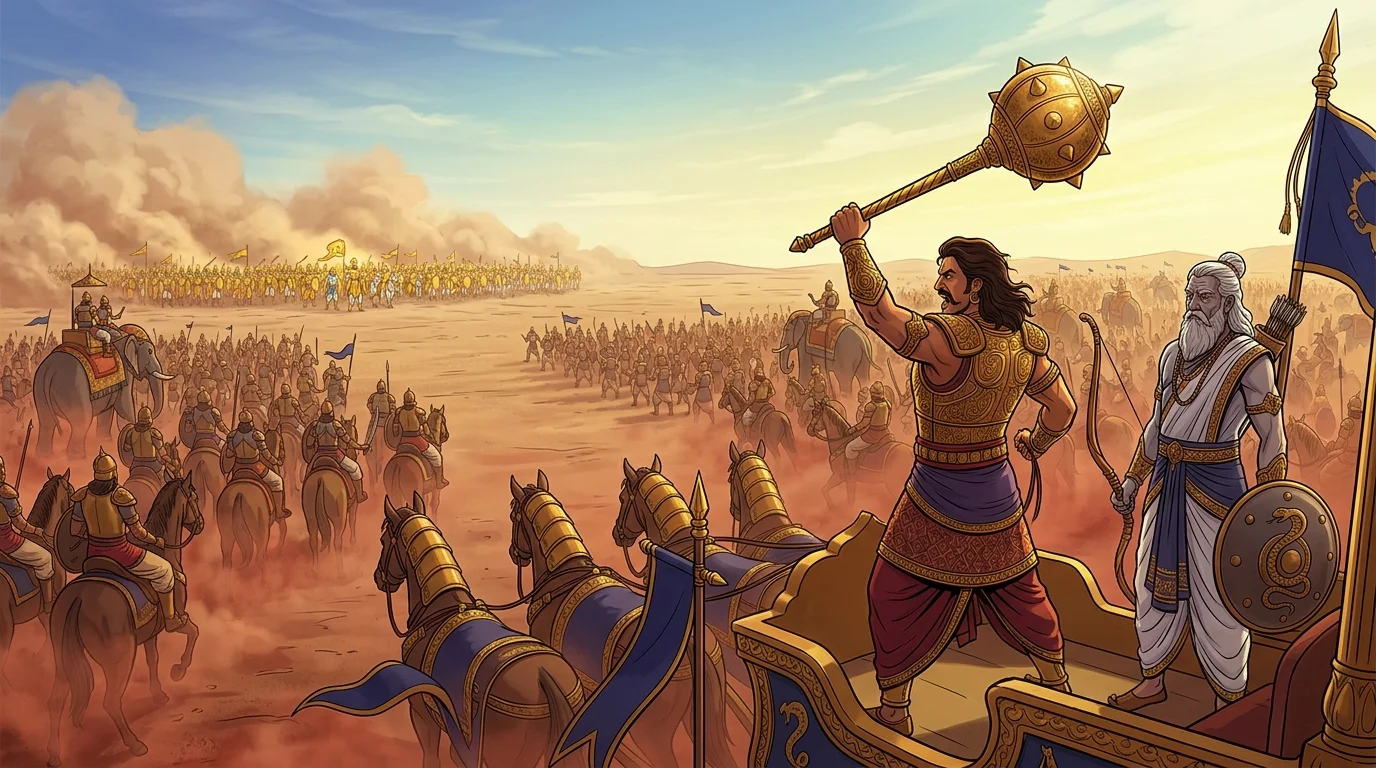
NEXT CHAPTER: The Champions of Vice (Shloka 1.7–1.8). Duryodhana rallies Drona, Bhishma, and Karna—the fragile fortress of sensory delusion!
Enough of their glories! Look now upon our own ranks, Acharya! For I shall name the invincible masters who fight for my throne!