The Twenty-Seventh Statue: Vasumati & The Buried Golden Cauldron
सप्तविंशति पुतली वसुमती: भूमि में गड़ा स्वर्ण-कलश, दो निष्कपट किसानों का अनूठा विवाद और सम्राट का धर्म-न्याय
The Twenty-Seventh Dawn & Vasumati
सत्ताईसवाँ सूर्योदय और वसुमती का प्रबोधन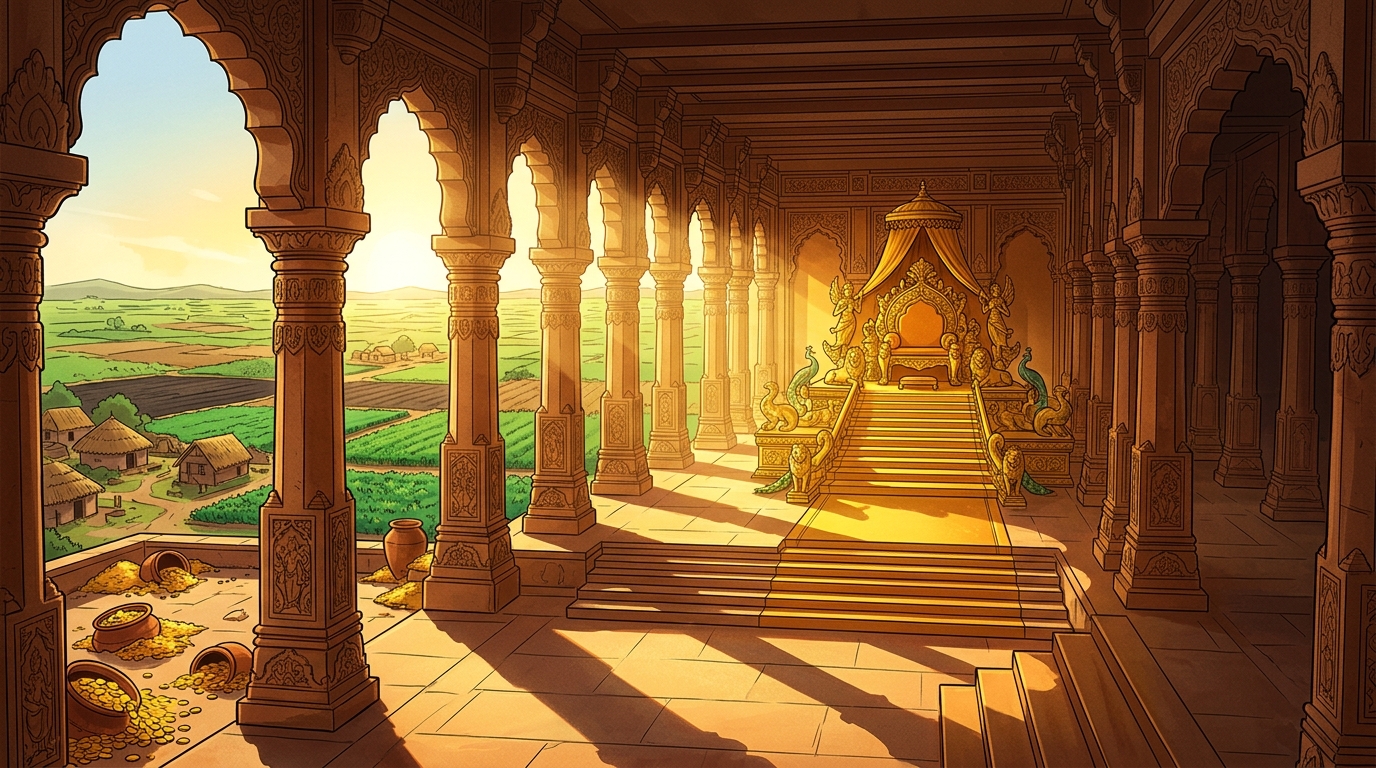
On the twenty-seventh dawn in Dharanagari palace, morning sunlight streamed across the sandstone colonnade onto the thirty-two-step golden throne.
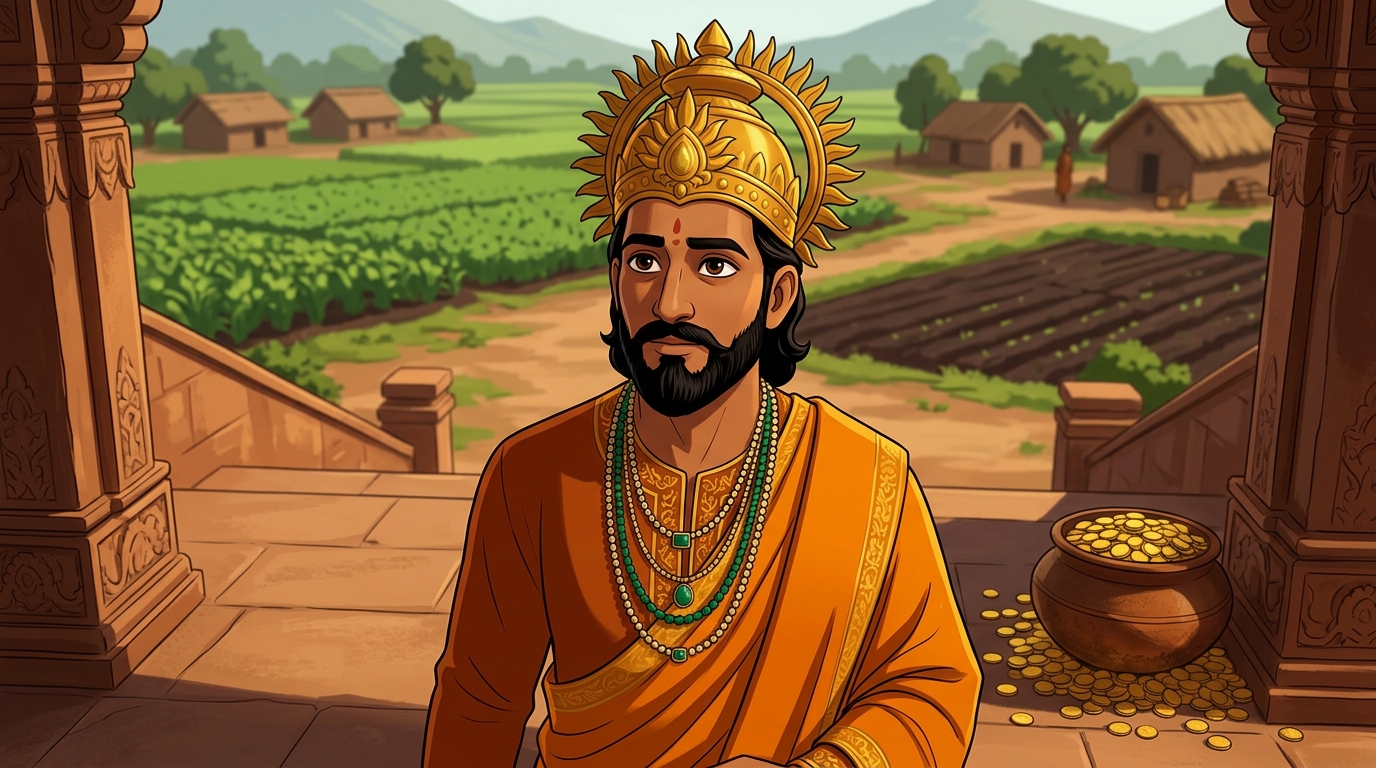
Draped in sacred saffron silks, King Bhoja approached the twenty-seventh step of the golden throne with solemn, reverent stride.
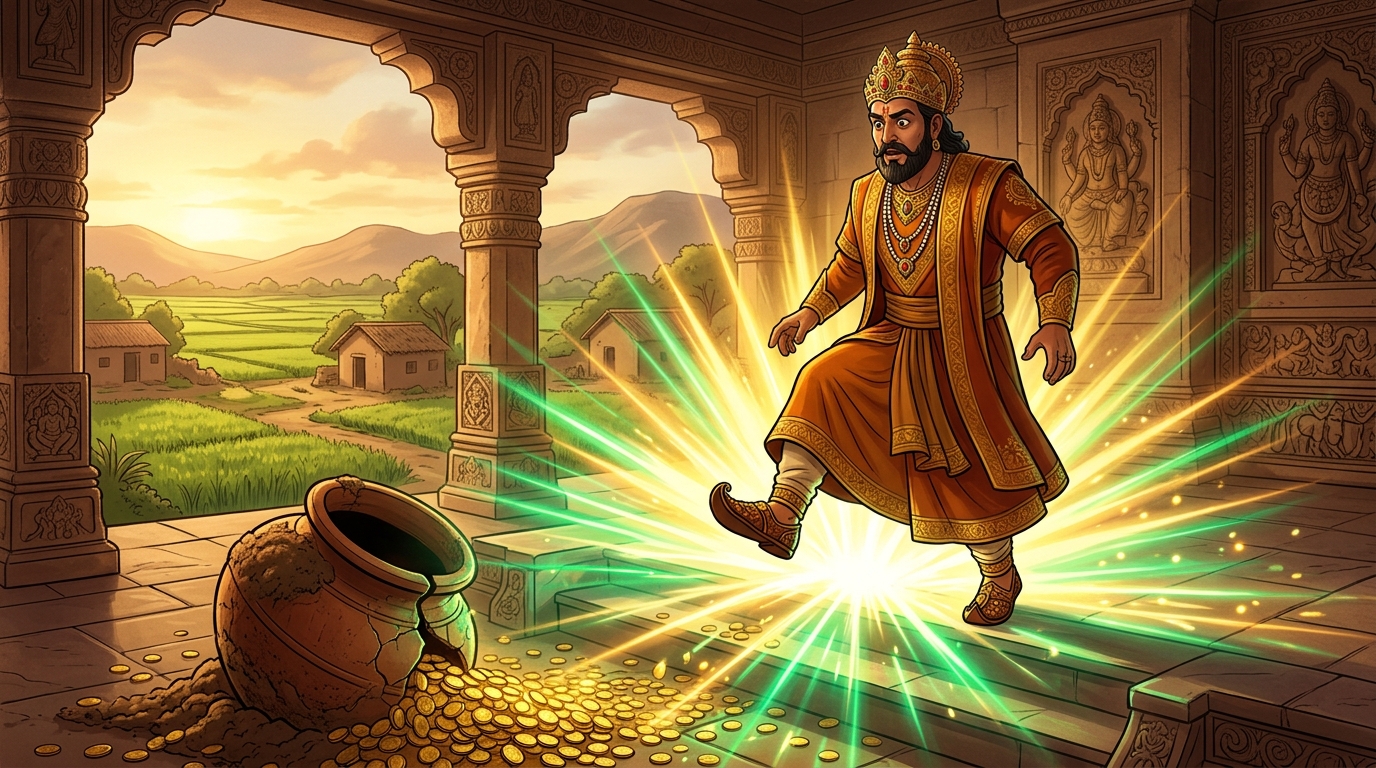
As King Bhoja lifted his right foot toward the twenty-seventh step, the marble dais erupted with brilliant earth-golden and emerald-green radiance!
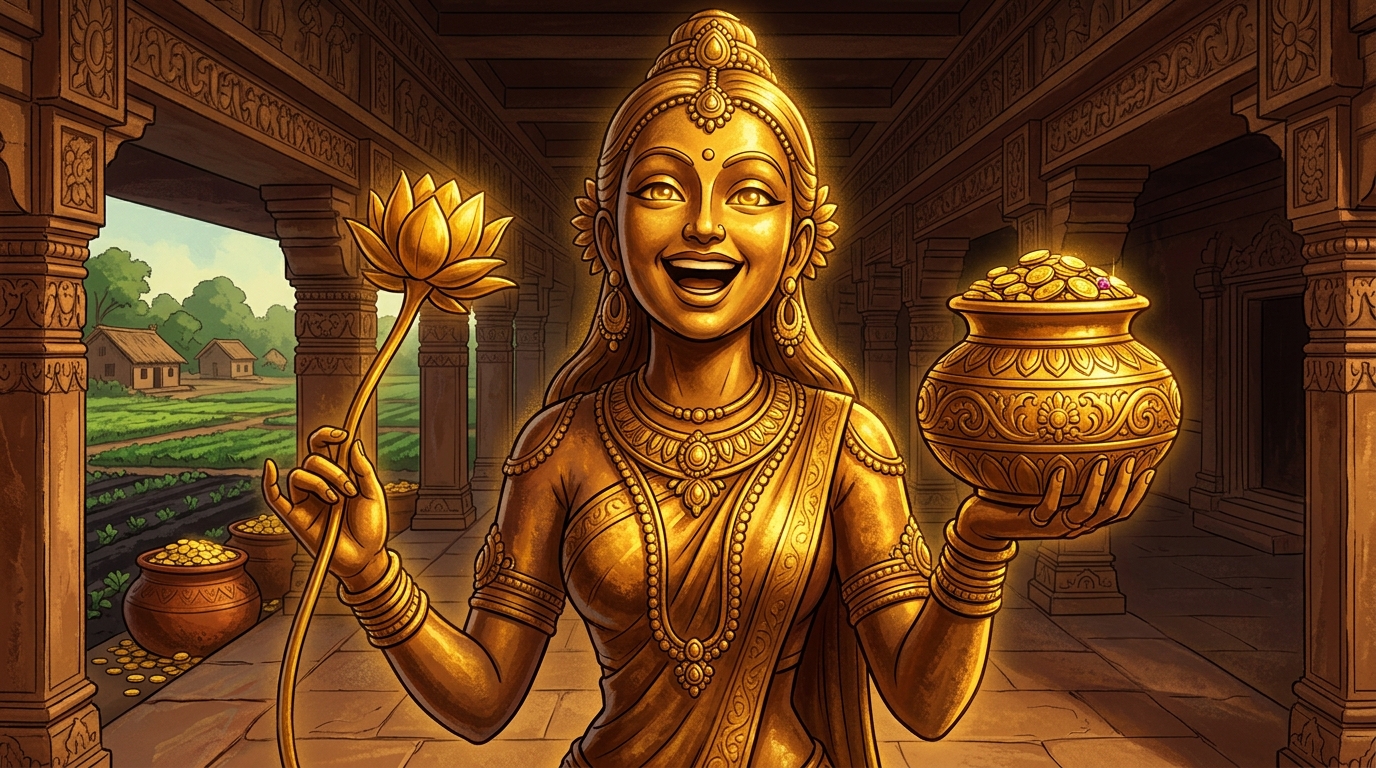
The twenty-seventh carved bronze statue—**Vasumati (वसुमती)**—opened her glowing earth-golden eyes, laughing with melodious temple-bell chime!
"Halt, King Bhoja! Dare not place your foot upon this twenty-seventh step!"
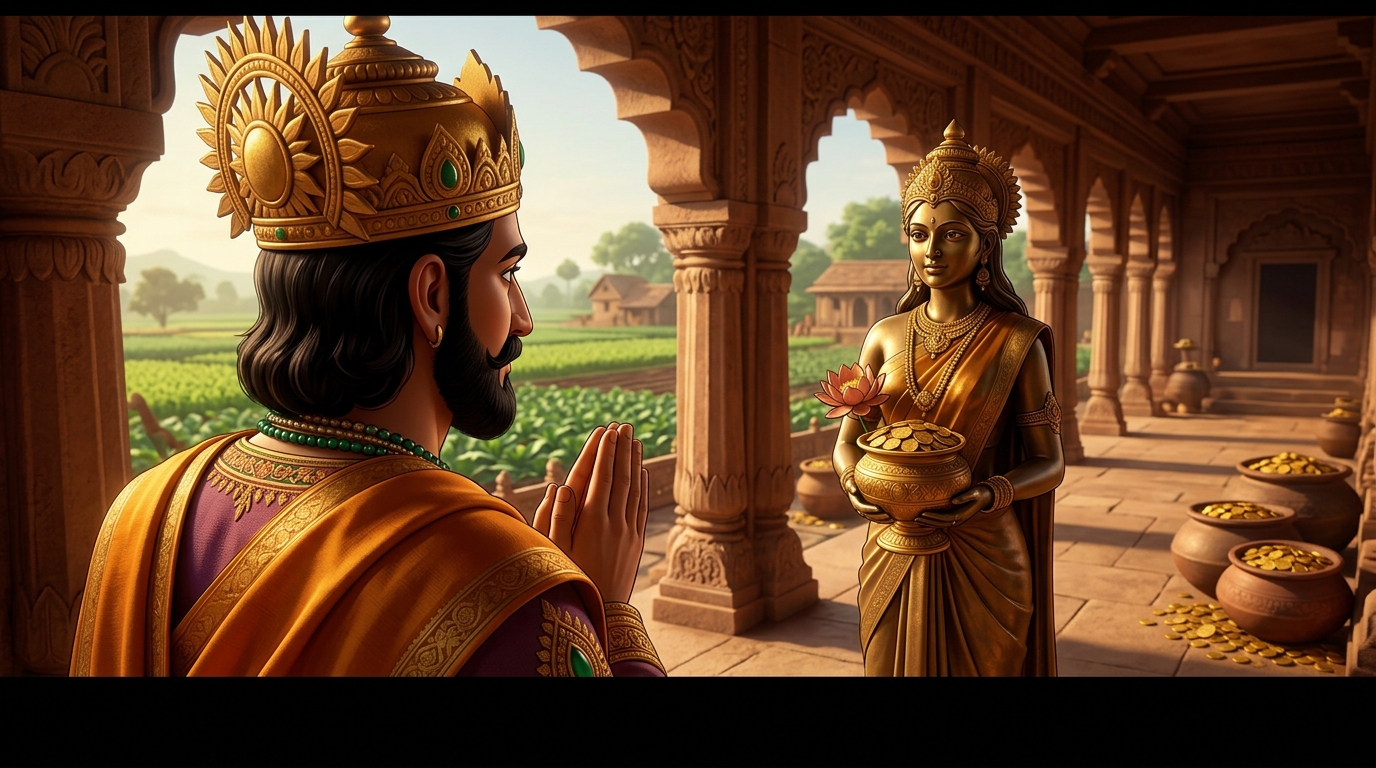
King Bhoja halted in deep reverence with folded hands, gazing in awe at the living celestial bronze maiden holding a golden treasure vessel and blooming lotus.
"O divine Vasumati! What tale of judicial purity and selfless statecraft of Emperor Vikramaditya do you bring today?"
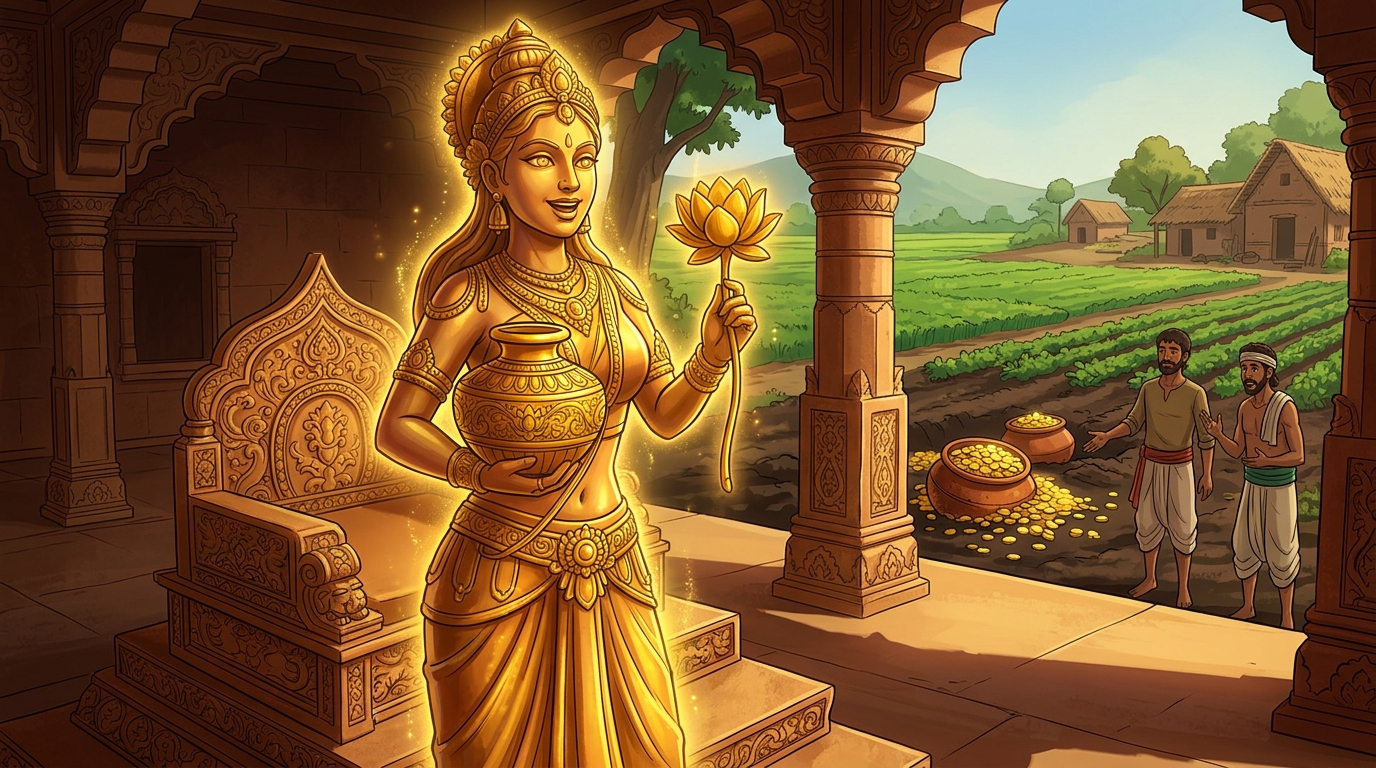
Vasumati raised the golden treasure vessel, speaking with sovereign authority:
"Do you possess the judicial purity of Emperor Vikramaditya when two honest peasants refused to keep a buried cauldron of one million gold coins, and he resolved the dispute without seizing a single coin for the crown, uniting both families in holy matrimony?"
The Sale of the Barren Field & The Unearthed Cauldron
बंजर खेत का क्रय-विक्रय, हल का आघात और स्वर्ण-कलश का प्राकट्य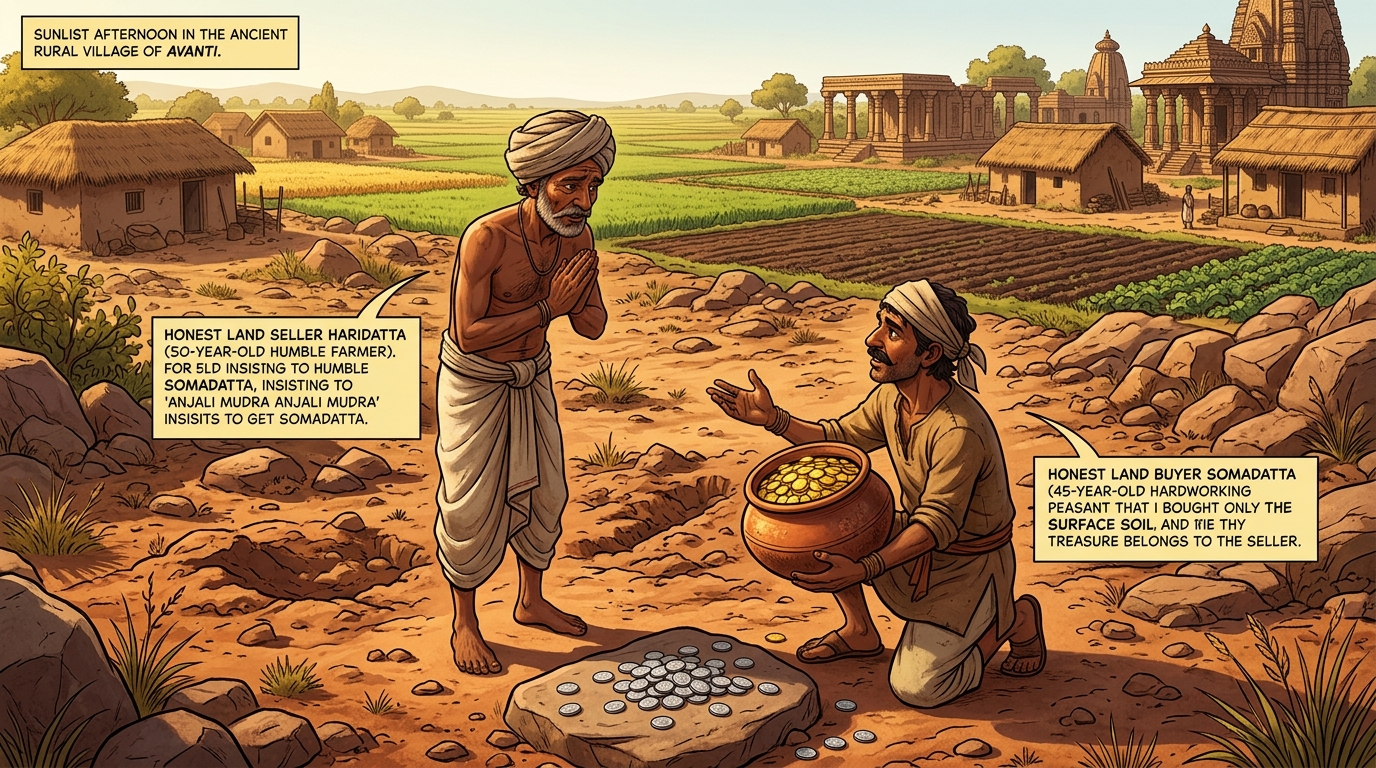
In a peaceful village of Avanti, an impoverished farmer named Haridatta sold a barren, rocky plot of land to his neighbor, honest peasant Somadatta, for fifty silver coins.
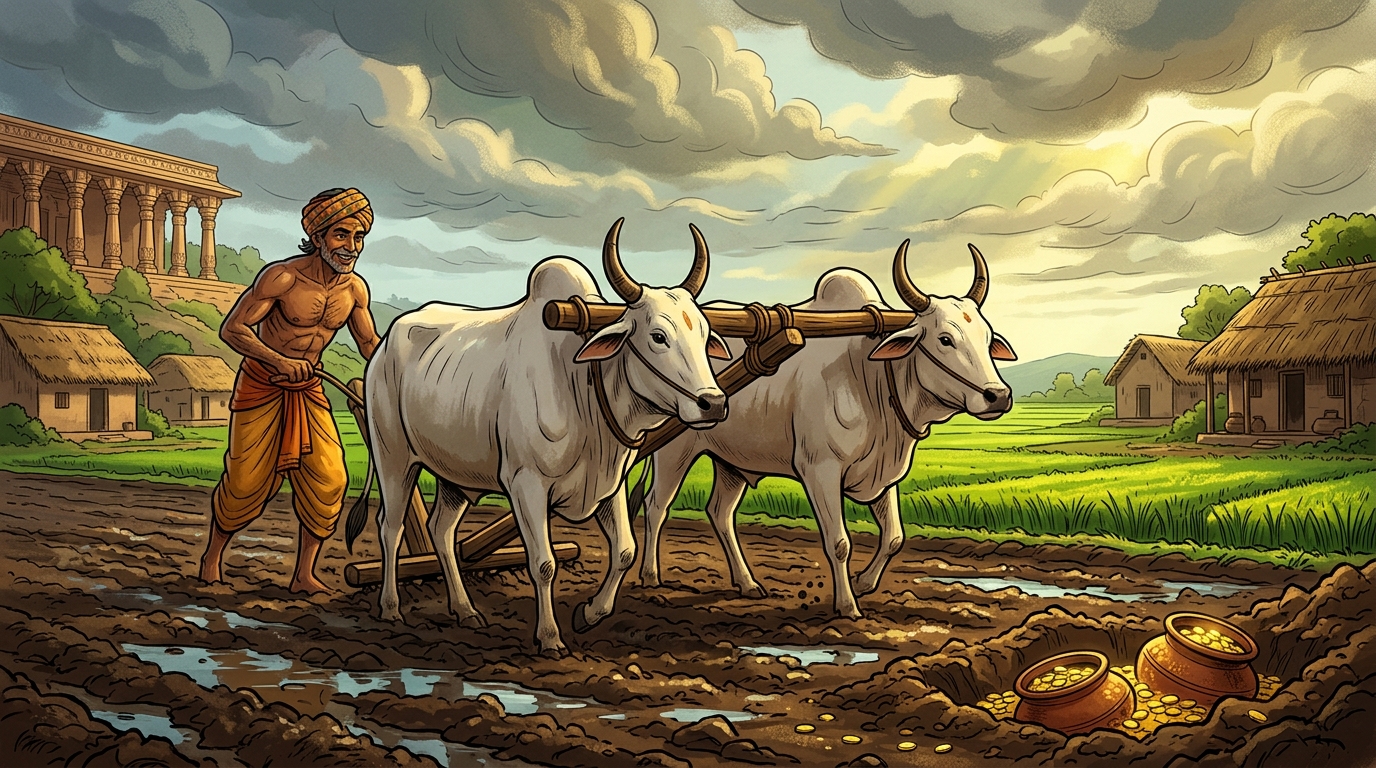
During the first monsoon plowing (*Halakarshana*), Somadatta guided a sturdy pair of white bullocks through the deep, rich soil.
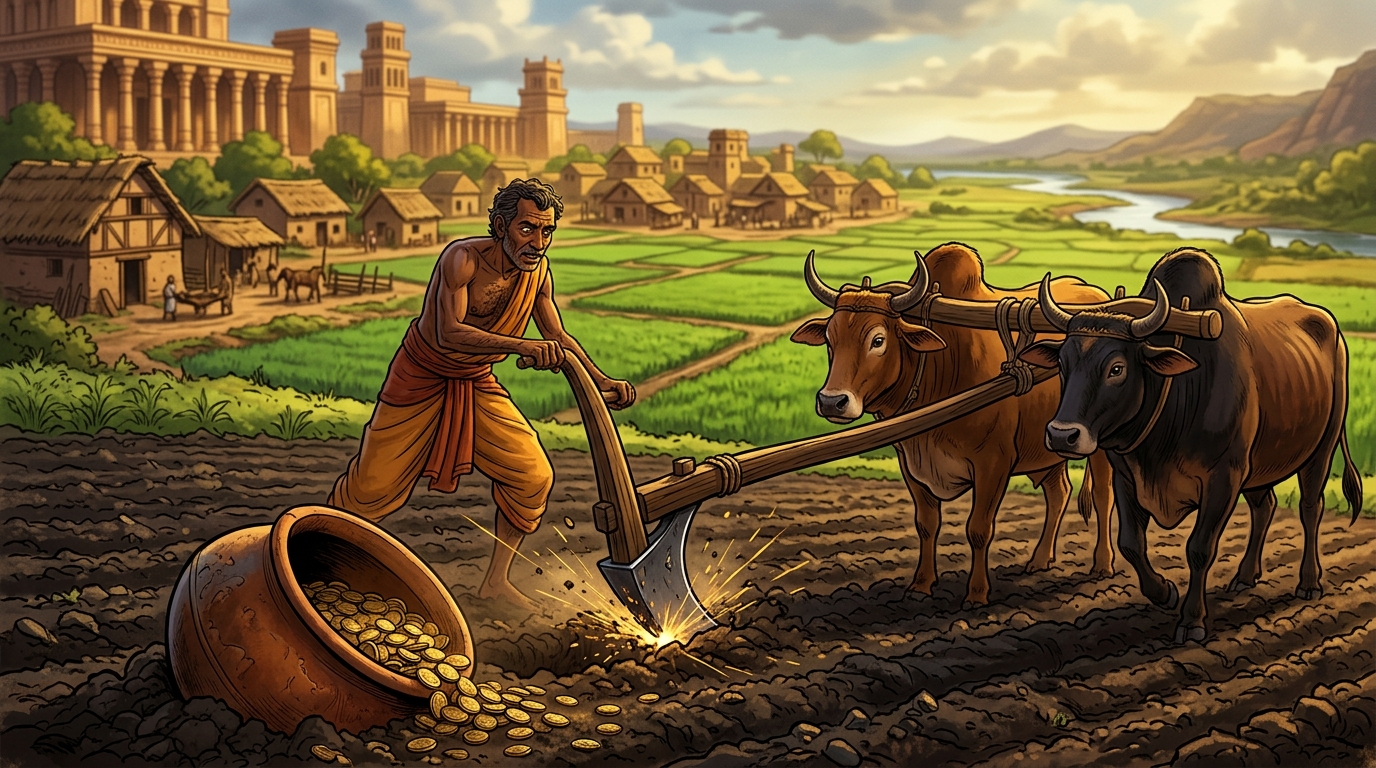
Suddenly, the iron plowshare struck something solid beneath a deep furrow with a sharp metallic clatter, halting the bullocks.
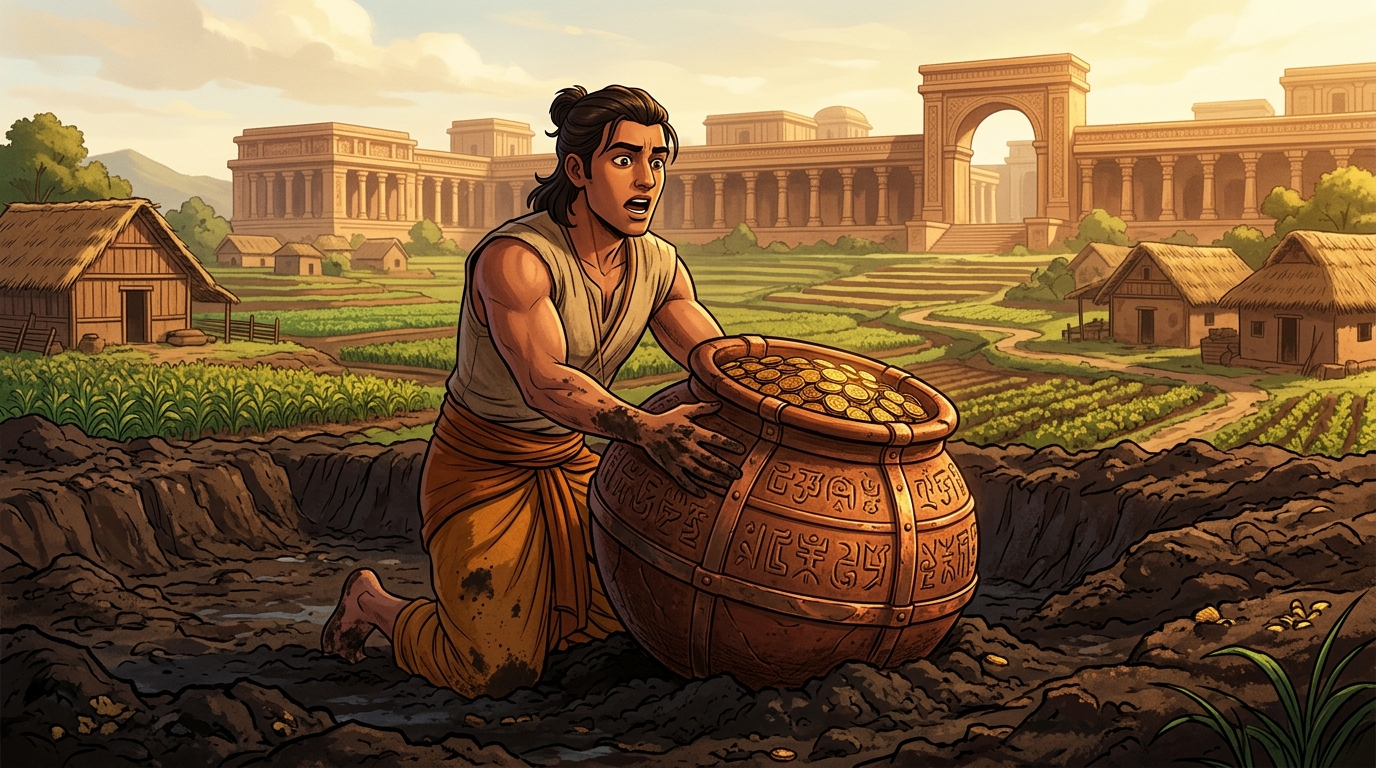
Digging away the black loam with his bare hands, Somadatta unearthed a massive ancient terracotta cauldron bound with thick copper bands.
"Ah! This is an ancient, heavy treasure vessel!"
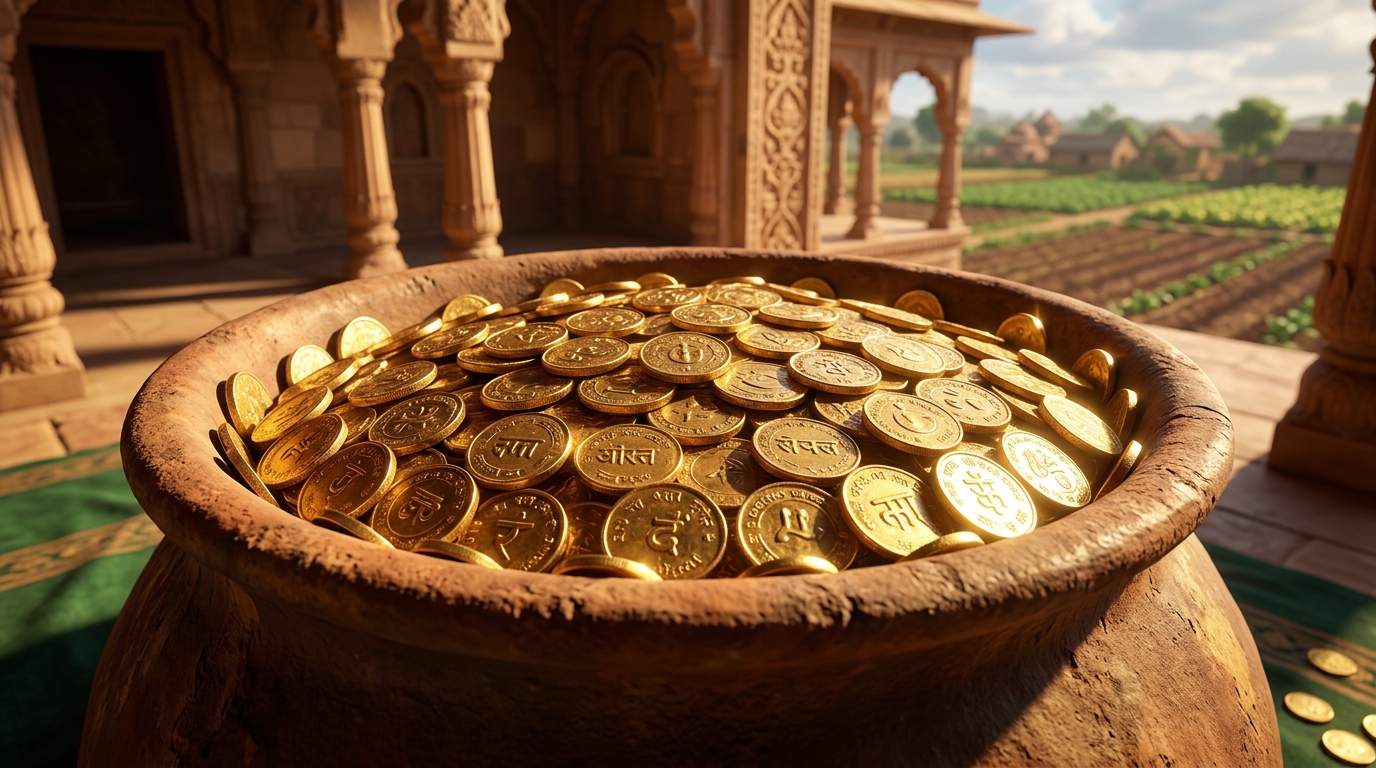
Lifting the lid, Somadatta was stunned: the cauldron was filled to the brim with **one million sparkling ancient gold coins** (*Suvarna-Mudras*)!
"O Lord Narayana! This buried fortune is not mine; it belongs to the ancestors of brother Haridatta!"
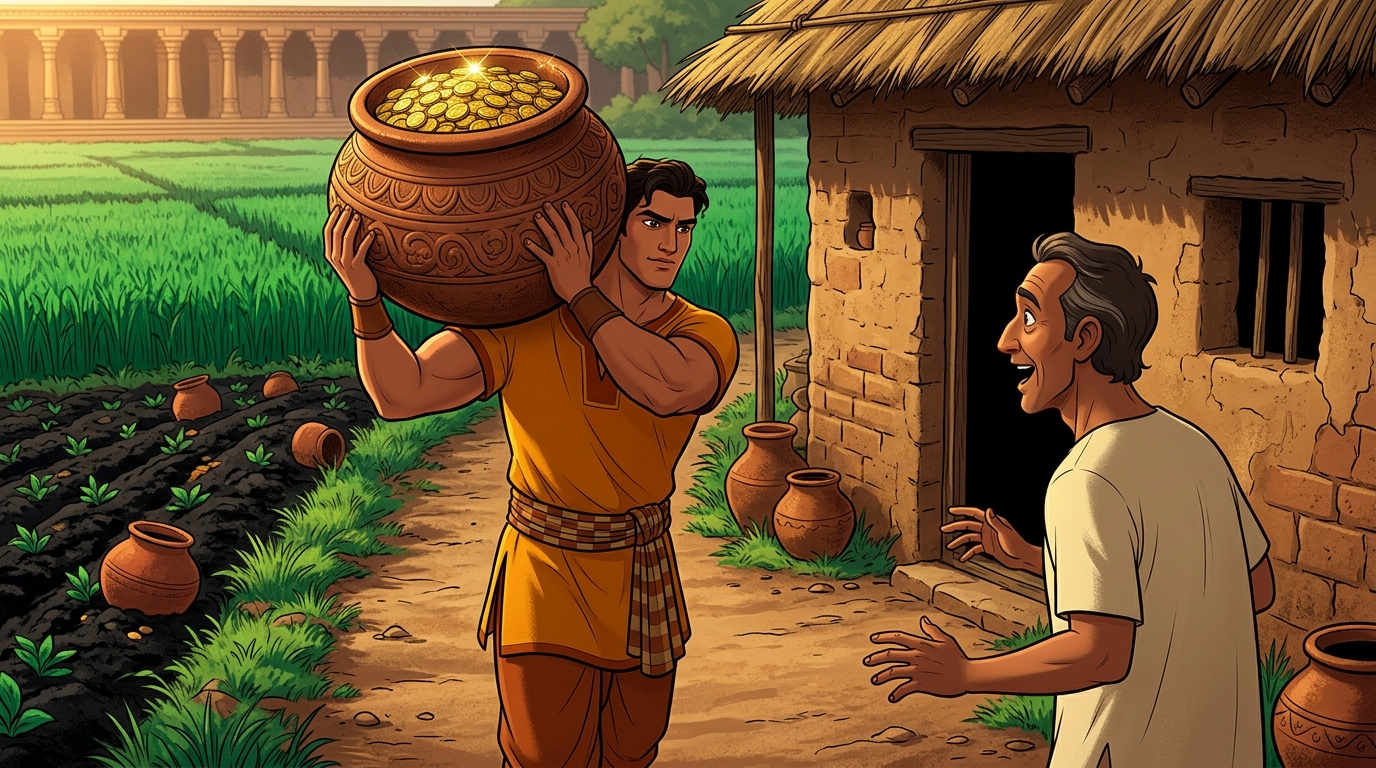
Without a grain of greed, Somadatta lifted the heavy cauldron onto his shoulders, carrying it straight to Haridatta's cottage.
"Brother Haridatta! I bought only the surface soil to grow barley; this buried gold belongs to you and your ancestors!"
The Extraordinary Dispute Before the Imperial Throne
उज्जयिनी की राजसभा और त्याग का अनोखा मुकदमा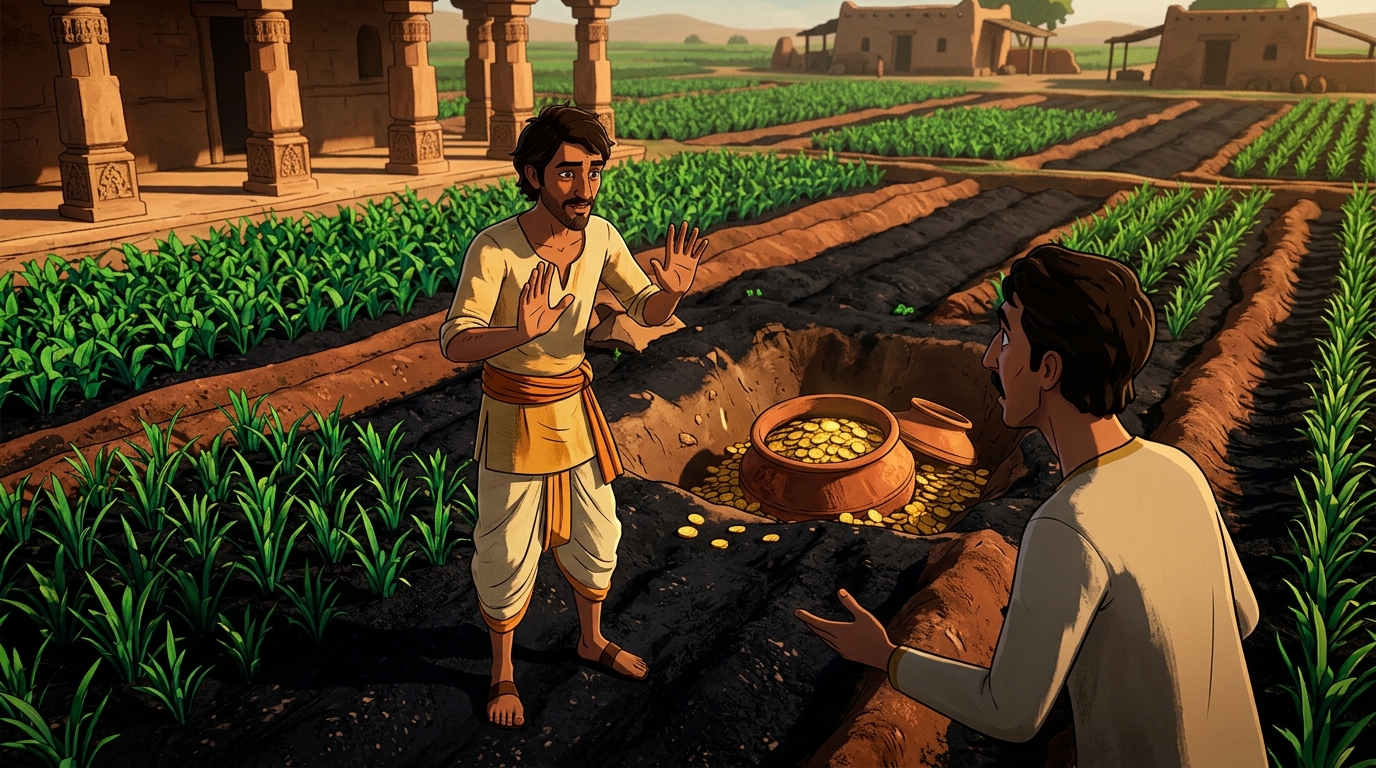
Haridatta refused with equal righteousness: *"I sold the land in its entirety—from the grass on top to the bedrock beneath! The gold was hidden by fate for you; it is a sin for me to touch it!"*
"To take gold from land I have already sold would be a sin against Dharma, Somadatta!"
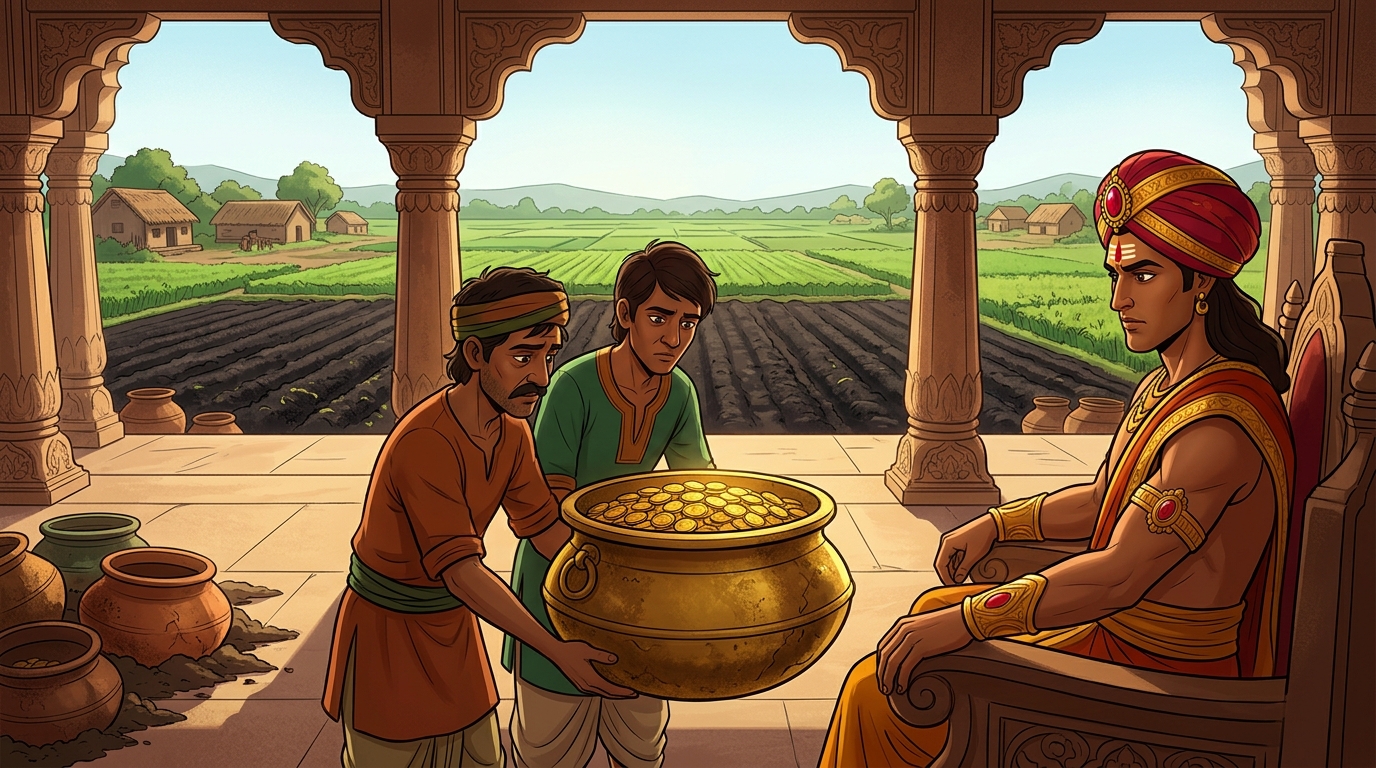
Unable to agree, both honest peasants carried the heavy golden cauldron together into the grand audience hall of Emperor Vikramaditya.
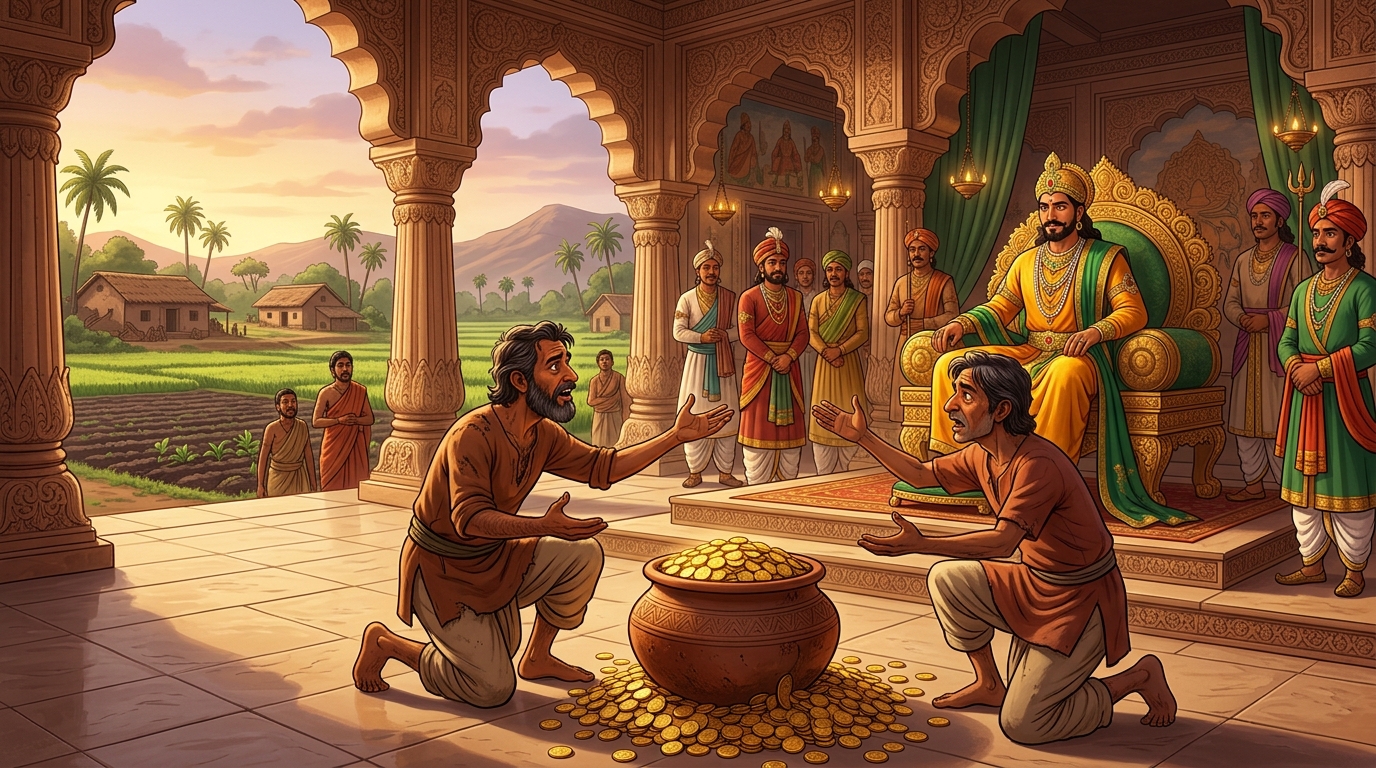
Both peasants knelt before the throne, each passionately pleading with the Emperor to order the other man to take the entire fortune!
"O Emperor! Deliver justice and command him to take this treasure!"
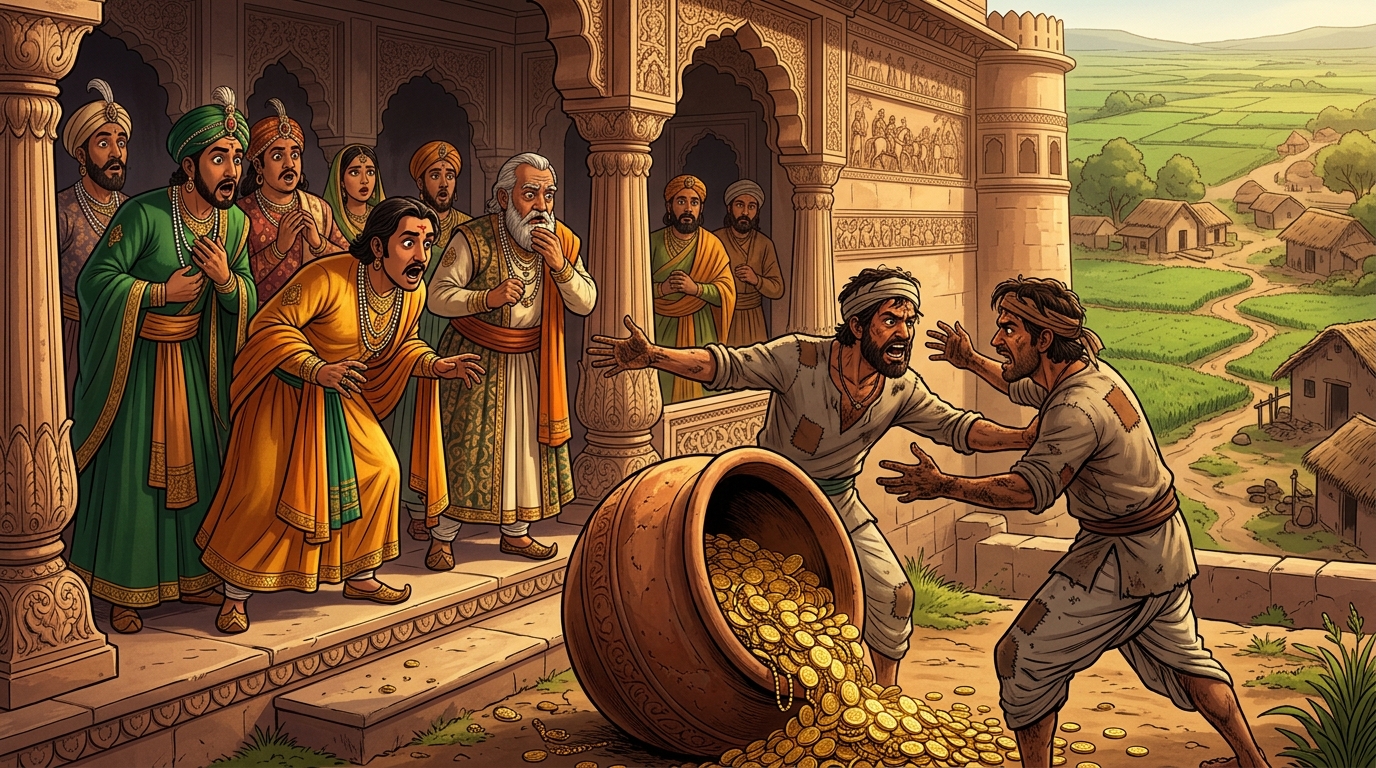
The ministers and nobles looked on in breathless amazement: in every other court on earth, men fought to steal gold, but here two poor peasants fought to surrender a fortune!
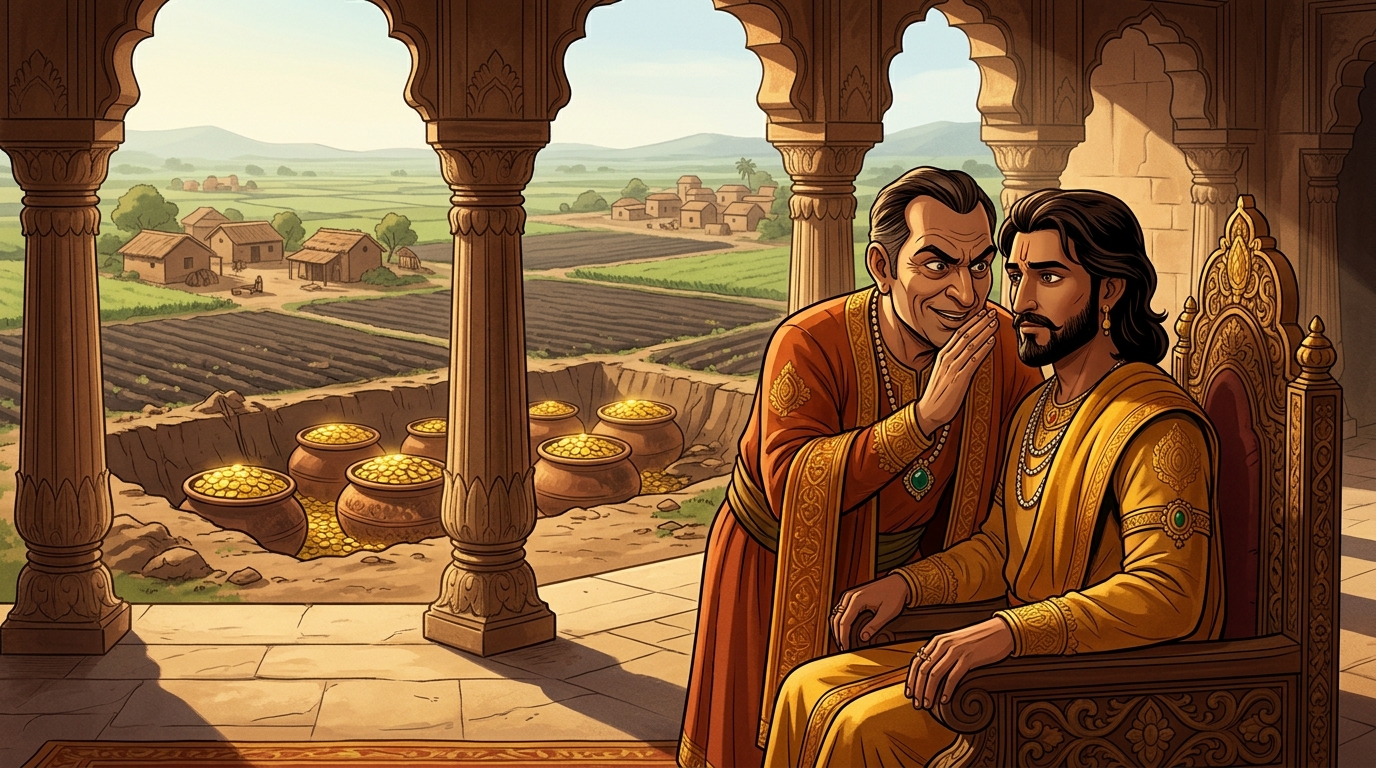
The royal treasurer whispered: *"O Sovereign! Ancient statute declares that unclaimed buried treasure belongs by royal prerogative to the crown (*Raja-Bhoga*); seize the gold for the royal treasury!"*
"These one million gold coins belong by law to your royal treasury, O King!"
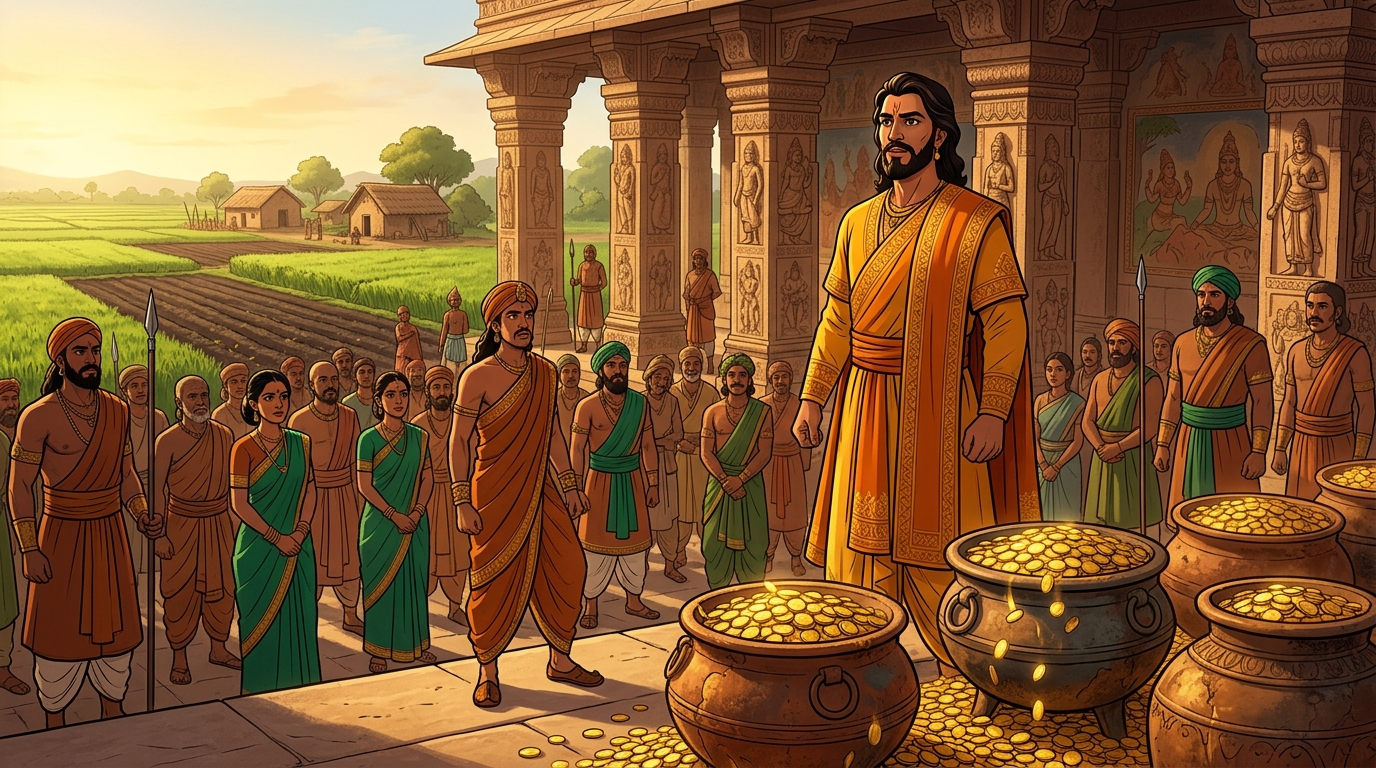
Vikramaditya rejected the counsel with royal dignity: *"A king who steals gold born of the righteousness and pure honesty of his own peasants commits a spiritual crime! This treasure shall serve Dharma, not royal chests!"*
"The pure integrity of our peasants is the true crown of our empire!"
The Royal Investigation & Matrimonial Solution
सम्राट की पारिवारिक पूछताछ और विवाह का दिव्य निर्णय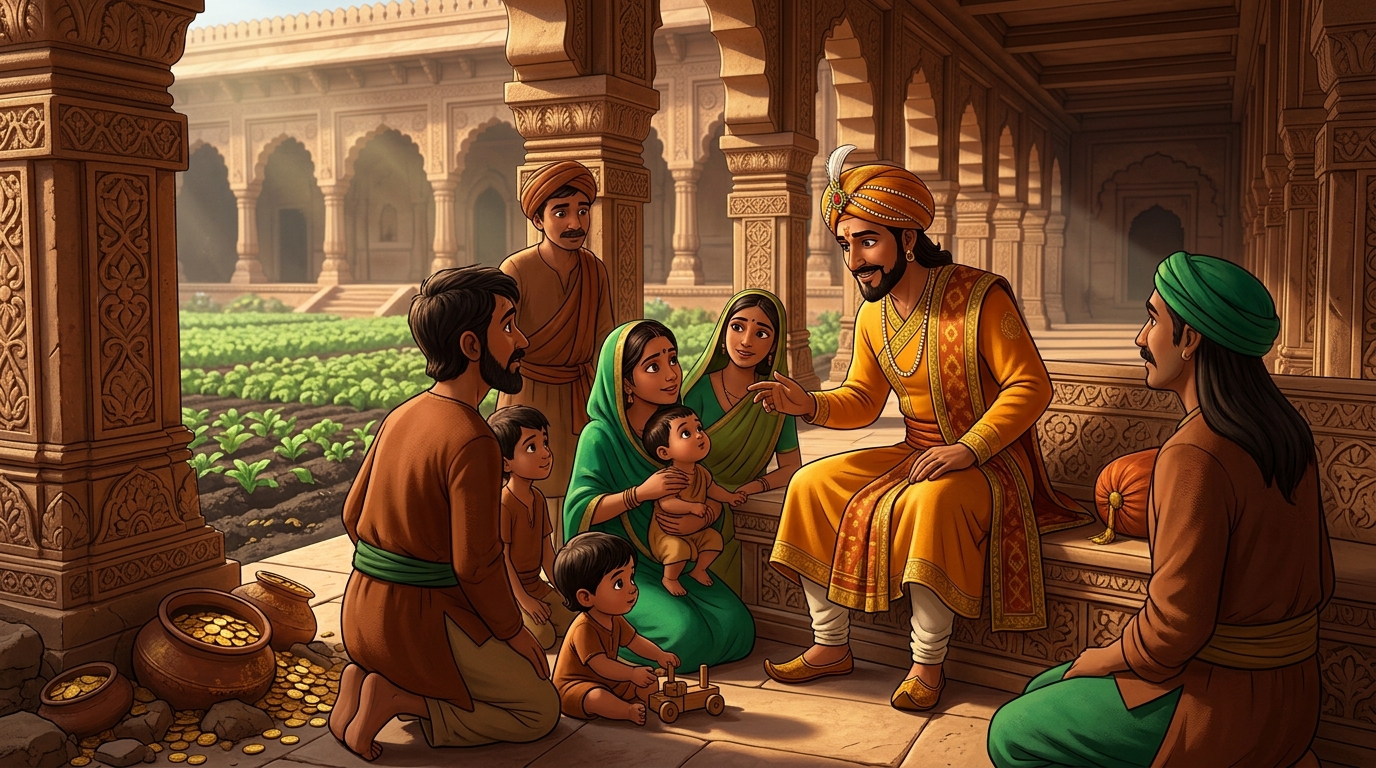
Vikramaditya gently questioned both farmers about their households, lineages, and children.
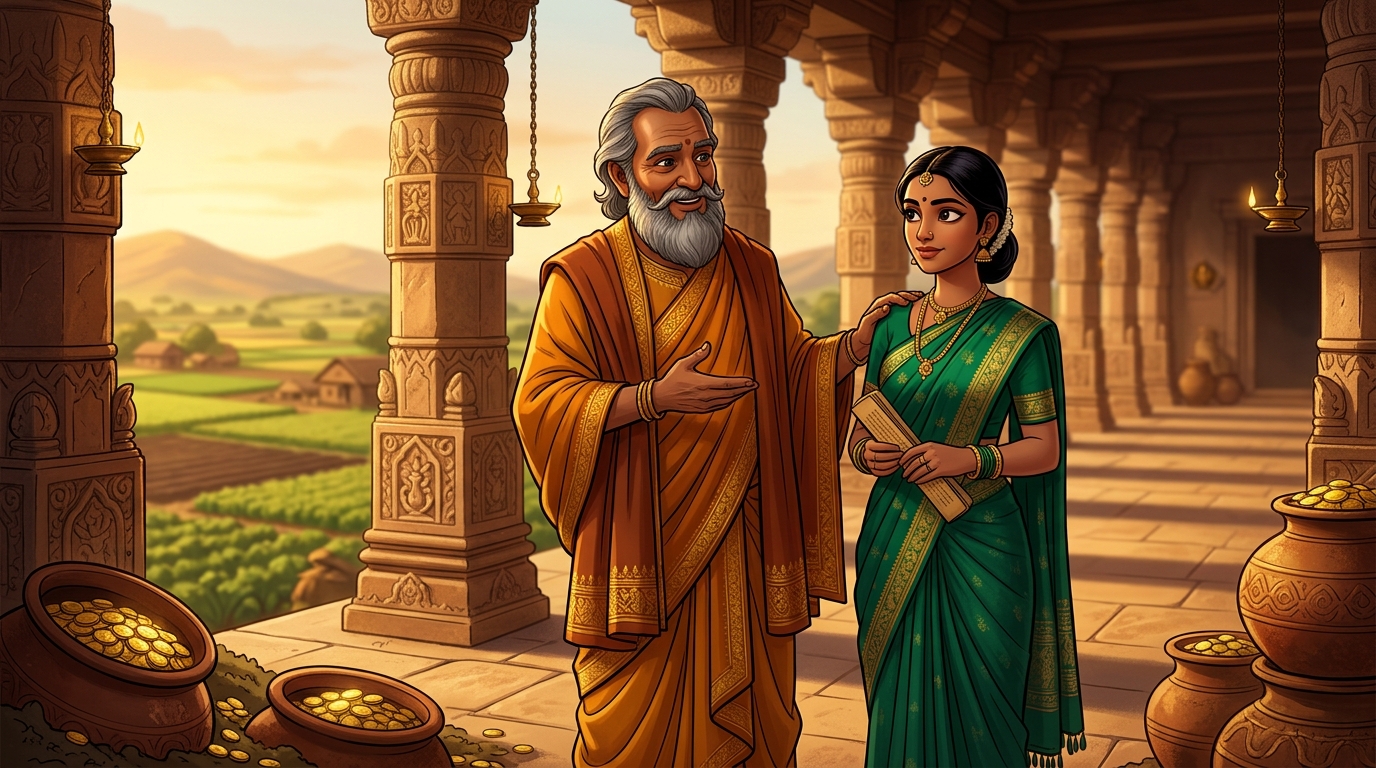
Haridatta revealed that he had a virtuous, dutiful eighteen-year-old daughter named Padmavati.
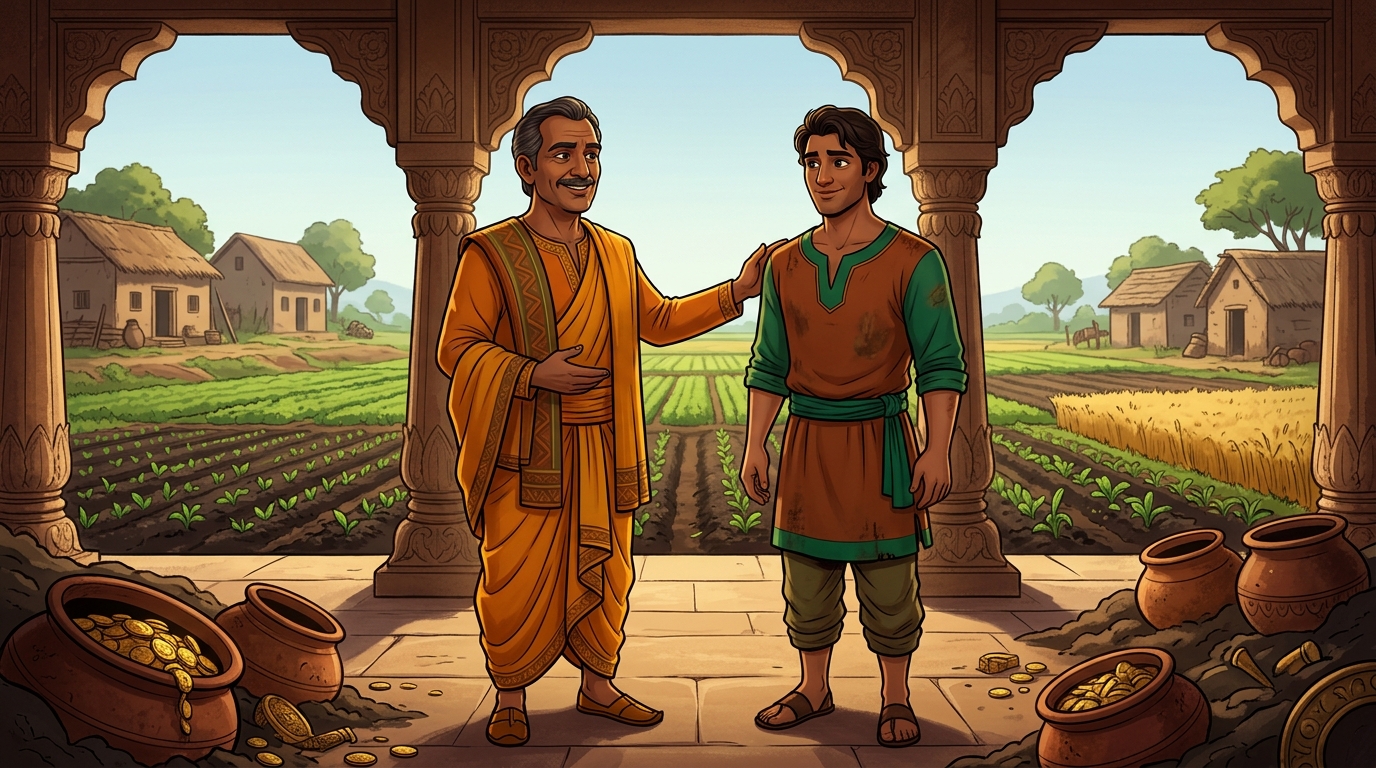
Somadatta revealed that he had an industrious, noble twenty-year-old farmer son named Vasudeva.
"O King! My son Vasudeva serves the earth day and night with honest toil!"
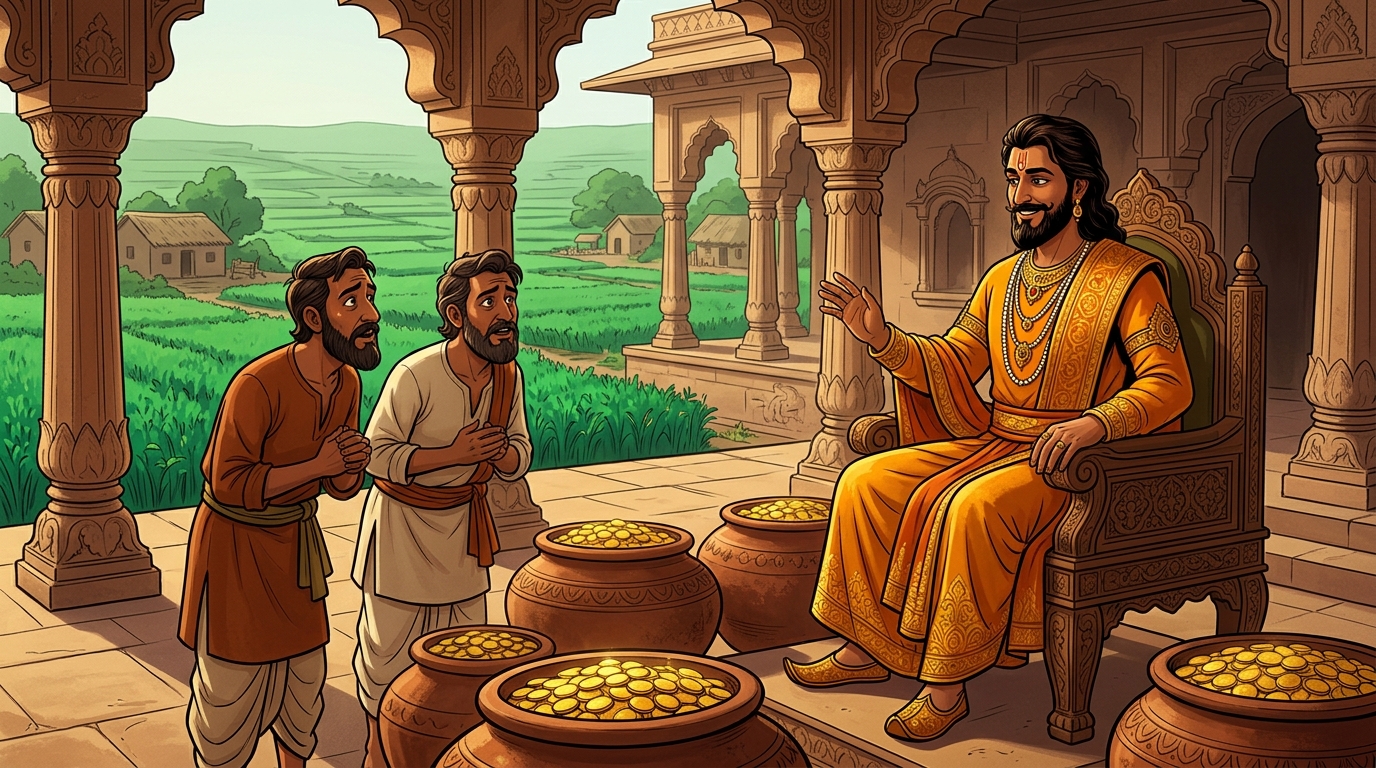
Vikramaditya smiled with radiant judicial brilliance: *"If neither righteous father will claim the gold, let this treasure become the sacred dowry and heritage of your children, uniting two of the most honest families of Bharat in holy matrimony!"*
"The fruit of truth always blossoms in love, kinship, and peace!"
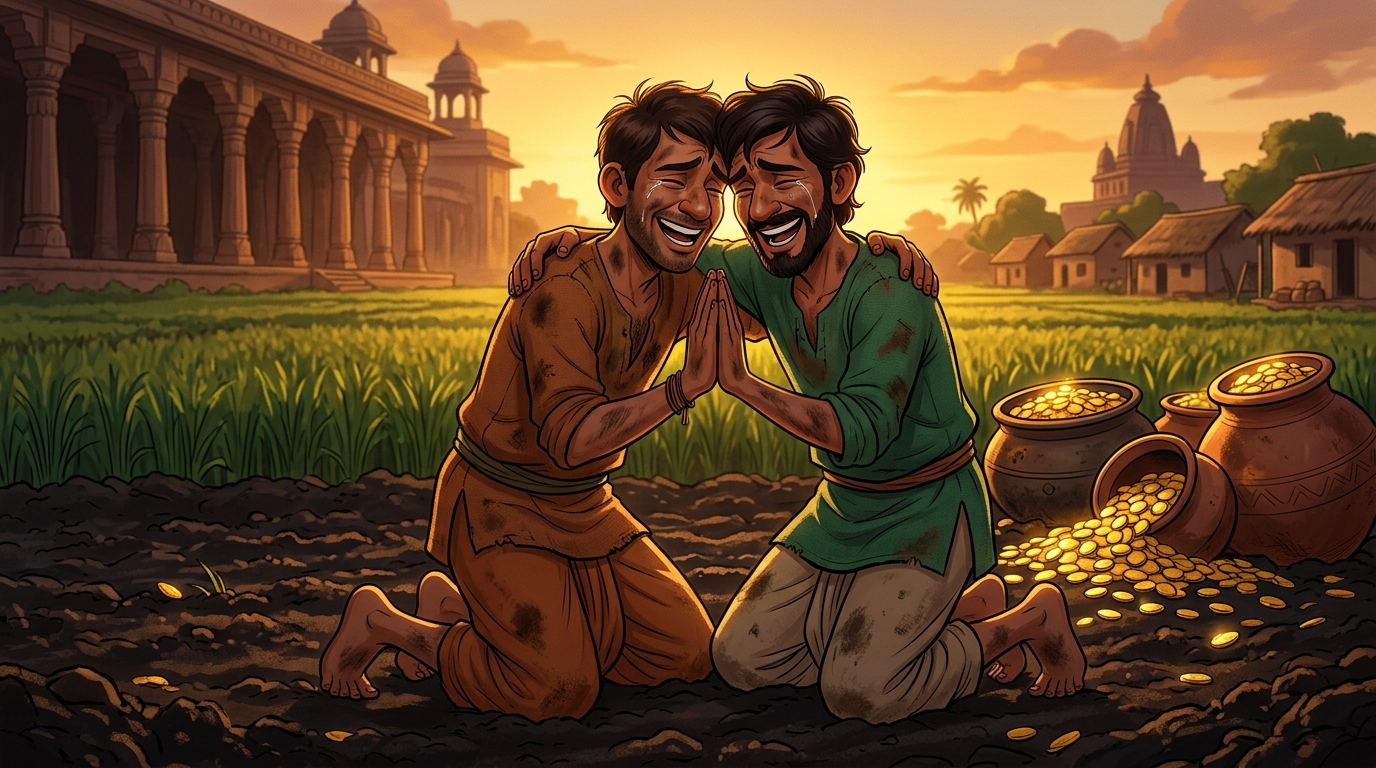
Both peasants fell to their knees in tears of boundless joy, embracing each other with folded hands as future kinsmen!
"The Emperor's divine justice has turned our dispute into an eternal bond of kinship!"
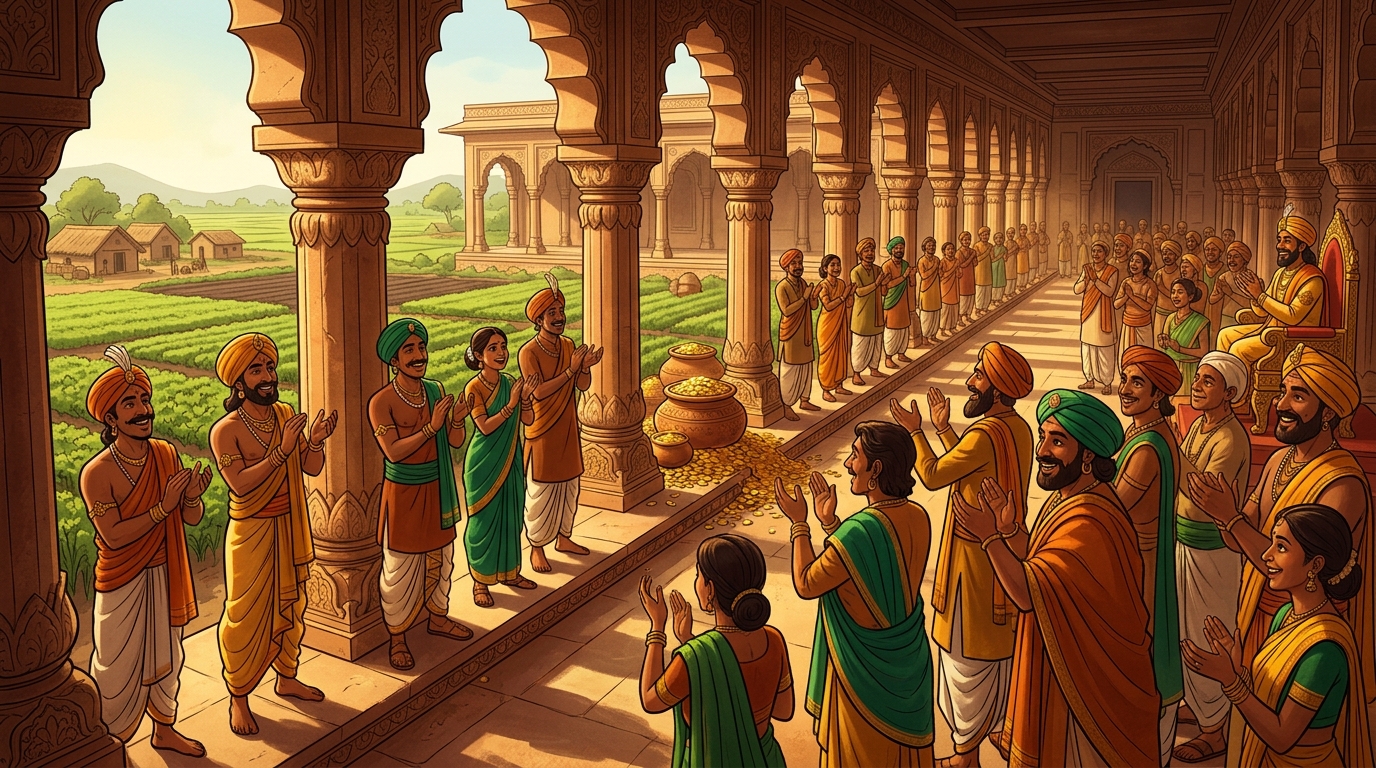
The audience hall erupted in standing applause, celebrating a sovereign whose justice was as pure and fertile as the earth itself.
The Grand Wedding & Public Welfare Stepwells
राजसी विवाह, जल-बावड़ियों का निर्माण और लोक-कल्याण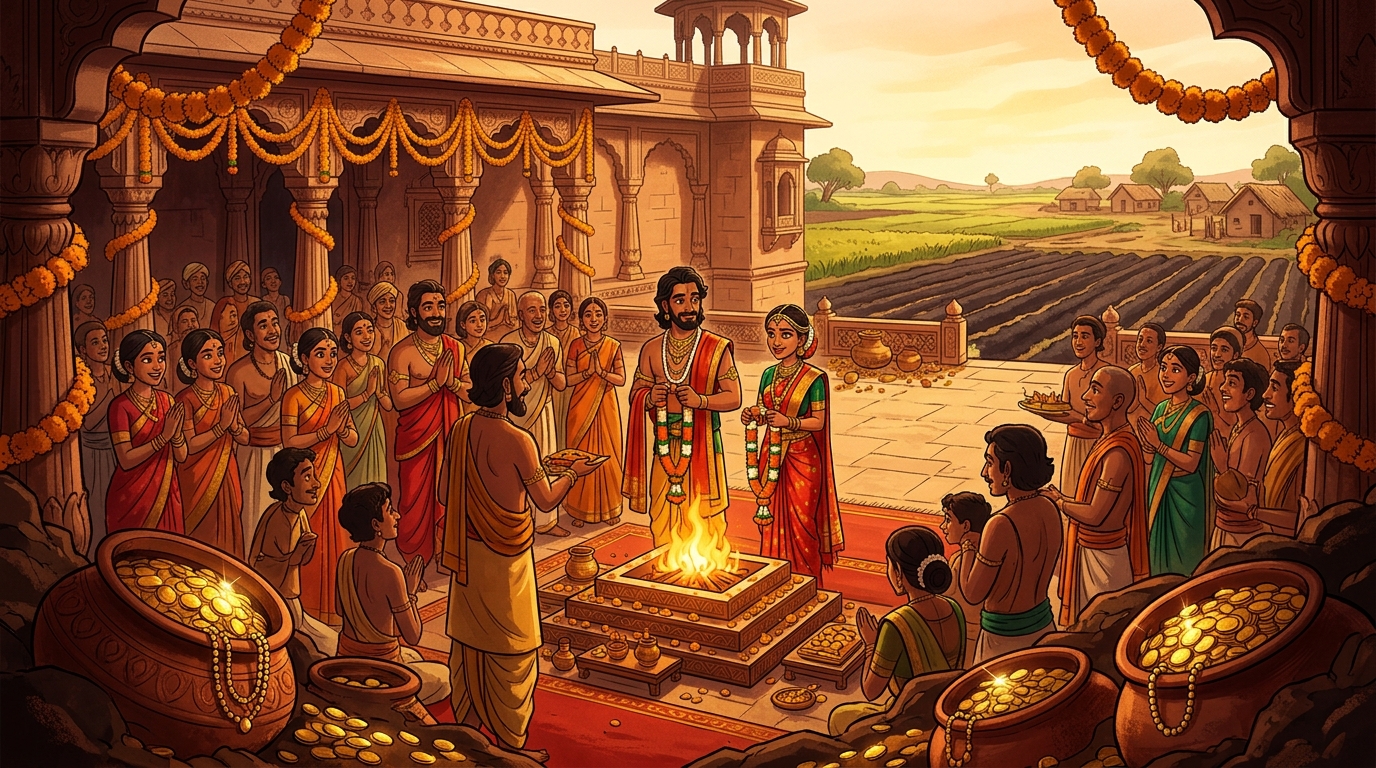
In the flower-draped palace courtyard of Ujjayini, the grand wedding of Vasudeva and Padmavati was consecrated with sacred Vedic mantras in the Emperor's presence.
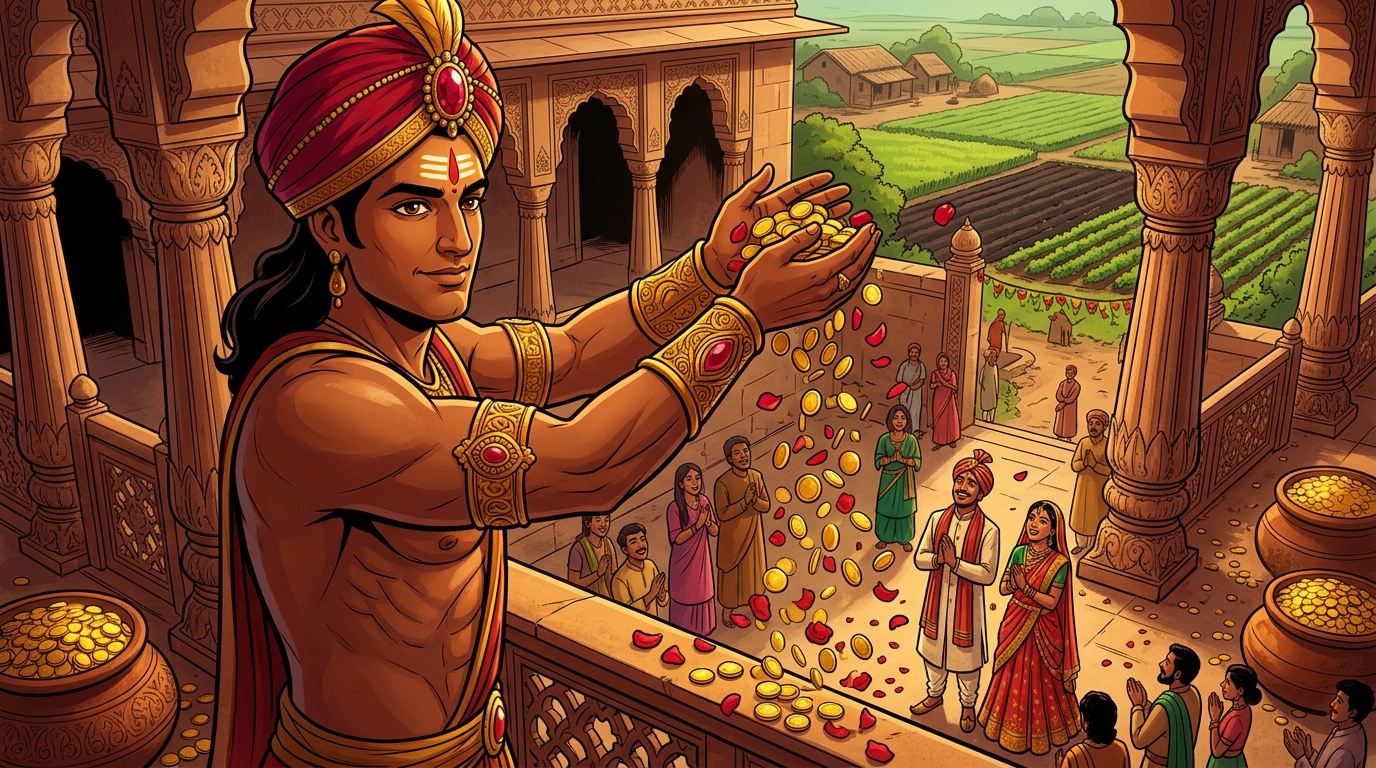
Emperor Vikramaditya personally showered gold coins and fragrant rose petals upon the bride and groom with fatherly blessings.
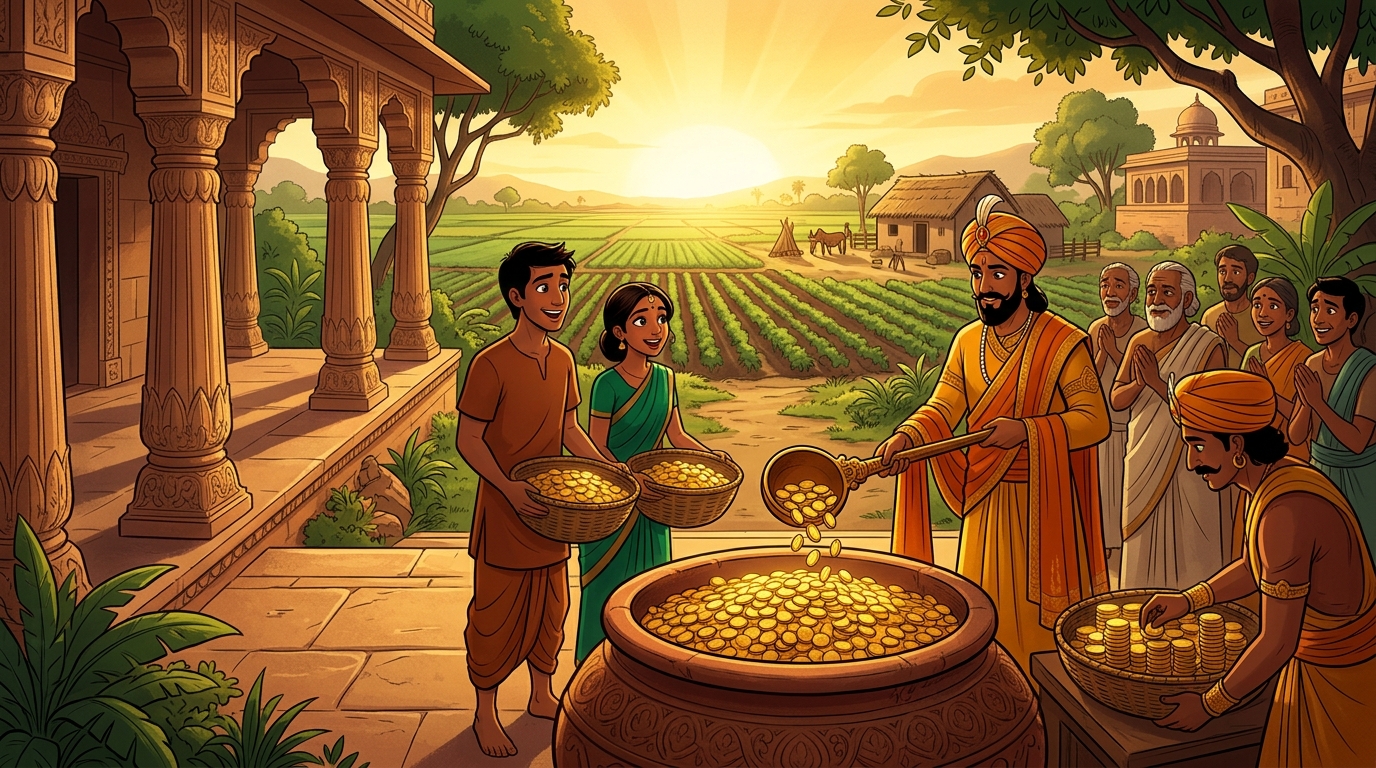
The one million gold coins were divided with divine equity: five hundred thousand coins gifted to the newlyweds to build their farm estate, and the remaining half dedicated to public welfare.
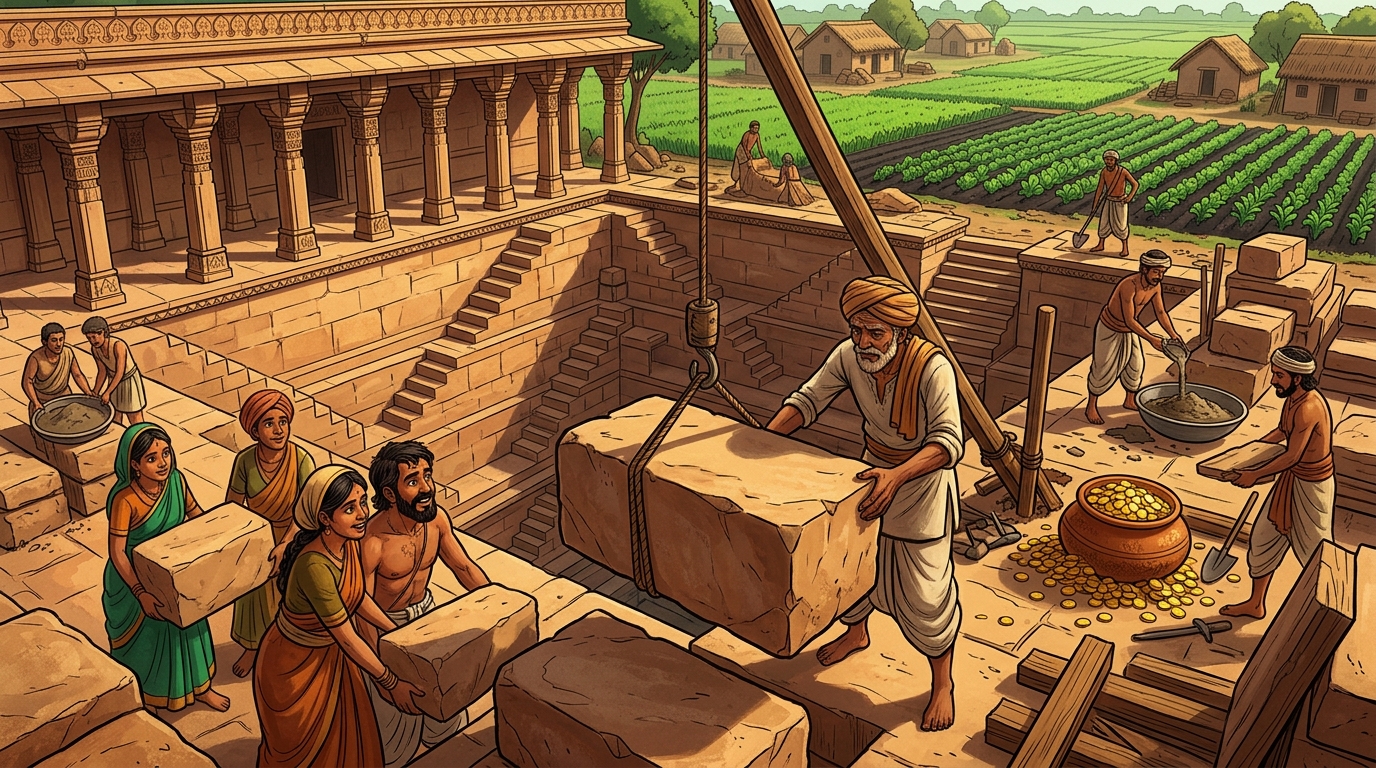
Funded by the dedicated gold, master masons and villagers constructed massive stone irrigation stepwells, canals, and livestock drinking reservoirs across the district.
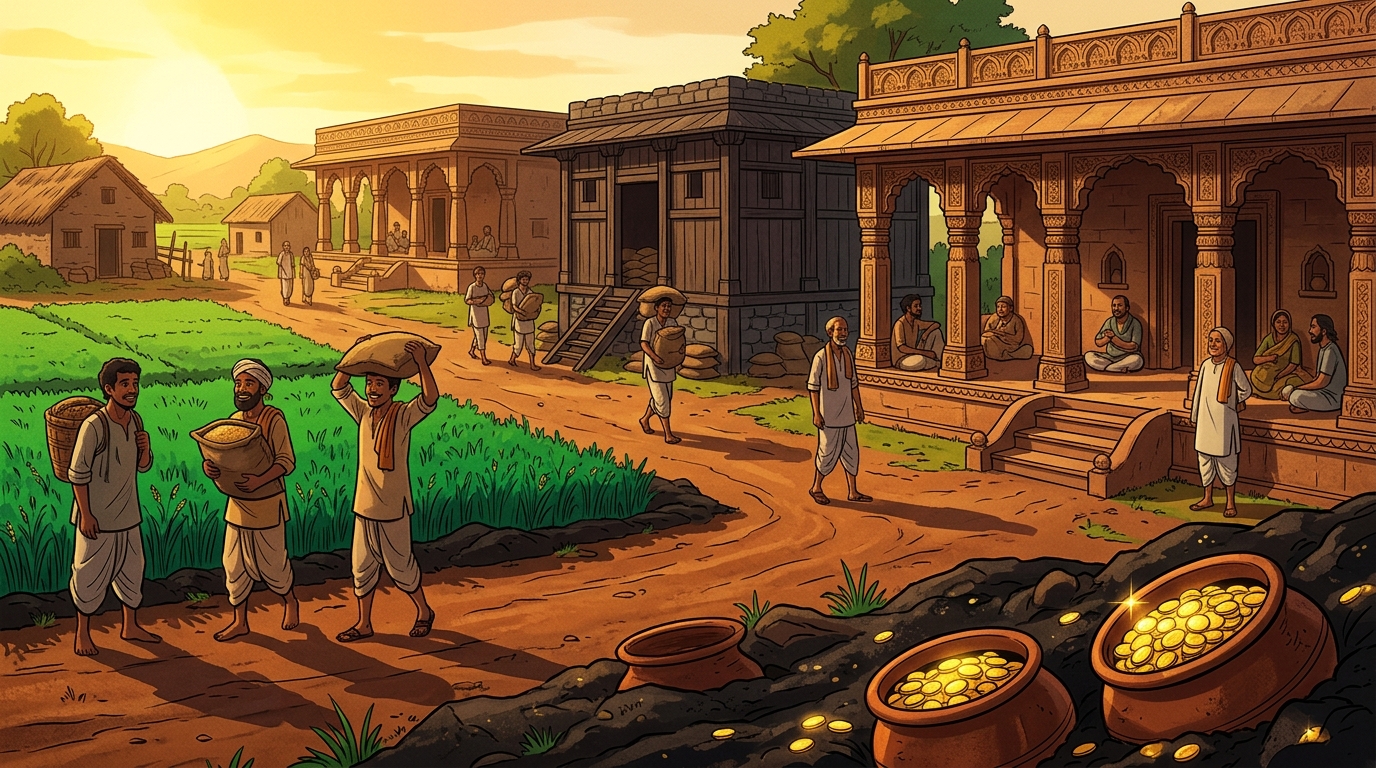
Free roadside rest-houses (*Dharmashalas*) and community grain banks were opened along all major highways for travelers and poor farmers.
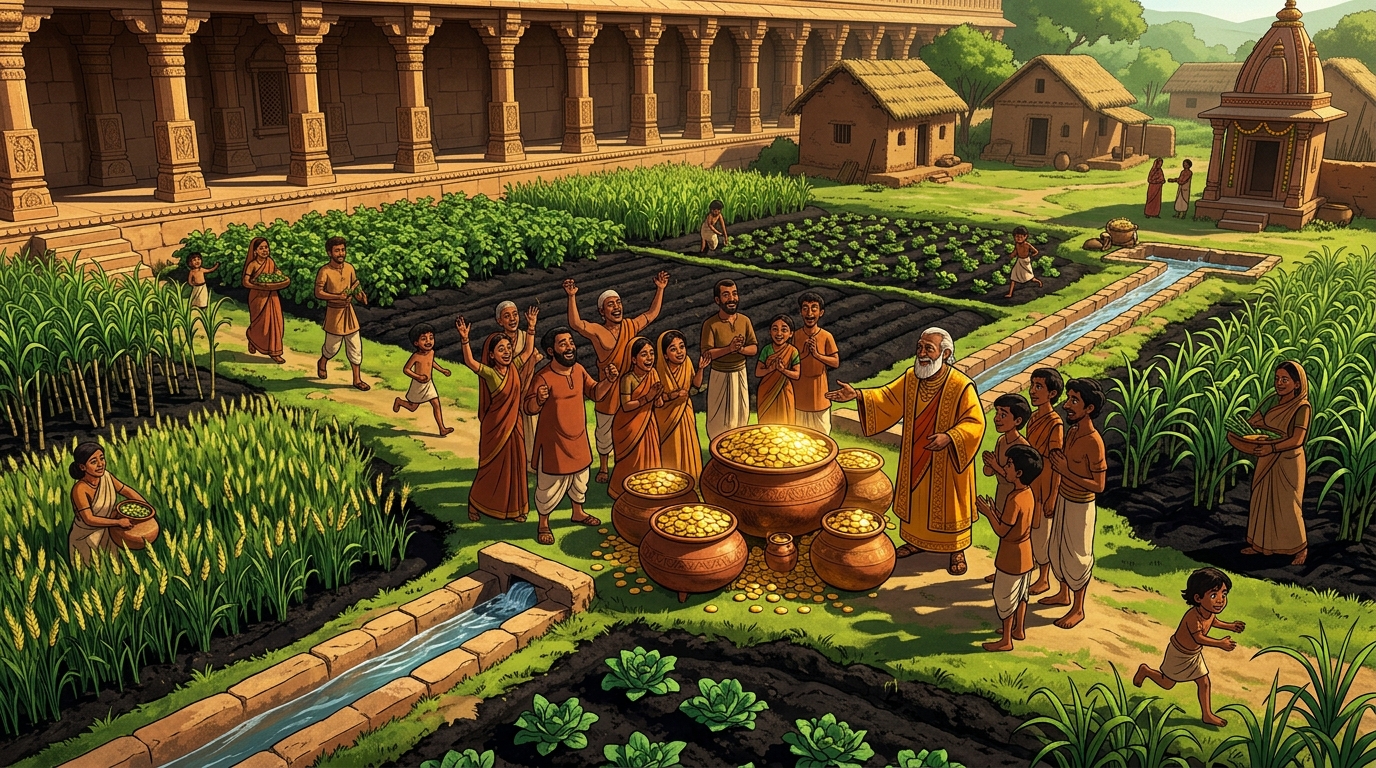
The fields of Avanti flourished with lush green harvests and flowing waters, celebrating the eternal victory of honesty and selflessness over greed!
Vasumati
वसुमती का निर्णय और राजा भोज का संकोच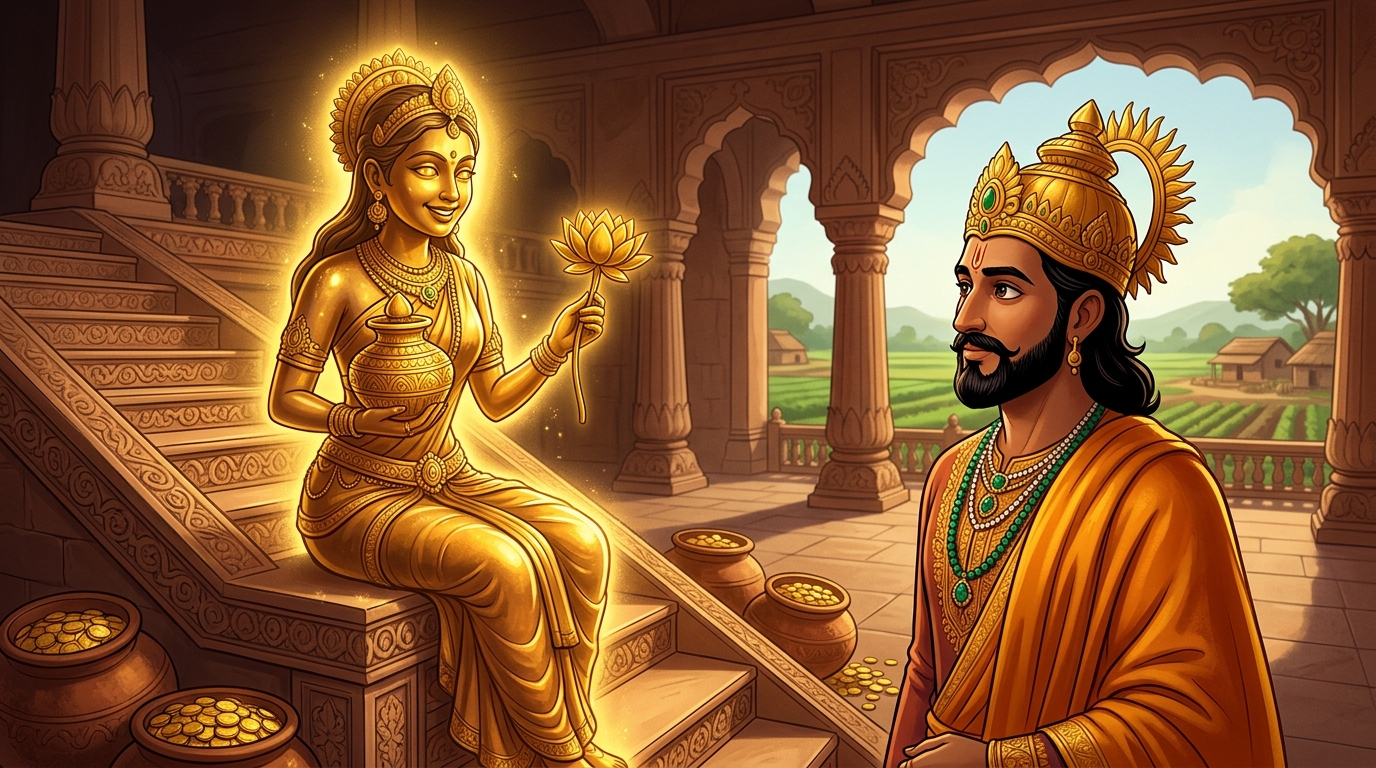
Back in the grand audience hall of Dharanagari, the living statue Vasumati looked directly into King Bhoja's eyes with penetrating earth-golden radiance.
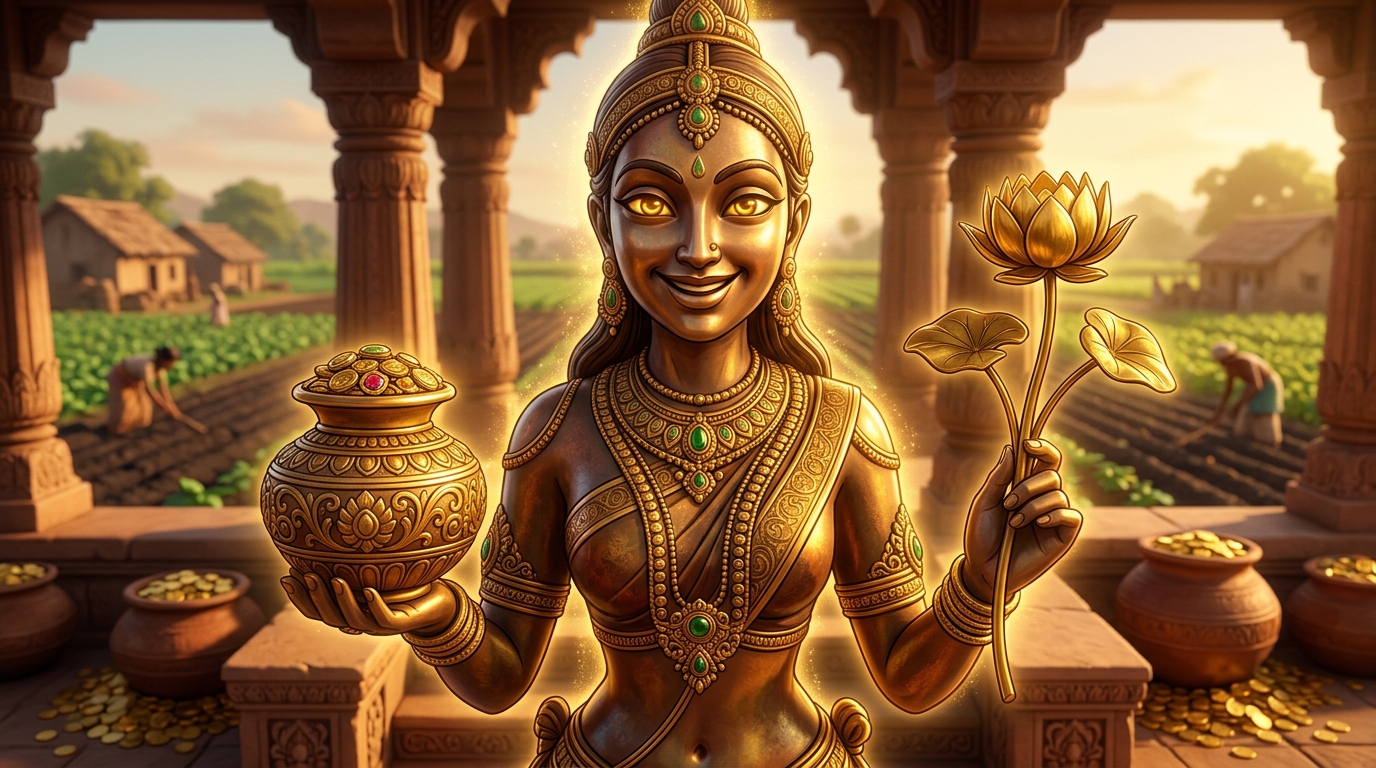
Vasumati delivered her decisive challenge:
"Now tell me, King Bhoja—have you ever refused to seize unclaimed buried treasure for your treasury, resolving a dispute of honest peasants by uniting their families in holy matrimony and dedicating the gold to public welfare? If you possess such judicial purity and detachment, ascend this step! If not, turn back!"
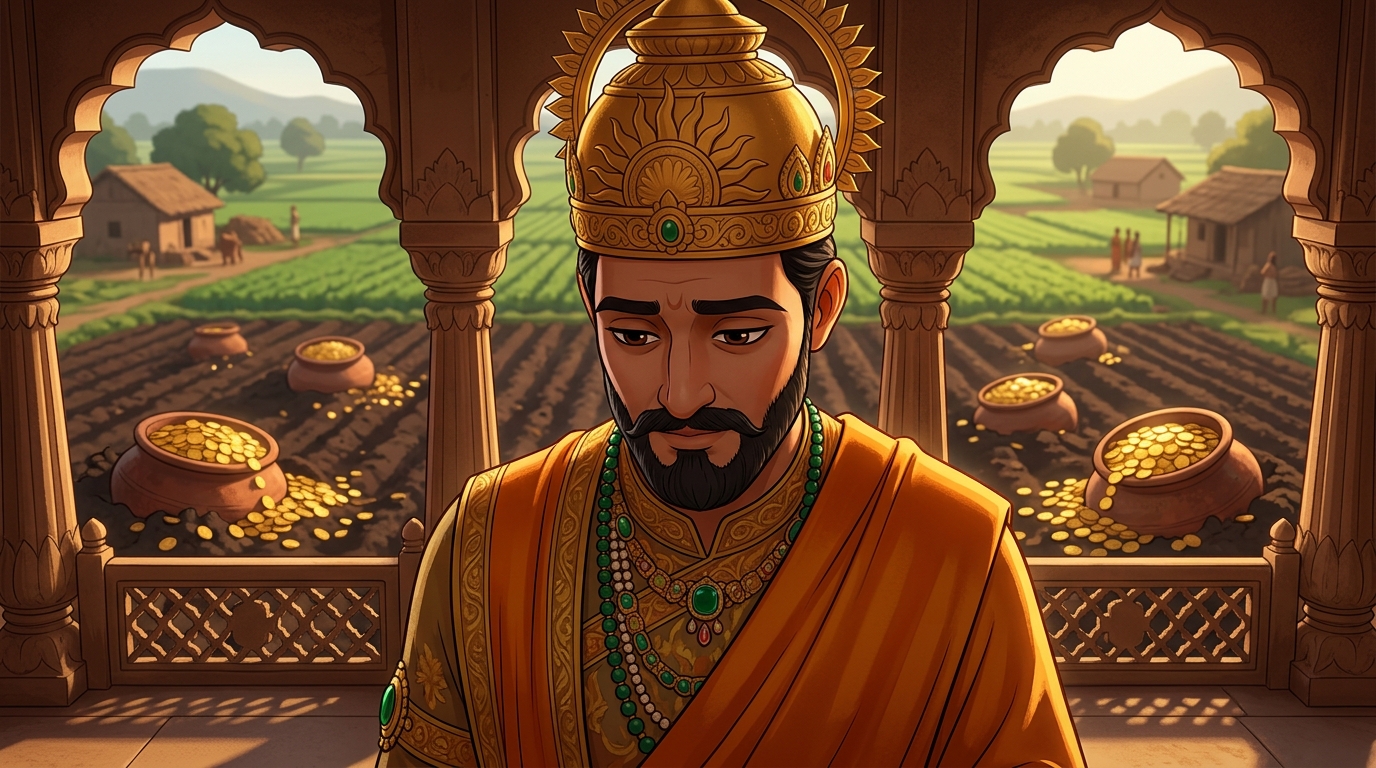
King Bhoja lowered his head in deep humility and introspection:
"I lack such unshakeable judicial detachment from state treasure troves, profound matrimonial wisdom, and supreme reverence for peasant honesty, O celestial maiden. I am not yet worthy of the twenty-seventh step."
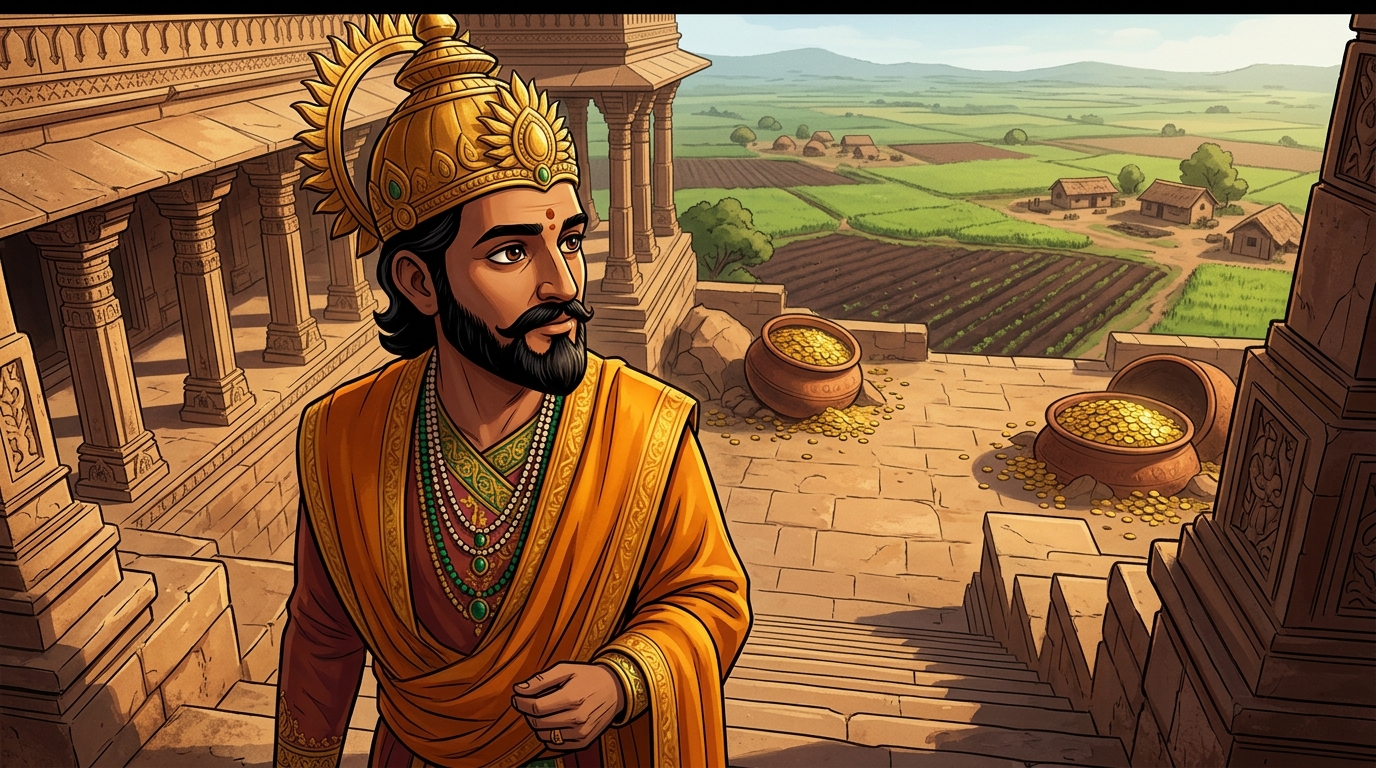
King Bhoja stepped down from the twenty-seventh step, decreeing peasant land-title protections, treasure-trove ownership reforms, and rural irrigation trusts established across all districts of Malwa.
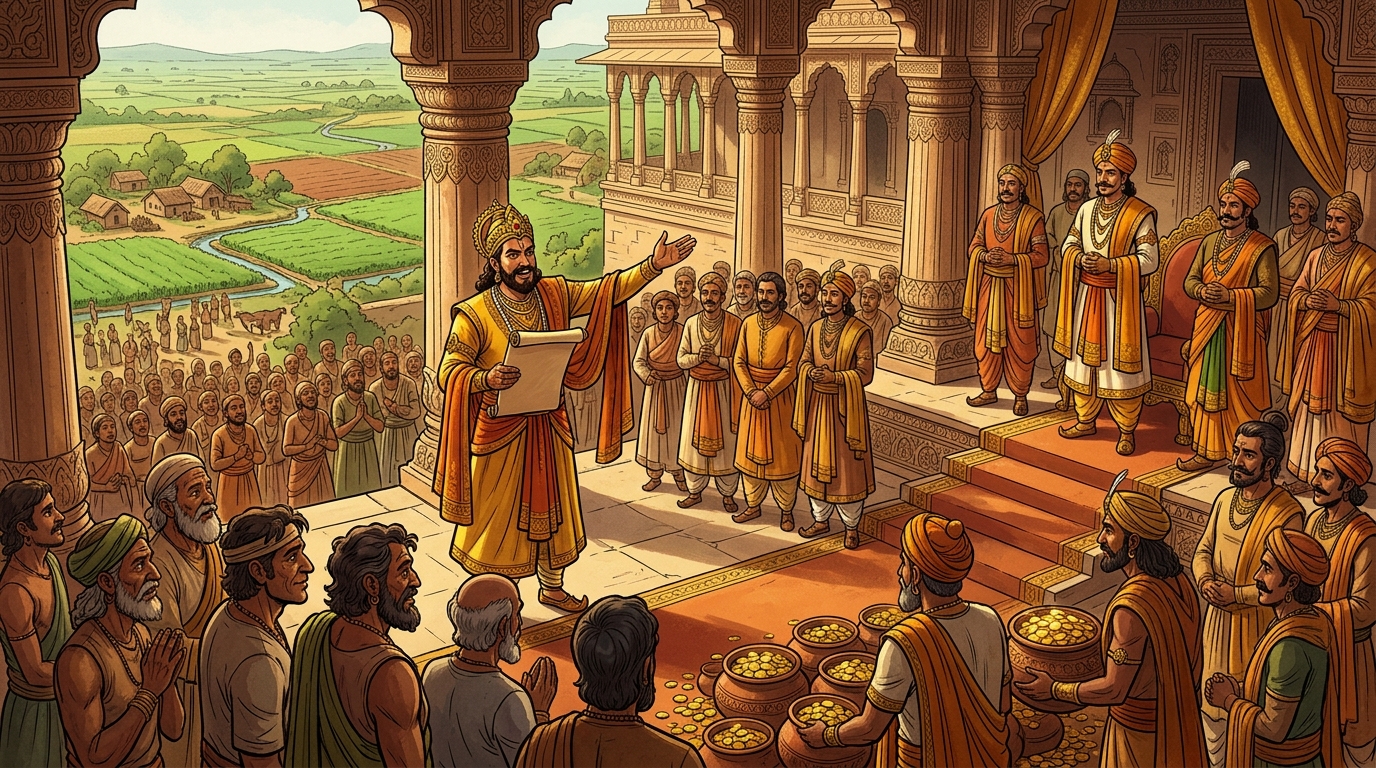
Rural water development trusts and peasant property protection tribunals were established throughout the kingdom.
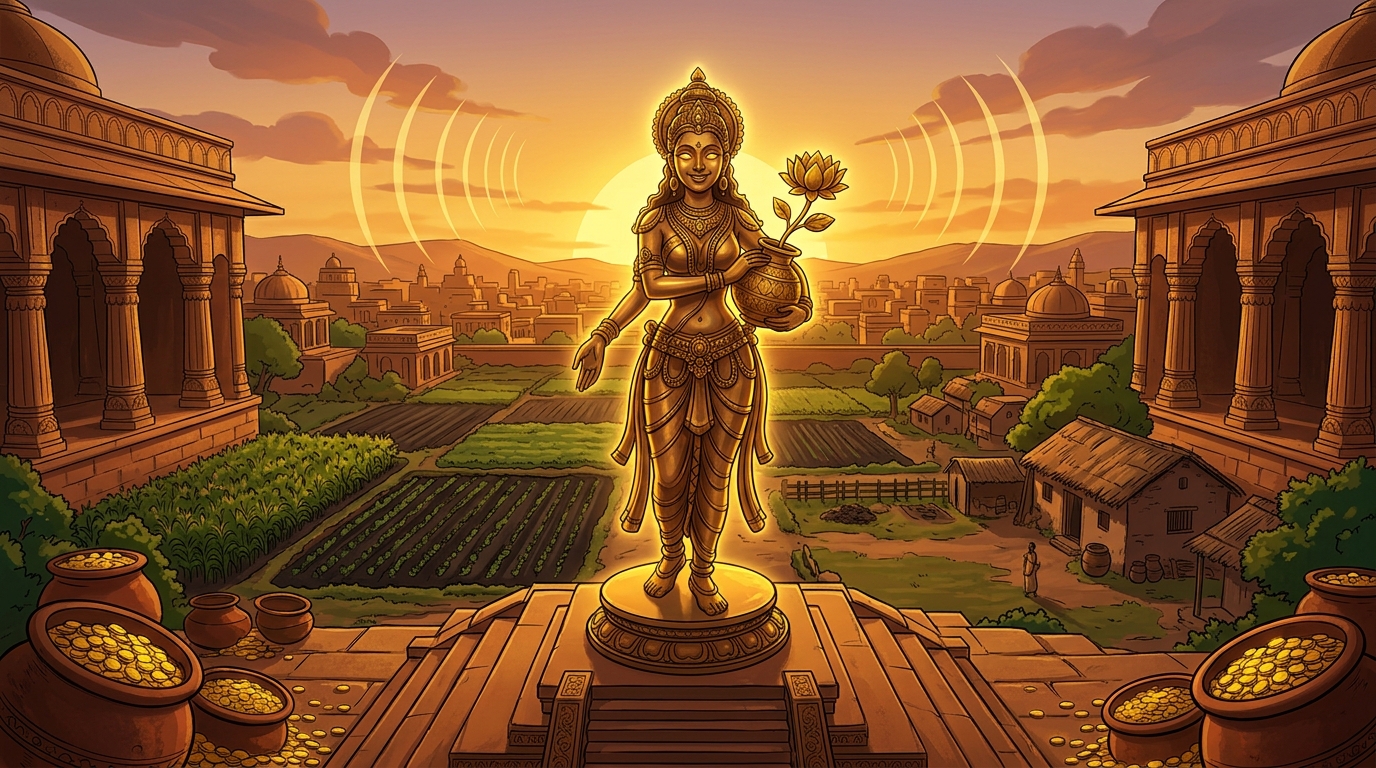
Twilight conches echoed across Dharanagari as Vasumati smiled warmly and froze back into silent speculum bronze. **The twenty-seventh day of *Singhasan Battisi* had concluded!**
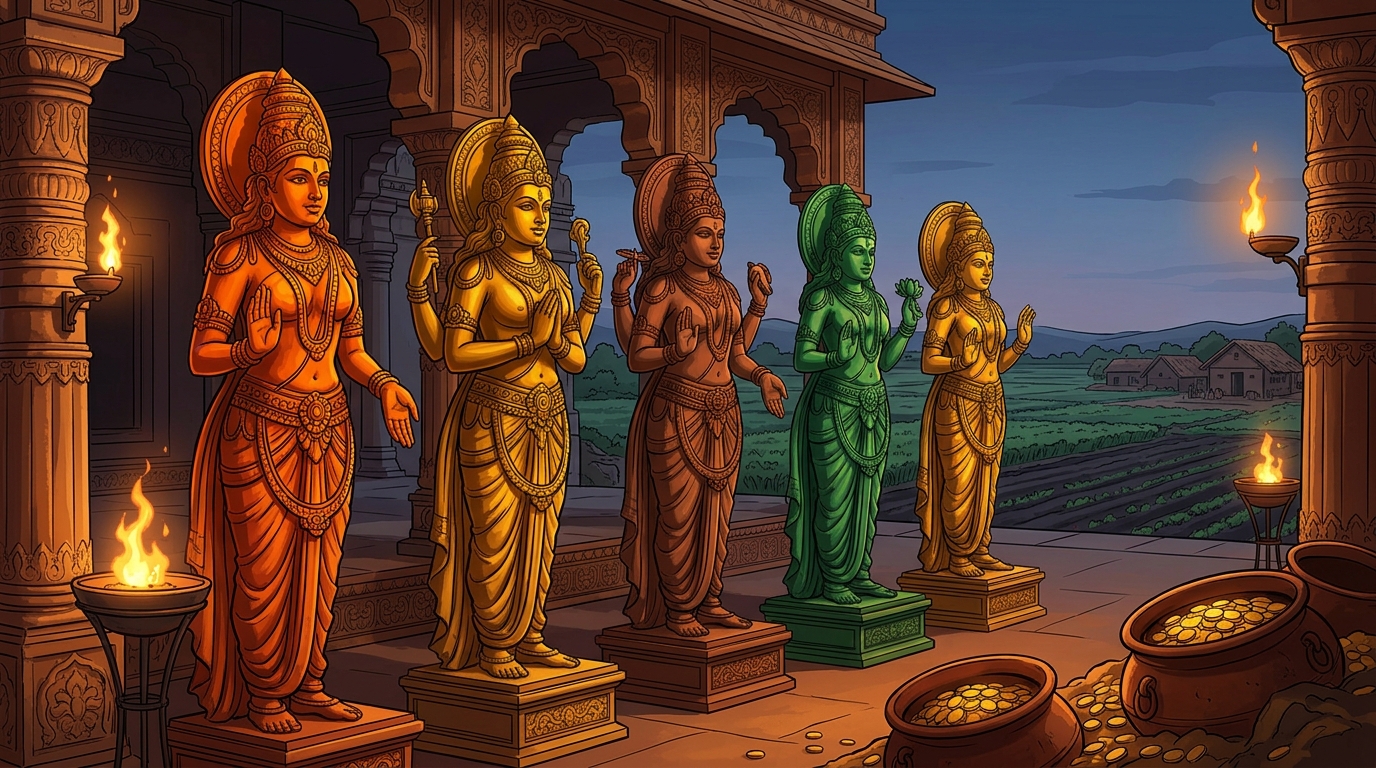
The remaining five celestial statues gleamed in the evening torchlight, awaiting the dawn of the twenty-eighth test (**Statue 28: Vaidehi**).
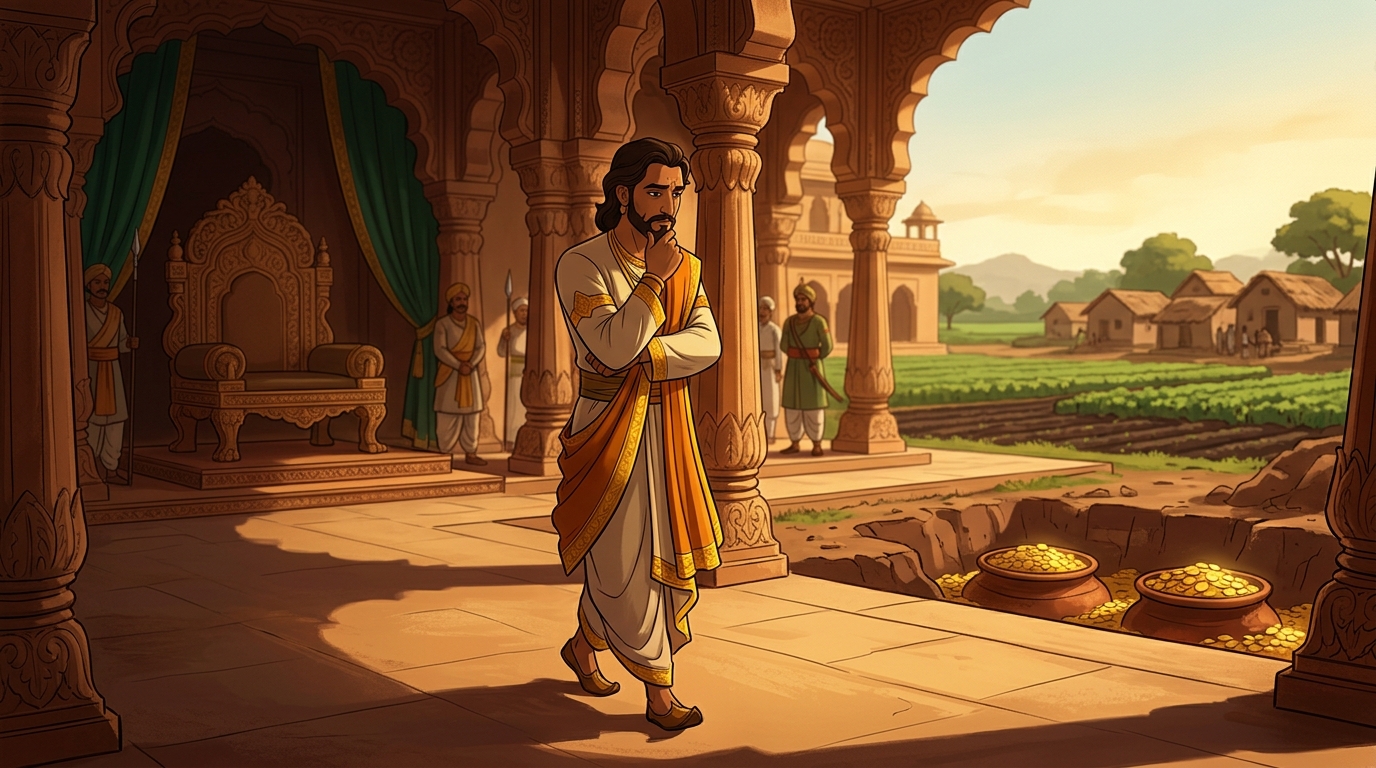
King Bhoja departed the throne hall in quiet contemplation, inspired by the divine judicial purity and peasant empathy of Emperor Vikramaditya.
"कल प्रातःकाल हम अट्ठाईसवीं सीढ़ी पर कदम रखेंगे और अट्ठाईसवीं पुतली—वैदेही—की अमर गाथा सुनेंगे!"